

Unexpected hairs can appear at the most inconvenient times. One morning, you may notice a dark chin hair, coarse neck hair, or stubborn strand near your cheek. Stray Hair can feel annoying, especially when it keeps returning in the same spot. Fortunately, managing Rogue Hair doesn’t need to become a complicated part of your routine. Simple Stray Hair removal methods can help you maintain smooth, well-groomed skin. Tweezing, shaving, threading, and trimming each work differently. Understanding your hair growth patterns also makes regular grooming easier.
For occasional stray hairs or persistent unwanted hair growth, a practical routine can make a noticeable difference. You may need a quick solution for facial hair or a longer-lasting approach for body hair. Meanwhile, gentle aftercare can reduce skin irritation and ingrown hairs. By choosing suitable hair removal methods, you can handle Rogue Hair confidently while keeping your grooming routine simple, comfortable, and effective.
What Is Rogue Hair and Why Does It Appear?
Rogue Hair refers to an unexpected, noticeable hair that seems to appear out of nowhere. You might spot one dark chin hair, a coarse neck hair, or a stubborn strand on your cheek. These hairs often stand out because they grow differently from the surrounding hair.
Rogue Hair can develop on the face, neck, eyebrows, arms, legs, or other areas of the body. One strand may grow thicker, darker, or faster than the rest.
Common examples include:
- A single dark chin hair
- Random upper lip hair
- Coarse neck hair
- A long eyebrow hair
- Stray hairs on the cheeks
- Unexpected body hair
- A few stubborn hairs around the jawline
Occasional Stray Hair growth is usually normal. Hair follicles don’t always follow identical growth patterns. Genetics, age, hormones, and natural changes in the hair cycle can all influence where individual hairs appear.
Common Causes of Rogue Hair and Unwanted Growth
Why do random hairs grow when most surrounding hairs look completely normal? Several factors can play a role.
Rogue Hair may appear because of:
| Cause | How It Can Affect Hair Growth |
| Genetics | May influence hair thickness, color, and growth patterns |
| Aging | Hormonal shifts can change facial and body hair |
| Hormonal changes | May increase unwanted facial or body hair |
| Certain medications | Some medicines can affect hair growth |
| Natural hair cycles | Individual follicles grow at different rates |
| Androgens | Higher sensitivity can encourage coarse hair growth |
| Hair follicle differences | One follicle may produce thicker hair than others |
Hormonal changes deserve special attention when unwanted hair growth suddenly becomes more noticeable. Changes during adulthood, pregnancy, menopause, or other hormonal transitions can alter facial hair patterns.
A few stray hairs aren’t usually concerning. However, sudden or excessive hair growth deserves a closer look, especially when other noticeable body changes occur.
10 Ways to Manage Rogue Hair and Unwanted Growth

Managing Stray Hair doesn’t have to become a daily battle. The right technique depends on where the hair grows, how thick it is, and how sensitive your skin feels.
These practical methods can help you maintain smooth skin without making your routine complicated.
Use Tweezers for Individual Stray Hairs
For one or two noticeable Stray Hair strands, tweezing remains one of the simplest options. It removes the entire visible hair from the follicle rather than simply cutting it at the surface.
Why tweezing works
- Ideal for individual stray hairs
- Great for chin and eyebrow hairs
- Requires no chemicals
- Easy to perform at home
- Works well for coarse, stubborn strands
- Doesn’t require expensive equipment
Before tweezing stray hairs, clean your tweezers and skin. Grip the hair close to its base and pull gently in the direction of growth.
Avoid repeatedly digging into the skin when you can’t grab a hair. That habit can increase redness, irritation, and the chance of ingrown hairs.
For small areas, tweezing offers a precise form of Stray Hair removal without affecting nearby hair.
Shave Rogue Hair Carefully
Shaving provides a fast solution when Stray Hair appears unexpectedly. It’s especially useful when you need a quick touch-up before work, an event, or a night out.
A clean razor cuts hair at the skin’s surface. It doesn’t change the follicle or permanently make hair thicker.
For smoother shaving:
- Wash the area with warm water.
- Apply a gentle shaving gel or cream.
- Use a clean, sharp razor.
- Glide lightly in the direction of hair growth.
- Rinse away residue.
- Apply a gentle moisturizer afterward.
Shaving works particularly well for facial hair and small areas of body hair. If your skin reacts easily, follow hair removal tips for sensitive skin and avoid aggressive pressure.
You may need to shave more frequently because the follicle continues producing hair.
Try Waxing for Longer-Lasting Results
Waxing removes hair from the root, which can provide longer-lasting results than shaving. It’s useful when several Stray Hair strands appear together.
Waxing can work on:
- Upper lip hair
- Chin hair
- Legs
- Arms
- Underarms
- Bikini areas
Because waxing pulls hair from the root, regrowth usually takes longer than after surface shaving. However, the method can cause temporary redness or sensitivity.
If you’re deciding between shaving vs waxing for unwanted hair, consider your skin type and maintenance preferences. Waxing suits people who want fewer touch-ups. Shaving may feel easier for sensitive skin or occasional grooming.
Don’t wax irritated, sunburned, or damaged skin. A little preparation can make the experience much more comfortable.
Consider Threading for Facial Hair
Threading offers precise stray hair removal, particularly around the face. A trained professional can remove multiple fine hairs while shaping specific areas.
It’s commonly used for:
- Eyebrows
- Upper lip
- Chin
- Cheeks
- Jawline
Threading doesn’t require chemical products or hot wax. That makes it appealing for people who prefer a simple facial hair removal technique.
However, sensitive skin may become temporarily red after threading. Avoid touching the freshly threaded area unnecessarily.
For detailed facial grooming, threading can manage unwanted facial hair while preserving the surrounding hair.
Use a Facial Trimmer for Quick Touch-Ups
A facial trimmer is handy when you want quick Rogue Hair maintenance without pulling hairs from the root.
It works well for:
- Fine facial hair
- Upper lip hair
- Chin areas
- Sideburns
- Cheek hair
- Small touch-ups
Trimmers cut hair close to the skin without requiring wax or chemicals. They’re also convenient for people who don’t enjoy tweezing.
For frequent hair grooming, keep your trimmer clean and avoid pressing it firmly against your skin. Gentle passes usually provide a more comfortable result.
Apply Hair Removal Cream When Suitable
Hair removal creams dissolve hair at or slightly below the skin’s surface. They’re useful when you want to treat several unwanted hairs quickly.
However, these products aren’t suitable for every person or every body area.
Before using a hair removal cream:
- Read the product directions carefully.
- Perform a patch test first.
- Use a formula designed for the intended body area.
- Never leave the product on longer than directed.
- Rinse thoroughly afterward.
- Stop immediately if severe burning occurs.
This method can work for some types of unwanted body hair, yet facial products require extra care. Don’t automatically use a body formula on your face.
If you’re wondering how to remove rogue hair without tweezing, a suitable cream may provide another option.
Try an Epilator for Longer-Lasting Smoothness
An epilator mechanically removes multiple hairs from the root. Unlike a razor, it doesn’t simply trim hair at the skin’s surface.
Epilators can help with:
- Legs
- Arms
- Underarms
- Other suitable body areas
Because the device removes hair from the root, results can last longer than shaving. Still, the first few sessions may feel uncomfortable.
To make epilation easier, keep the skin clean and follow the device instructions. Don’t repeatedly pass over the same area because excessive friction can trigger skin irritation.
Epilators work best when you want efficient unwanted hair removal across a larger area.
Consider Laser Hair Removal for Reduction
When Stray Hair keeps returning in the same area, laser hair removal may provide a longer-term approach.
Laser treatments target pigment within the hair follicle. Over multiple sessions, they can reduce hair growth and make regrowth less noticeable.
Laser hair removal may be considered for:
- Facial hair
- Chin hair
- Neck hair
- Underarms
- Legs
- Bikini areas
- Other suitable body regions
Results vary based on hair color, skin tone, treatment area, hormonal factors, and the specific laser technology used.
It’s important to understand the difference between permanent hair reduction and completely permanent hair removal. Multiple sessions are typically needed, and some maintenance treatments may still be necessary.
For persistent stubborn hair, professional treatment can offer a more long-term strategy than repeated daily grooming.
ALSO READ: How to Style Hair: 10 Proven & Easy Techniques
Manage Hormonal Factors With Professional Guidance
Sometimes Stray Hair isn’t simply a grooming issue. Hormonal changes can influence facial and body hair growth, particularly when several new hairs appear within a short period.
Possible signs worth discussing with a healthcare professional include:
- Sudden excessive hair growth
- Rapidly increasing facial hair
- New coarse chin or neck hair
- Noticeable changes in normal hair growth patterns
- Other unexpected hormonal changes
The goal isn’t to treat every stray strand medically. Instead, professional guidance can help identify possible hormonal causes of unwanted hair when growth changes significantly.
If you notice persistent excessive hair growth, don’t rely solely on cosmetic solutions. A healthcare professional can determine whether further evaluation makes sense.
Follow a Consistent Hair Removal Routine
The easiest way to manage Stray Hair is often consistency. Waiting until several hairs become noticeable can make grooming feel more frustrating than necessary.
Create a simple routine based on your needs:
| Hair Concern | Practical Option |
| One chin hair | Tweezing |
| Occasional facial hair | Shaving or trimming |
| Several facial hairs | Threading or waxing |
| Larger body areas | Shaving or epilation |
| Frequent recurring growth | Professional laser treatment |
| Sudden excessive growth | Professional medical guidance |
Knowing how to get rid of Stray Hair becomes easier when you stop treating every strand the same way.
Keep your preferred tools clean. Check your skin afterward. Most importantly, don’t over-treat an area simply because one strand catches your attention.
Best Rogue Hair Removal Method for Different Areas

The best Stray Hair removal method depends heavily on the location. Facial skin generally needs more precision than larger body areas.
| Area | Suitable Methods | Helpful Tip |
| Chin | Tweezing, shaving, threading, laser | Choose precision for isolated hairs |
| Upper lip | Threading, shaving, waxing, laser | Avoid harsh products on sensitive skin |
| Eyebrows | Tweezing, threading | Shape carefully rather than removing too much |
| Cheeks | Trimming, threading, shaving | Use gentle techniques for sensitive skin |
| Neck | Tweezing, shaving, laser | Watch for irritation and ingrown hairs |
| Legs | Shaving, waxing, epilation, laser | Larger areas benefit from efficient methods |
| Underarms | Shaving, waxing, epilation, laser | Exfoliate gently between treatments |
When choosing the best hair removal method, think beyond speed. Your skin sensitivity, hair texture, treatment frequency, and desired results all matter.
For example, tweezing makes sense for one unwanted chin hair. It becomes tedious when dozens of hairs need attention.
How to Prevent Skin Irritation After Hair Removal
Good Stray Hair removal shouldn’t leave your skin feeling raw. A little aftercare can reduce redness, dryness, bumps, and discomfort.
Follow these simple steps:
- Rinse treated skin gently.
- Avoid aggressive scrubbing immediately afterward.
- Apply a fragrance-free moisturizer.
- Skip irritating skincare products for a short period.
- Avoid unnecessary touching.
- Use sun protection on exposed areas.
- Keep freshly treated skin clean.
- Don’t pick at bumps or possible ingrown hairs.
If you’re learning how to prevent ingrown hairs, gentle exfoliation between removal sessions may help some people. Don’t exfoliate aggressively right after waxing, threading, or epilation.
People with sensitive skin should pay particular attention to skin irritation. Burning, persistent swelling, or severe redness isn’t something to simply push through.
When Unwanted Hair Growth May Need Medical Attention
Most Rogue Hair strands are harmless and simply part of normal hair growth. However, sudden changes deserve more attention than an occasional stray strand.
Consider speaking with a healthcare professional when you notice:
- Rapid or unexplained excessive hair growth
- A sudden increase in coarse facial hair
- New unwanted chin hairs appearing frequently
- Significant changes in facial or body hair patterns
- Hair growth alongside other unusual physical changes
- Persistent growth that concerns you
Understanding why am I getting stray hairs starts with recognizing that occasional hairs can be completely normal. Hormones, genetics, aging, and individual follicles can all affect growth.
If you’re unsure when to see a doctor about excessive hair growth, focus on the pattern rather than one isolated strand. A single Stray Hair usually isn’t a big deal. A sudden, widespread change may deserve professional attention.
Ultimately, Stray Hair management comes down to choosing the right technique for the right situation. Tweezing handles isolated strands. Shaving and trimming offer quick maintenance. Waxing, threading, and epilation can provide longer-lasting results. Laser treatment may help reduce persistent growth over time.
With a simple personal grooming routine and sensible skin care, you can manage Stray Hair without turning hair removal into a chore.
Rogue Hair vs Normal Hair Growth

Not every unusual strand signals a problem. Stray Hair usually describes an isolated hair that looks different from the surrounding growth. It may appear darker, thicker, longer, or grow in an unexpected location.
Normal hair growth varies naturally across your body. One follicle might produce a fine strand while another creates noticeably coarse hair. Genetics, age, hormones, and follicle sensitivity can all contribute to these differences.
What makes hair seem unusual?
- It grows noticeably faster than nearby hairs.
- The strand looks darker or thicker.
- It appears in an unexpected spot.
- One follicle repeatedly produces a prominent hair.
- The surrounding area has very little visible hair.
Understanding this difference can prevent unnecessary concern over an occasional stray hair.
Why Rogue Hair Can Become More Noticeable With Age
As you get older, your hair growth patterns can change. Hormonal fluctuations may alter the thickness, color, and location of individual hairs.
Some people notice more visible facial hair around the chin or jawline during adulthood. Others may see changes in body hair texture or density.
Several age-related factors can influence noticeable growth:
- Natural hormonal fluctuations
- Changes in follicle sensitivity
- Different hair pigmentation
- Altered growth cycles
- Gradual changes in skin texture
That doesn’t mean every new Stray Hair comes from aging. Individual genetics still play an important role.
Does Cutting Rogue Hair Make It Grow Back Thicker?
Cutting a Stray Hair doesn’t make the follicle produce a thicker strand. Shaving simply cuts the hair at the skin’s surface.
When the hair grows back, its blunt tip can temporarily make it look or feel coarser. That visual difference sometimes creates the impression that shaving changed the hair itself.
Think of cutting a blade of grass. Trimming the top doesn’t change the roots underneath.
For this reason, shaving can remain a practical option when you want quick hair grooming without altering the follicle.
How to Handle Rogue Hair Before a Special Event
A last-minute Stray Hair can be irritating when you’re preparing for a wedding, interview, vacation, or important night out.
Avoid experimenting with an unfamiliar product immediately before your event. A new cream or aggressive removal technique could cause unexpected redness.
Instead:
- Check the area in bright natural light.
- Use a familiar removal method.
- Keep your tools clean.
- Avoid repeatedly touching the treated area.
- Give your skin time to settle.
- Apply a gentle moisturizer afterward.
Simple preparation can prevent a tiny grooming issue from becoming a noticeable skin problem.
Common Mistakes People Make When Removing Rogue Hair
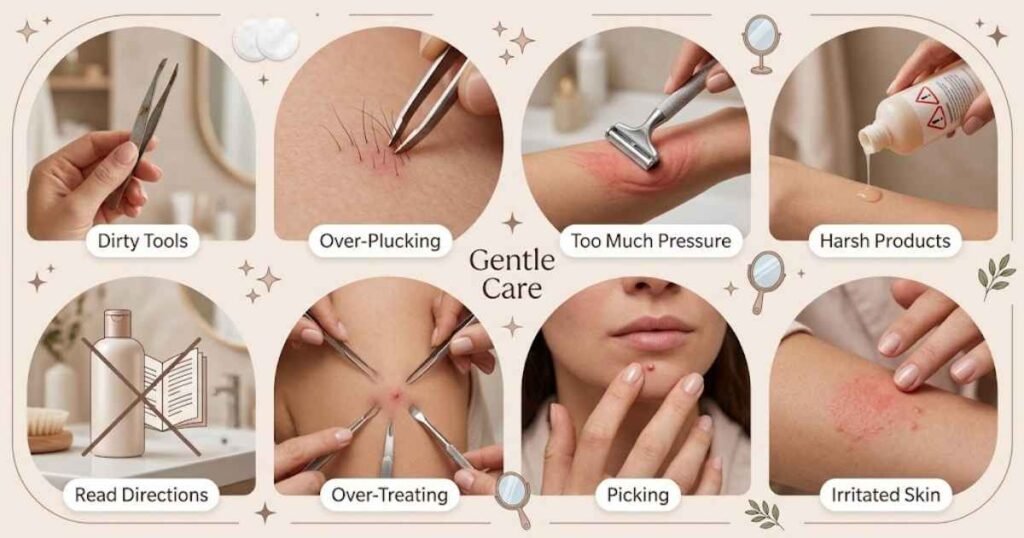
Even simple Stray Hair removal can cause problems when you rush. Small mistakes may lead to redness, bumps, broken hairs, or irritation.
Mistakes worth avoiding
- Pulling hairs repeatedly when they won’t release
- Using dirty tweezers
- Pressing razors too firmly
- Applying harsh products immediately afterward
- Removing hair from already irritated skin
- Picking at developing ingrown hairs
- Over-treating the same area
- Ignoring product instructions
Gentle technique usually beats aggressive effort. Your skin doesn’t need a wrestling match with one stubborn strand.
FAQ’s
Why do random hairs grow on the face?
Rogue Hair can appear because genetics, aging, hormones, and individual hair follicles influence normal growth patterns.
What is the best way to remove unwanted chin hair?
Tweezing works well for isolated Rogue Hair, while threading, shaving, or laser treatment suits repeated facial growth.
How can you prevent irritation after removing facial hair?
Use clean tools, gentle products, and avoid excessive rubbing to reduce Rogue Hair removal-related skin irritation.
How often should unwanted facial hair be removed?
Removal frequency depends on growth speed, hair removal method, and personal preference when managing recurring Rogue Hair.
When should excessive hair growth receive medical attention?
Sudden excessive growth may require professional evaluation, particularly when Rogue Hair increases rapidly or changes unexpectedly.
Conclusion
Managing Rogue Hair becomes much easier when you choose a method that matches your needs. A single stray strand doesn’t require an elaborate routine.. Waxing, threading, and epilation can provide longer-lasting stray hair removal when you need fewer maintenance sessions. For recurring unwanted facial hair, professional laser treatments may help reduce growth over time. Your skin deserves attention, too. Gentle preparation and aftercare can help minimize skin irritation, bumps, and ingrown hairs.
Changes in unwanted hair growth can sometimes relate to hormones, age, genetics, or natural hair growth patterns. Otherwise, a consistent personal grooming routine usually keeps Rogue Hair manageable. Whether you’re dealing with chin hair, neck hair, upper lip hair, or excess body hair, the right approach can keep your skin looking clean and smooth. With practical hair removal tips for sensitive skin, you can manage Rogue Hair comfortably and confidently.

HairVist is a helpful destination for hair care tips, hairstyle ideas, and beauty inspiration, managed by Ava Reynolds, an SEO content writer with 2 years of experience, focused on creating simple, useful, and engaging content that helps readers learn more about hair care and styling.
1 thought on “10 Proven Ways to Manage Rogue Hair and Unwanted Growth”