
Dealing with Lice in Blonde Hair can feel frustrating, especially when tiny insects blend with lighter strands. Still, careful checking can make the process much easier. Knowing what to look for helps you spot live lice, nits in blonde hair, and lice eggs near the scalp. With the right lice removal for blonde hair approach, you can handle the problem calmly and protect healthy-looking hair.
A good routine combines careful inspection, nit removal, and suitable treatment. You’ll also want simple head lice prevention habits to reduce another infestation. Whether you’re learning how to check blonde hair for lice or looking for safe lice treatment at home, small steps matter. This guide covers practical ways to identify, treat, and manage Lice in Blonde Hair while keeping your routine simple, clear, and manageable. It also helps you avoid unnecessary products and rushed decisions when treating the scalp at home.
What Lice in Blonde Hair Look Like
At first glance, Lice in Blonde Hair can be surprisingly difficult to notice. Adult head lice are usually tiny, wingless insects that crawl close to the scalp. Their color can range from grayish-white to tan or brown, while freshly laid eggs often look like tiny pale or yellowish-brown specks attached firmly to individual hairs.
Knowing what you’re looking for makes lice removal for blonde hair much easier. Unlike loose flakes, nits stay attached to the hair shaft.
What to look for
- Live lice: Small, moving insects close to the scalp.
- Lice eggs: Tiny oval structures attached firmly to individual hairs.
- Nits in blonde hair: Often appear as small yellow, beige, or brownish dots.
- Lice eggs in blonde hair: Usually sit close to the scalp where warmth helps them develop.
- Scalp lice: May move quickly when you separate the hair.
- Lice crawling on scalp: Can be easier to see under bright natural or direct light.
If you’re wondering what do lice look like in blonde hair, focus on movement and attachment rather than color alone. A stationary speck isn’t automatically a louse or nit.
Why Lice Can Be Hard to Spot in Blonde Hair
Blonde hair creates a visual camouflage effect. Small lice can blend with lighter strands, especially when the hair has highlights, lowlights, or multiple shades.
That doesn’t mean Lice in Blonde Hair are harder to treat. The main challenge involves detecting them accurately.
Several factors can make inspection tricky:
- Light-colored lice may blend with blonde strands.
- Fine hair can make individual nits difficult to distinguish.
- Hair products may create tiny particles that resemble nits.
- Highlights can make color differences harder to notice.
- Nits close to the scalp may hide beneath dense hair.
- Fast-moving live lice can disappear between strands.
For how to find lice in blonde hair, work in small sections instead of scanning the entire head at once. Good lighting and a fine-toothed lice comb can make a major difference.
Common Signs of Lice and Nits in Blonde Hair
Sometimes the first clue isn’t seeing a bug at all. An itchy scalp may appear before you notice head lice in blonde hair.
Common signs include:
- Persistent scalp itching
- A crawling or tickling sensation
- Scratching around the ears
- Scratching near the neckline
- Visible live lice
- Firmly attached nits
- Small irritated areas from scratching
- Difficulty sleeping because of scalp itching
- A sensation of something moving through the hair
The severity can vary. Some people experience noticeable itching while others may have few symptoms.
Quick symptom check
| Sign | What it may indicate |
| Itchy scalp | Possible lice activity |
| Moving insects | Strong evidence of live lice |
| Firmly attached specks | Possible nits |
| Loose white flakes | More consistent with dandruff |
| Scratched scalp | Possible irritation |
If you’re checking for symptoms of head lice, don’t rely on itching alone. A careful scalp and hair inspection provides better confirmation.
How to Check Blonde Hair for Head Lice
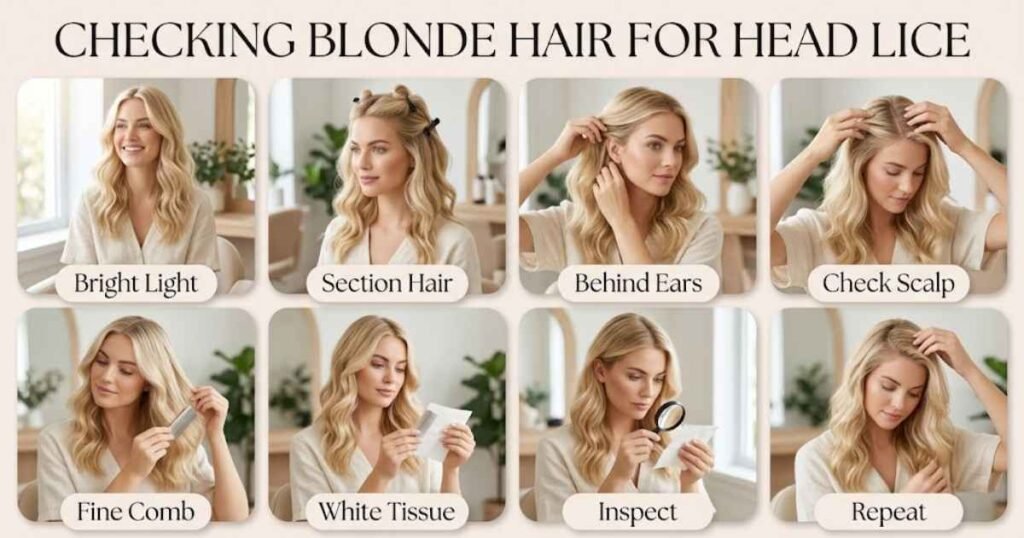
A careful inspection works better than simply running your fingers through the hair. If you’re learning how to check blonde hair for lice, choose a bright area and take your time.
Follow these steps
- Sit under bright natural light or use a strong lamp.
- Separate the hair into several small sections.
- Start behind the ears and around the neckline.
- Examine the hair close to the scalp.
- Look for movement between individual strands.
- Check for firmly attached nits.
- Use a fine-toothed lice comb for blonde hair.
- Wipe the comb onto a white tissue after each pass.
- Inspect anything removed from the hair.
- Repeat the process across the entire scalp.
A magnifying glass can help when you’re unsure about a tiny speck. Don’t rush this step. Accurate identification makes Lice in Blonde Hair treatment much more effective.
How to Tell Lice From Dandruff in Blonde Hair
Dandruff and nits can look similar when you’re inspecting light-colored hair. The biggest difference involves how firmly they attach to the hair.
When learning how to tell lice from dandruff, check whether the material moves easily.
Lice vs. dandruff
| Feature | Nits | Dandruff |
| Attachment | Firmly attached | Usually loose |
| Shape | Small and oval | Irregular flakes |
| Movement | Doesn’t move by itself | Easily falls or shifts |
| Location | Often close to scalp | Can appear throughout hair |
| Removal | Requires sliding or combing | Usually brushes away |
| Texture | Firm | Flaky |
A white speck that falls away with a light brush is less likely to be a nit. However, unusual scalp debris can look convincing, so inspect carefully.
Best Ways to Remove Lice From Blonde Hair
Once you’ve confirmed Lice in Blonde Hair, combine an appropriate treatment with thorough combing. Removing only visible bugs may leave eggs behind.
The most useful approach usually includes:
- Identifying live lice first
- Choosing an appropriate lice treatment
- Following product directions carefully
- Using a fine-toothed nit comb
- Rechecking the scalp afterward
- Repeating treatment when product directions call for it
- Cleaning recently used personal items
- Checking close household contacts when appropriate
Removing lice from hair takes patience. Think of it like clearing tiny weeds from a garden. You don’t want to remove only what you can see. You also need to deal with what remains attached.
For persistent cases, discuss available prescription lice treatment options with a healthcare professional.
Safe Lice Treatment Options for Blonde Hair

Treating Lice in Blonde Hair doesn’t require changing your hair color or using harsh household chemicals. Choose products specifically intended for head lice and follow their directions.
Common treatment approaches
Over-the-counter treatment:
Many families start with an over-the-counter lice treatment or over-the-counter lice medicine. Follow the package instructions carefully, including directions about repeat applications.
Prescription treatment:
A healthcare professional may recommend prescription lice treatment when an OTC option isn’t appropriate or hasn’t worked as expected.
Wet combing:
Wet combing uses conditioner and a fine-toothed comb to remove live lice and nits mechanically.
Professional treatment:
Some families prefer professional lice removal when extensive combing feels difficult or time-consuming.
Avoid using household insecticides, flammable substances, or unapproved chemicals on the scalp. More product doesn’t mean better treatment.
How to Remove Nits From Blonde Hair
Nits can remain attached even after live lice are gone. That’s why nit removal remains an important part of managing lice removal for blonde hair.
For how to remove nits from blonde hair, work systematically.
A practical method
- Dampen the hair.
- Apply enough conditioner to reduce friction.
- Divide hair into small sections.
- Start close to the scalp.
- Place the nit comb against the hair shaft.
- Pull the comb slowly toward the ends.
- Wipe the comb after every pass.
- Remove stubborn nits individually when necessary.
- Repeat until each section has been checked.
Nits can cling tightly to hair because they attach with a sticky substance. Regular brushing may not remove them.
If you see lice eggs in blonde hair, don’t assume every pale speck is an egg. Check its shape, location, and attachment to the hair.
MUST READ: 10 Proven Hair Palace Services for Better Hair Care
How to Comb Blonde Hair After Lice Treatment
Good combing can make lice removal for blonde hair easier to manage after treatment. Blonde hair often shows small particles clearly, yet the light strands can also make tiny lice difficult to distinguish.
Make combing easier
- Use damp hair with conditioner if appropriate for your chosen method.
- Divide thick hair into manageable sections.
- Comb from the scalp toward the ends.
- Overlap each pass slightly.
- Clean the comb between passes.
- Focus carefully behind the ears and near the neckline.
- Continue until every section has received attention.
- Repeat checks according to treatment directions.
Wet combing for lice can also help physically remove live lice and nits. A quality fine-toothed comb works best when you use it patiently rather than rushing through the hair.
Home Care Tips for Lice in Blonde Hair
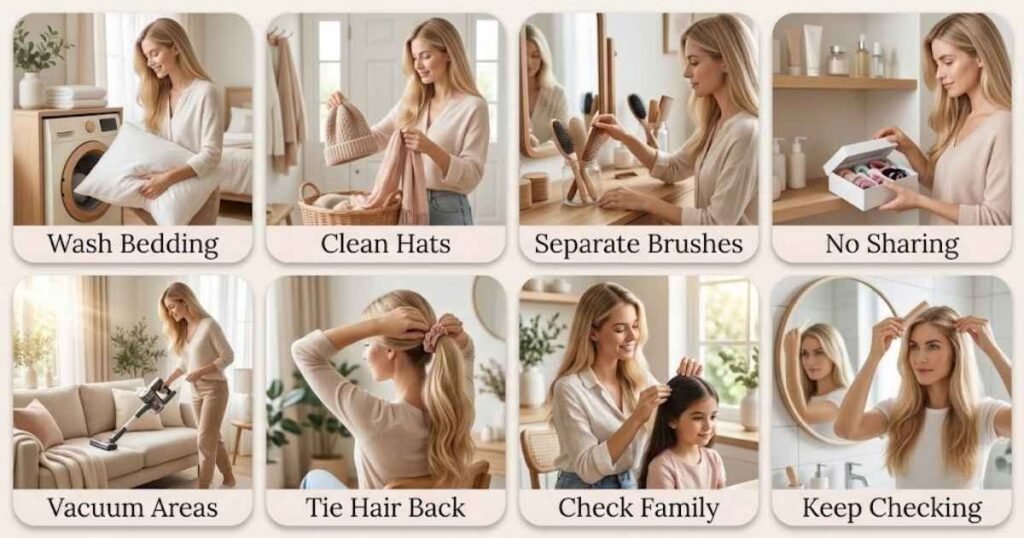
Effective lice treatment at home involves more than treating the scalp. A few simple habits can reduce the chance of spreading lice between household members.
Helpful home-care steps
- Wash recently used pillowcases and bedding according to care instructions.
- Clean recently used hats, scarves, and hair accessories.
- Avoid sharing brushes and combs.
- Don’t share hats or personal hair items.
- Vacuum areas where the affected person regularly rests.
- Keep long hair tied back during an active infestation.
- Check household members when exposure has occurred.
- Continue scalp checks after treatment.
You don’t need to panic-clean your entire house. Head lice primarily spread through direct hair-to-hair contact. Focus your effort on recently used personal items and close contact.
How to Prevent Lice From Coming Back
After treating Lice in Blonde Hair, prevention becomes the next priority. The goal isn’t to create a perfect lice-proof environment. Instead, reduce opportunities for lice to move from one person’s hair to another.
Useful lice prevention tips
- Avoid head-to-head contact during an active infestation.
- Don’t share combs or brushes.
- Don’t share hats, hair clips, or similar accessories.
- Check children’s hair after known exposure.
- Keep long hair secured during close-contact activities.
- Teach children not to share personal hair items.
- Follow treatment instructions completely.
- Perform follow-up checks for live lice and nits.
- Wash recently used bedding and clothing appropriately.
- Continue head lice prevention habits when exposure remains possible.
If you’re wondering how to prevent lice from coming back, consistent follow-up checks matter. Treating once and immediately returning to old habits can create another opportunity for transmission.
When to See a Doctor for Head Lice
Most cases can be managed with appropriate treatment and careful combing. However, professional guidance can help when the situation doesn’t improve or the diagnosis remains uncertain.
Consider asking a healthcare professional:
- If live lice remain after correctly following treatment directions.
- If repeated treatments haven’t worked.
- If the scalp develops significant sores or irritation.
- If scratching causes broken skin.
- If you’re unsure whether the infestation is actually lice.
- If a child is very young and you’re unsure which treatment is suitable.
- If you need guidance about prescription options.
- If you aren’t sure when to see a doctor for head lice.
A professional can help confirm whether you’re dealing with head lice and nits or another scalp issue.
Most importantly, don’t confuse persistent itching with proof of an active infestation. Confirm live lice whenever possible. With careful inspection, appropriate treatment, and consistent nit combing, Lice in Blonde Hair can be handled without turning your entire routine upside down.
Can Blonde Hair Get Lice Even If It Is Colored?
Hair color doesn’t make blonde hair immune to head lice. lice removal for blonde hair can affect natural blonde, highlighted, bleached, or dyed hair. Lice feed on blood from the scalp rather than the hair’s pigment, so changing the shade doesn’t reliably prevent an infestation.
If you’re wondering can lice live in dyed blonde hair, the answer is yes. Hair dye may alter the appearance of individual strands, yet it doesn’t provide dependable lice protection. Likewise, does hair color kill lice isn’t a reliable treatment strategy.
Keep these points in mind:
- Dyed hair can still develop a lice infestation.
- Bleached hair doesn’t guarantee protection.
- Hair color isn’t a substitute for lice medicine.
- Check the scalp after known exposure.
- Look for live lice rather than relying only on itching.
- Follow the directions for any approved treatment you use.
So, don’t assume a new hair color solves the problem. Proper identification and targeted care remain important for Lice in Blonde Hair.
Where Should You Check First During a Blonde Hair Inspection?
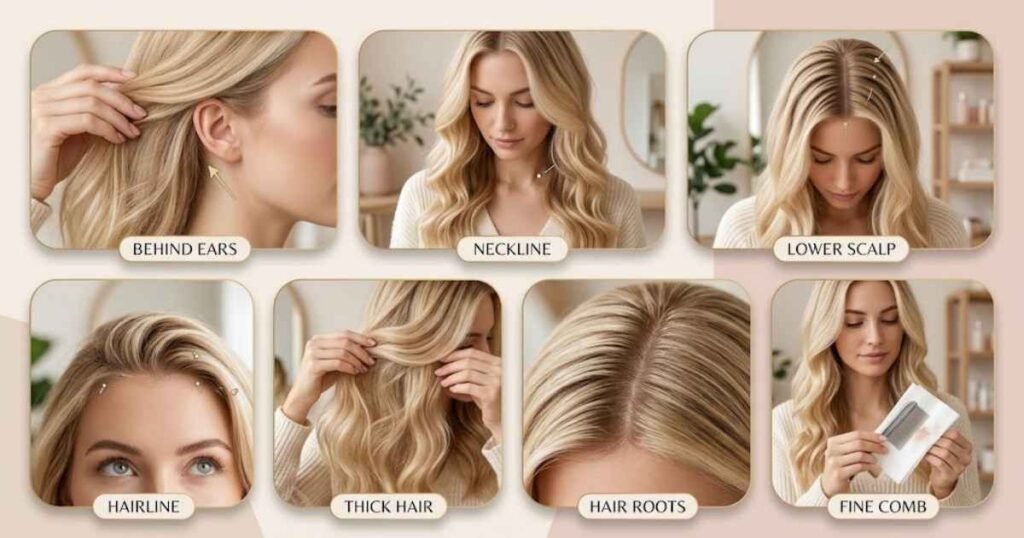
A thorough inspection becomes easier when you know which areas deserve extra attention. lice removal for blonde hair often hide close to the scalp, making certain locations more useful to examine than others.
Start with areas where hair tends to stay warm and relatively protected:
- Behind both ears
- Around the neckline
- Near the lower scalp
- Along the hairline
- Around thicker sections of hair
- Close to the roots
Use bright lighting and separate the hair into narrow sections. If you’re learning how to find lice in blonde hair, avoid scanning only the visible surface. Tiny insects can move between underlying strands.
A fine-toothed comb can also reveal material that’s difficult to spot visually. Wipe the comb onto a white tissue after each pass. This simple trick can make small insects or debris easier to examine.
What Should You Do After a Possible Lice Exposure?
A possible exposure doesn’t automatically mean you have Lice in Blonde Hair. Instead of immediately applying treatment, start with a careful inspection.
If someone close to you has head lice, take these practical steps:
- Check the scalp under bright light.
- Examine the hair near the roots.
- Look for live lice and firmly attached nits.
- Avoid sharing brushes, hats, and hair accessories.
- Keep long hair secured during close contact.
- Check again if symptoms develop.
- Follow professional or product guidance if live lice appear.
You don’t need to turn your home upside down after every possible exposure. Focus on direct hair contact and recently used personal items.
This approach can also help with preventing lice from spreading. Early checking gives you a clearer picture of whether treatment is actually necessary.
Can Lice Cause Hair Damage in Blonde Hair?
The insects themselves don’t typically damage the hair shaft in the same way that chemical processing or excessive heat can. However, frequent scratching and aggressive attempts at removing lice from hair may irritate the scalp and create broken areas.
Blonde hair may already have dryness or weakness from bleaching, highlighting, or frequent styling. That’s why gentle handling matters during lice removal for blonde hair treatment.
Protect your hair while managing lice
- Comb gently rather than pulling aggressively.
- Detangle small sections before nit combing.
- Avoid unnecessary heat styling during treatment.
- Don’t scratch irritated areas.
- Use a suitable conditioner when your chosen combing method allows it.
- Follow treatment directions instead of repeatedly applying products.
- Give processed hair extra care after the infestation is controlled.
If you notice significant scalp irritation, sores, or worsening discomfort, professional medical advice can help determine whether another scalp problem exists alongside Lice in Blonde Hair.
FAQ’s
How Can You Tell If Blonde Hair Has Head Lice?
Lice in Blonde Hair may appear as moving insects or attached nits near the scalp.
Can Hair Color Kill Head Lice?
Dye doesn’t reliably eliminate Lice in Blonde Hair, so use an appropriate lice treatment instead.
How Often Should You Comb Hair After Treatment?
For Lice in Blonde Hair, follow treatment directions and continue nit combing during follow-up checks.
What Helps Remove Nits From Blonde Hair?
A comb can help remove Lice in Blonde Hair eggs when used consistently and carefully.
When Should You Seek Medical Advice for Head Lice?
Seek medical advice when Lice in Blonde Hair persist after treatment or irritation becomes severe.
Conclusion
Managing Lice in Blonde Hair becomes easier when you know what signs deserve attention. Check the scalp carefully, look for live lice, and inspect firmly attached nits rather than relying on itching alone. A quality lice comb for blonde hair can support thorough nit combing, while an appropriate blonde hair lice treatment can address an active infestation. Patience matters because removing lice and eggs takes careful, repeated attention.
After treatment, keep checking the hair and follow the product directions closely. Good lice prevention tips can also reduce the chance of another problem. Avoid sharing combs, brushes, hats, and other personal hair items during an active case. If symptoms continue or you still see live lice, consider professional guidance. With consistent care and smart habits, Lice in Blonde Hair can become a manageable issue instead of a stressful daily concern. Consistent follow-up makes treatment more effective over time.

HairVist is a helpful destination for hair care tips, hairstyle ideas, and beauty inspiration, managed by Ava Reynolds, an SEO content writer with 2 years of experience, focused on creating simple, useful, and engaging content that helps readers learn more about hair care and styling.
1 thought on “10 Proven Lice in Blonde Hair Removal Tips”