
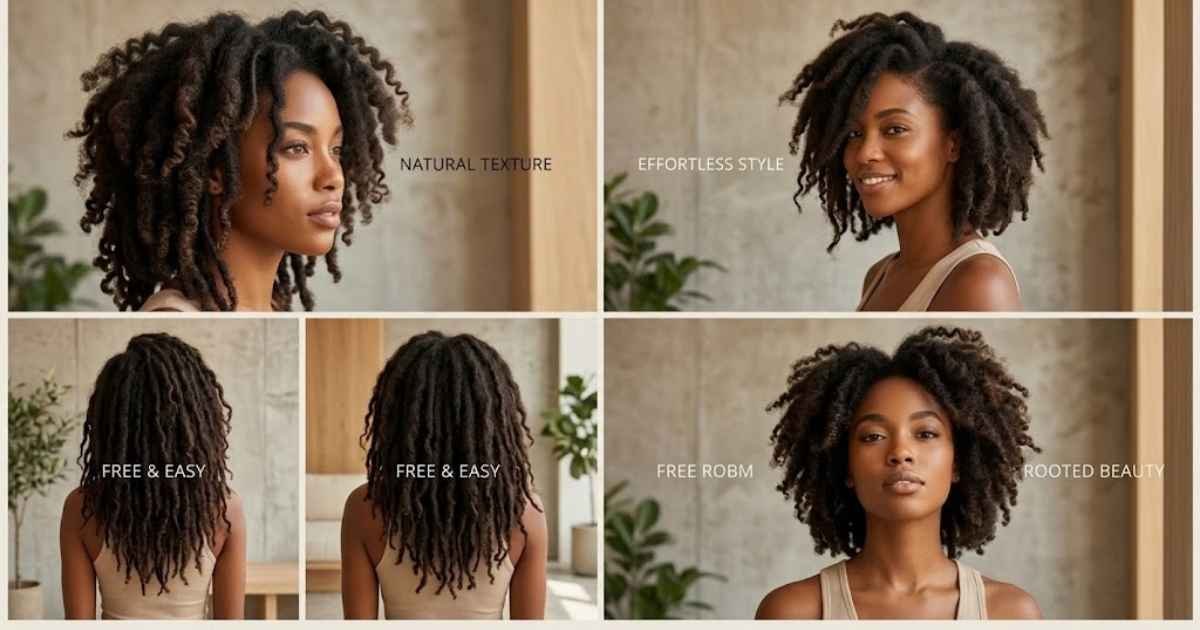
Freeform Hair gives you a natural way to grow locs with less manipulation and more freedom. Instead of chasing perfect sections, you let your texture shape the journey. Freeform locs can form gradually as your hair grows, tangles, and matures. This approach suits anyone who loves natural hairstyles with personality and movement. From short freeform locs to long freeform dreadlocks, every journey can look different.
Your routine still matters. Clean roots, gentle washing, light moisture, and careful handling help support healthy Freeform Hair. You can also try semi-freeform locs, beads, buns, or tapered sides while keeping an organic appearance. Whether you’re starting freeform locs for beginners or growing mature freeform locs, patience makes the process easier. With simple freeform loc care and realistic expectations, your natural loc journey can develop into a distinctive style that feels comfortable, expressive, and genuinely yours without constant styling or strict rules.
What Is Freeform Hair and How Does It Work?
Freeform Hair is a natural approach to growing locs with minimal manipulation. Instead of creating perfectly separated sections or getting regular retwists, you allow your hair to mat, coil, and form its own pattern over time.
This style works especially well for people who want their natural hair texture to guide the look. Your strands gradually combine as you wash, moisturize, and care for your hair without constantly reshaping the roots.
Think of Freeform Loc Hairstyles as letting your locs take their own path. Every head develops differently, which makes the finished result highly personal.
How Freeform Locs Develop
- Hair grows with minimal combing and separation.
- Natural oils help strands stick together.
- Washing encourages the hair to tighten and mature.
- Different textures create different loc shapes.
- Roots may remain loose while the lengths become more compact.
- Over time, natural dreadlocks develop their own pattern.
| Freeform Hair | Traditional Locs |
| Minimal manipulation | Regular maintenance |
| Organic sections | Defined sections |
| Little or no retwisting | Frequent retwisting |
| Naturally changing shapes | Controlled appearance |
| Individual growth pattern | More uniform loc pattern |
The goal isn’t perfection. Freeform Loc Hairstyles celebrates texture, individuality, and organic loc development.
Why Are Freeform Locs Popular in the US?
Across the US, more people are choosing natural hairstyles that reduce daily styling demands. Freeform locs fit that lifestyle because they allow your hair to grow with less routine manipulation.
The style also offers plenty of room for personal expression. Some people prefer completely unretwisted locs, while others combine organic growth with occasional shaping.
Another reason for the popularity is convenience. Low-maintenance locs can reduce the time spent separating, twisting, and styling your hair.
Why People Choose Freeform Styles
- They highlight natural hair texture.
- They require less frequent manipulation.
- They create an individual appearance.
- They work across different hair lengths.
- They can support a relaxed hair routine.
- They offer many creative styling options.
- They complement natural locs and organic locs.
- They can suit both men and women.
For someone beginning a freeform hair journey, the biggest attraction is often freedom. You aren’t trying to make every loc look identical. Instead, you give your natural hair room to develop.
10 Amazing Freeform Hair Ideas for a Natural Look
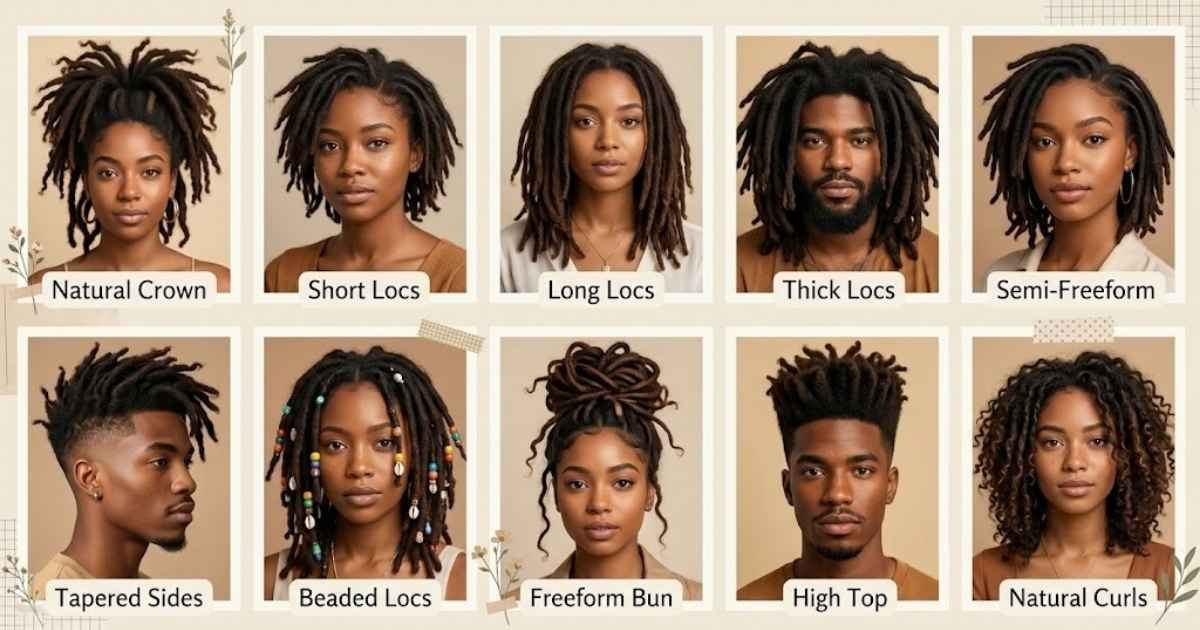
The beauty of Freeform Hair comes from its variety. Your texture, length, density, and growth pattern can completely change the final appearance.
Whether you have short hair or mature freeform locs, there’s plenty of room to personalize your look.
Natural Crown Freeform Locs
Natural crown locs create a fuller appearance around the top of your head. This approach keeps the sides and back relatively natural while allowing the crown to develop more volume.
It works particularly well if you enjoy a soft, organic silhouette rather than sharply defined sections.
Style tips:
- Let crown locs grow without frequent retwisting.
- Keep the scalp clean.
- Moisturize dry areas lightly.
- Allow different loc sizes to develop naturally.
- Avoid excessive pulling around the roots.
This look highlights natural freeform locs while keeping the overall shape balanced.
Short Freeform Locs
Short Freeform Loc Hairstyles creates a fresh, textured appearance without requiring long growth. It’s also a practical choice if you’re starting your loc journey from a shorter haircut.
Your early stages may look uneven. That’s completely normal. As your strands mature, small sections can combine and develop more visible freeform shapes.
Great for:
- Beginners
- Short natural hair
- Low-maintenance routines
- Men and women
- Early freeform loc journeys
If you’re researching freeform locs with short hair, focus on consistency rather than quick results.
Long Freeform Locs
Long locs create dramatic movement and plenty of styling flexibility. Once your Freeform Hair becomes mature, you can experiment with buns, ponytails, half-up styles, and other looks.
Long freeform dreads may also become heavier. Therefore, gentle handling becomes increasingly important.
Keep long locs healthy by:
- Washing the scalp regularly.
- Drying locs thoroughly.
- Moisturizing when needed.
- Avoiding excessive tension.
- Sleeping with suitable hair protection.
If you’re wondering about freeform locs with long hair, remember that patience plays a major role in length retention.
Thick Freeform Locs
Thick freeform dreads form when multiple strands naturally combine into larger sections. This creates a bold appearance with plenty of texture.
Your natural hair density can influence how quickly your locs become thick. Avoid forcing sections together simply to achieve a particular size.
Thick locs often offer:
- Strong visual texture
- A fuller appearance
- Fewer individual sections
- A distinctly organic finish
- More dramatic styling potential
These freeform dread styles work especially well for people who want their natural texture to remain visible.
Semi-Freeform Locs
Semi-freeform locs offer a middle ground between completely organic growth and traditional loc maintenance.
You can allow most of your hair to grow naturally while occasionally separating sections, cleaning up the neckline, or shaping certain areas.
| Completely Freeform | Semi-Freeform |
| Little manipulation | Occasional manipulation |
| Organic sections | Some section control |
| No regular retwist | Optional maintenance |
| Highly unpredictable | More controlled shape |
This option suits people who love freeform locs vs traditional locs but still want a little structure.
Freeform Locs With Tapered Sides
A tapered haircut can create contrast between organic locs and cleaner sides. The top remains natural while the sides gradually become shorter.
This style has a polished edge without removing the character of Freeform Loc Hairstyles.
Consider this look if you want:
- A cleaner outline
- More definition around the face
- A modern silhouette
- Natural locs on top
- Easier side maintenance
The contrast between freeform locks and tapered sides can make the locs appear even fuller.
Freeform Locs With Beads
Beads add personality without requiring major changes to your loc structure. Choose lightweight accessories that won’t create excessive tension.
Wooden, neutral, metallic, or colorful beads can all create different moods.
Try beads on:
- A few front locs
- Random individual locs
- Thicker mature locs
- Loc ends
- Small sections near the sides
Because freeform hairstyles already have organic movement, simple accessories often make a stronger visual impact.
Freeform Locs With a Bun
A bun gives longer Freeform Loc Hairstyles a practical styling option. Gather your locs gently and secure them without pulling tightly against the scalp.
This style works well for casual days, work settings, and warm weather.
For a comfortable bun:
- Gather the locs loosely.
- Avoid pulling the roots too tightly.
- Wrap the locs into a relaxed bun.
- Secure them with a soft accessory.
- Release the style if your scalp feels uncomfortable.
A loose bun keeps the natural character of mature locs while adding structure.
Freeform Locs With a High Top
High-top freeform locs focus attention on the crown. The sides stay shorter while the top develops volume and texture.
This approach works particularly well for freeform locs for men, although anyone can adapt the shape to their own hair.
The key is maintaining enough length on top to create visible movement. Regular scalp cleansing still matters even when you’re avoiding traditional retwisting.
Freeform Locs With Natural Curls
Natural curls can give freeform locs a softer and more textured appearance. Instead of forcing every strand into a uniform pattern, allow your curl pattern to influence the developing locs.
This look works beautifully for people with naturally curly or coily hair.
To support the texture:
- Avoid excessive brushing.
- Keep the scalp clean.
- Use lightweight moisture.
- Protect the hair while sleeping.
- Handle developing locs gently.
Your Freeform Loc Hairstyles texture can become one of the most distinctive parts of your natural loc journey.
How to Start Freeform Hair Naturally
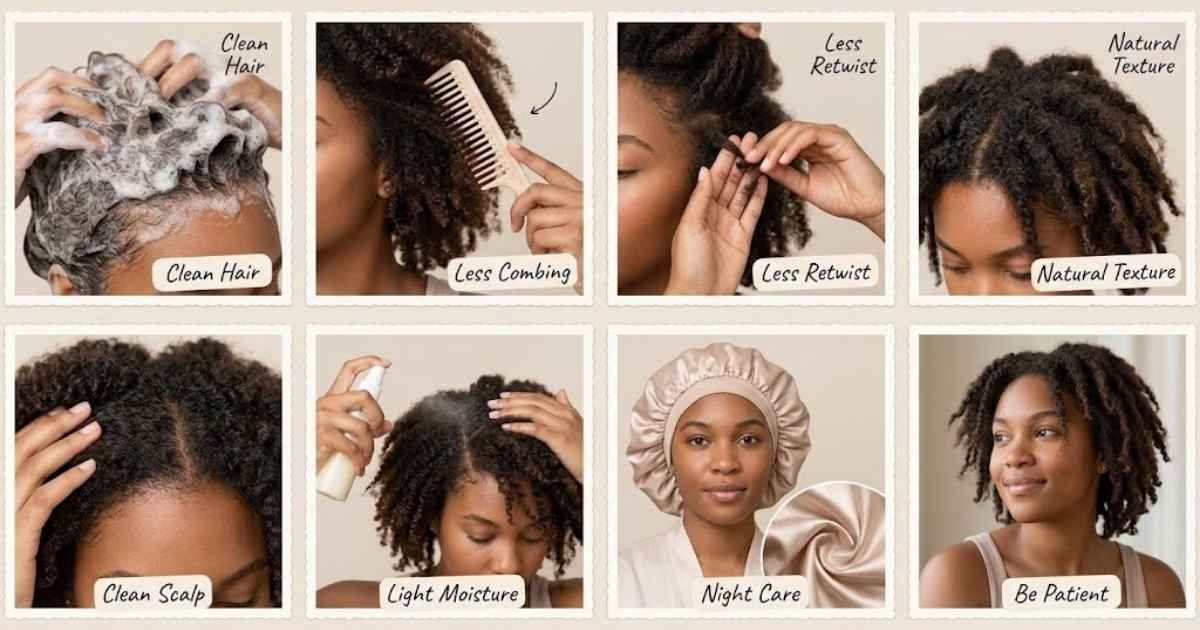
Starting Freeform Loc Hairstyles doesn’t require an elaborate setup. The process mainly involves reducing manipulation and allowing your natural texture to guide the development of your locs.
If you’re searching for how to start freeform locs, begin with clean, healthy hair and a realistic understanding of the process.
Simple Steps for Beginners
1. Start with clean hair
Wash your hair with a residue-free cleanser. Clean roots provide a better foundation for your freeform loc journey.
2. Stop frequent combing
Let your strands interact naturally. Constant combing prevents sections from developing organically.
3. Reduce retwisting
Traditional locs often rely on regular retwisting. Freeform locs without retwist take a different approach by allowing the roots to develop naturally.
4. Let your texture lead
Don’t force every section to match. Your curl pattern and density will influence your natural loc formation.
5. Keep your scalp clean
Clean hair remains important throughout the process. Learn how to wash freeform locs without aggressively separating or unraveling developing sections.
6. Moisturize carefully
Dry hair can become brittle. Practice moisturizing freeform locs with lightweight products that don’t leave heavy buildup.
7. Protect your hair at night
A satin or silk covering can help reduce friction while you sleep. This simple step can support healthier-looking locs.
8. Be patient
If you’re asking how long do freeform locs take, there’s no universal timeline. Hair texture, density, length, washing habits, and individual growth patterns all influence development.
ALSO READ: 10 Powerful Gummy Hair Benefits for Hair Growth
Basic Freeform Hair Routine
| Routine | Purpose |
| Regular cleansing | Keeps the scalp fresh |
| Gentle drying | Prevents lingering moisture |
| Light moisturizing | Helps manage dryness |
| Minimal manipulation | Supports natural formation |
| Night protection | Reduces friction |
| Occasional separation | Optional for semi-freeform styles |
Freeform Loc Maintenance Tips
Good freeform loc maintenance doesn’t mean constantly changing the shape. Instead, focus on keeping your scalp and hair healthy.
- Wash according to your scalp’s needs.
- Don’t leave locs damp for long periods.
- Avoid heavy product buildup.
- Don’t pull tightly on mature locs.
- Separate only when necessary.
- Trim damaged ends when appropriate.
- Pay attention to scalp comfort.
- Adjust your routine as your locs mature.
A healthy freeform loc routine should feel manageable rather than complicated. Your goal is to support natural dreadlock growth while preserving your individual texture.
Freeform Hair vs. Traditional and Semi-Freeform Locs
Understanding the difference can help you choose an approach that matches your lifestyle.
| Feature | Freeform | Semi-Freeform | Traditional |
| Sectioning | Mostly natural | Some control | Clearly defined |
| Retwisting | Usually avoided | Occasional | Common |
| Appearance | Organic | Balanced | Uniform |
| Maintenance | Low | Moderate | More structured |
| Growth pattern | Highly individual | Partly guided | Controlled |
Whether you choose freeform locs vs semi-freeform locs depends on how much structure you want.
The same applies when comparing freeform locs vs traditional locs. One approach prioritizes organic development, while the other offers greater control over section size and appearance.
Ultimately, Freeform Loc Hairstyles gives you space to embrace your natural hair journey. Your locs may change shape, combine, shrink, or mature in unexpected ways. That’s part of the appeal.
With consistent freeform loc care, patience, and a healthy scalp routine, your hair can develop a distinctive look that feels genuinely yours.
Freeform Hair Care Tips for Healthy Locs
Healthy Freeform Loc Hairstyles needs consistency more than constant styling. Since freeform locs develop with minimal manipulation, your main job is to support your scalp, protect your strands, and avoid unnecessary buildup.
A simple routine can keep your locs comfortable while allowing their natural shape to develop.
Essential Freeform Loc Care Tips
- Clean your scalp regularly without aggressive scrubbing.
- Use lightweight products instead of heavy creams.
- Dry your locs completely after washing.
- Protect your hair while sleeping.
- Avoid excessive pulling or tight hairstyles.
- Separate locs only when they become uncomfortable or overly combined.
- Trim damaged ends when necessary.
- Pay attention to changes in scalp comfort or dryness.
Think of freeform loc maintenance like tending a garden. You don’t need to control every branch. You simply provide the conditions that help healthy growth.
How to Wash and Maintain Freeform Hair
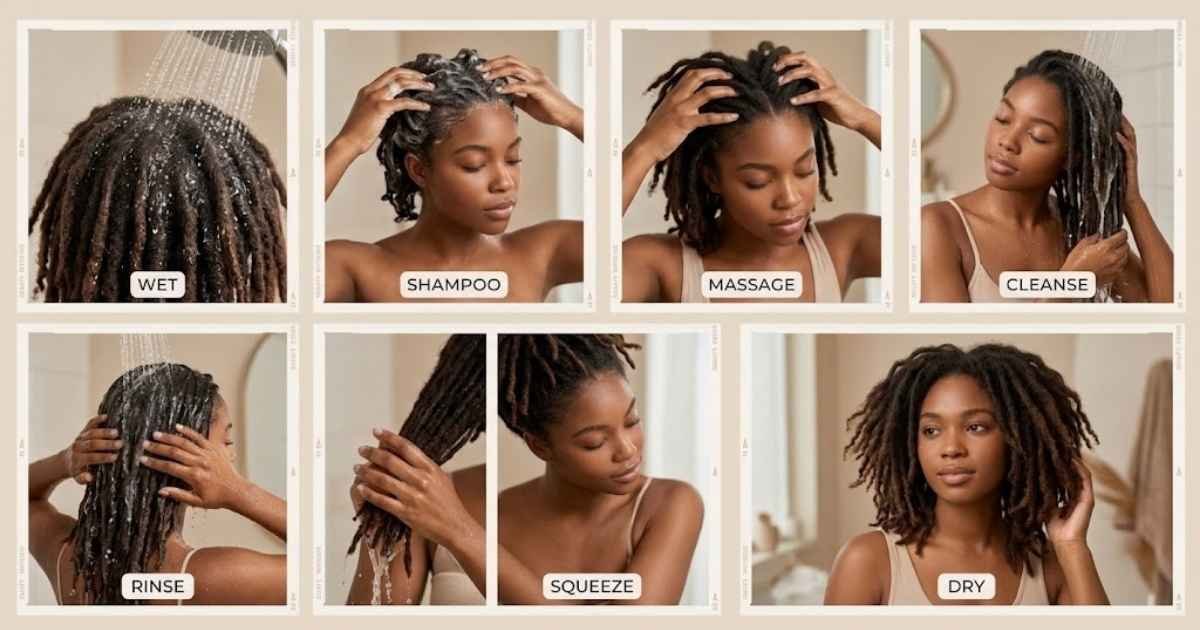
Washing Freeform Loc Hairstyles keeps the scalp fresh while removing sweat, oil, and product residue. You don’t need to avoid shampoo simply because you’re growing freeform dreadlocks.
The key is using a gentle technique that cleans the scalp without rough handling.
Simple Washing Steps
- Wet your hair thoroughly with warm water.
- Apply a gentle, residue-free shampoo to your scalp.
- Massage the scalp carefully with your fingertips.
- Allow the cleanser to move through the locs.
- Rinse until the water runs clear.
- Gently squeeze excess water from the locs.
- Dry your hair completely before covering it.
If you’re learning how to wash freeform locs, focus on the scalp first. A clean scalp provides a better foundation for a healthy freeform loc journey.
Avoid twisting or aggressively separating the locs during every wash. Your goal is cleanliness, not perfect uniformity.
How Often Should You Retwist Freeform Hair?
Most people choose Freeform Loc Hairstyles specifically because they don’t want frequent retwisting. Completely freeform locs can develop without routine retwists, while semi-freeform locs may receive occasional shaping.
There’s no universal retwist schedule because the right approach depends on your desired appearance and hair texture.
| Approach | Retwisting Pattern |
| Freeform locs | Little to none |
| Semi-freeform locs | Occasional |
| Traditional locs | More regular |
| Personal shaping | Based on preference |
If you want truly freeform locs without retwist, allow your roots to develop naturally. You can still clean your scalp and manage loose strands without turning the process into a traditional retwist routine.
Too much manipulation can also work against the organic appearance you’re trying to create.
Freeform Hair Styles for Different Hair Textures
Your natural texture plays a major role in how Freeform Loc Hairstyles develops. Curl pattern, density, strand thickness, and moisture levels can all influence the final appearance.
Rather than forcing every texture into one pattern, work with what your hair naturally does.
Texture-Based Styling Ideas
- Coily hair: Let tight coils form compact, textured locs.
- Curly hair: Preserve visible curl patterns around developing locs.
- Thick hair: Allow larger sections to combine naturally.
- Fine hair: Use gentle handling to reduce unnecessary breakage.
- Dense hair: Experiment with organic sections and fuller shapes.
- Mixed textures: Let different areas develop at their own pace.
Your freeform hair texture can make every loc look slightly different. That’s part of the charm.
For natural freeform locs, avoid comparing your progress too closely with someone else’s. Two people can follow similar routines and develop completely different loc patterns.
Freeform Hair for Short, Medium, and Long Lengths
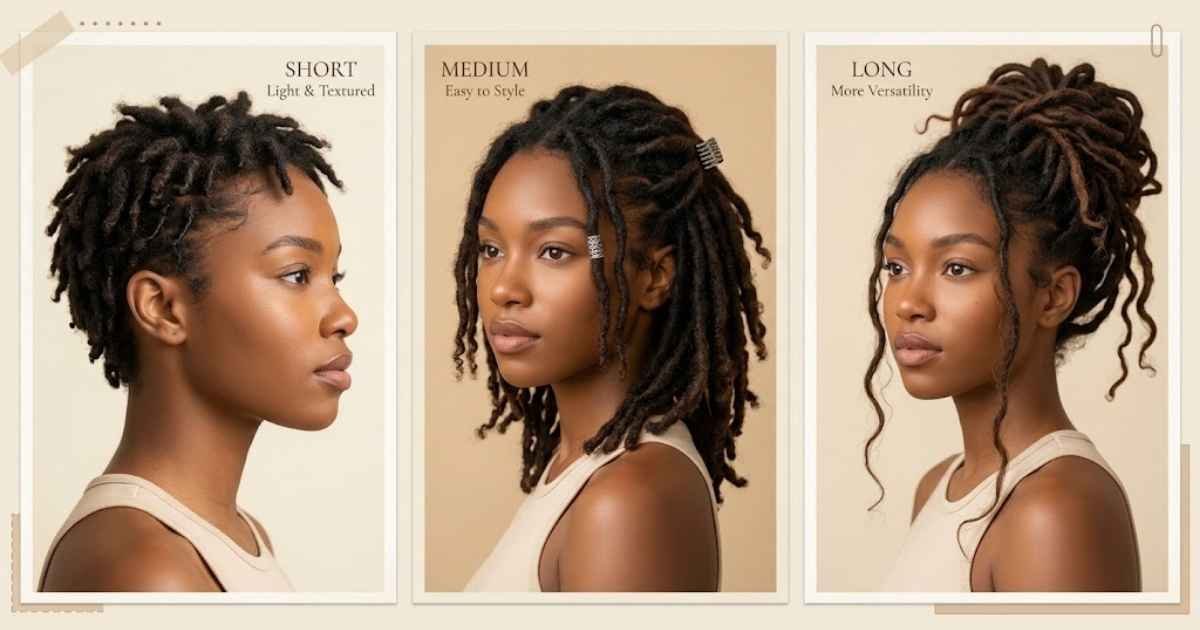
Length changes the way Freeform Loc Hairstyles looks and how you can style it. Short locs tend to appear compact and textured, while longer locs offer more movement and versatility.
Short Freeform Hair
Short locs work well for beginners who want to start their natural hair journey without waiting for long hair.
- Easy to wash
- Simple to protect
- Lightweight
- Great for high-top styles
- Easy to combine with tapered sides
Medium-Length Freeform Hair
Medium-length locs provide a useful balance between maintenance and styling options.
You can experiment with half-up styles, accessories, loose ponytails, and different loc arrangements. This stage also makes freeform loc styles easier to customize.
Long Freeform Hair
Long locs create more styling possibilities but require thoughtful handling.
- Loose buns
- High ponytails
- Half-up styles
- Beaded locs
- Wrapped styles
- Relaxed updos
Long freeform dreads can become heavier over time. Avoid repeatedly placing strong tension on the same sections.
How to Keep Freeform Locs Clean and Moisturized
Cleanliness and moisture balance matter throughout your Freeform Loc Hairstyles journey. Dirty hair doesn’t automatically create healthier locs. In fact, excessive buildup can make mature freeform locs feel heavy and uncomfortable.
A simple routine works best.
For Cleaner Locs
- Wash the scalp consistently.
- Rinse shampoo thoroughly.
- Avoid thick product layers.
- Check the roots for buildup.
- Dry the locs completely.
- Don’t cover damp hair for extended periods.
For Better Moisture
Moisturizing freeform locs doesn’t mean soaking them in heavy oils. Lightweight hydration often works better because excessive product can accumulate inside the locs.
Your routine might include:
- Water-based hydration
- Lightweight leave-in products
- Small amounts of suitable oils
- Gentle scalp massage
- Satin or silk protection at night
When practicing freeform dreadlock care, pay attention to how your hair responds. If a product leaves residue or makes your locs feel coated, simplify your routine.
Common Mistakes to Avoid With Freeform Hair
A natural approach doesn’t mean you can completely ignore your hair. Several common habits can interfere with healthy Freeform Loc Hairstyles development.
Avoid These Mistakes
Over-manipulating the roots: Constant twisting can prevent your hair from developing naturally.
Using too much product: Heavy creams and waxes can create buildup inside locs.
Washing too aggressively: Scrubbing roughly can cause unnecessary friction and unravel developing sections.
Keeping locs damp: Moisture trapped inside thick locs can create an unpleasant environment.
Copying someone else’s timeline: Natural loc growth varies widely from person to person.
Pulling mature locs tightly: Repeated tension can stress the roots and make styling uncomfortable.
Ignoring the scalp: Beautiful locs still start with a clean and comfortable scalp.
Separating every loc: Freeform styles don’t need perfect uniformity.
The biggest lesson is simple: freeform loc care should support your hair instead of constantly forcing it into a specific shape.
How Long Does Freeform Hair Take to Mature?
The timeline for Freeform Loc Hairstyles varies from person to person. Hair texture, density, length, washing habits, and daily manipulation can all influence how quickly locs develop.
Some people notice early grouping relatively soon, while others need much longer before their locs become compact and mature.
General Development Stages
| Stage | What You May Notice |
| Beginning | Loose coils and natural tangling |
| Early development | Small sections begin forming |
| Developing locs | Sections become firmer |
| Maturing stage | Locs become denser and more established |
| Mature freeform locs | Stronger, more defined organic shapes |
If you’re wondering how long do freeform locs take, there’s no exact deadline.
Your freeform loc growth may also happen unevenly. One section might mature quickly while another stays loose for months. That’s completely normal for an organic process.
Patience matters. Trying to speed up natural dreadlock growth through excessive twisting or product use can create more problems than progress.
How to Style Freeform Locs Without Losing Their Natural Look
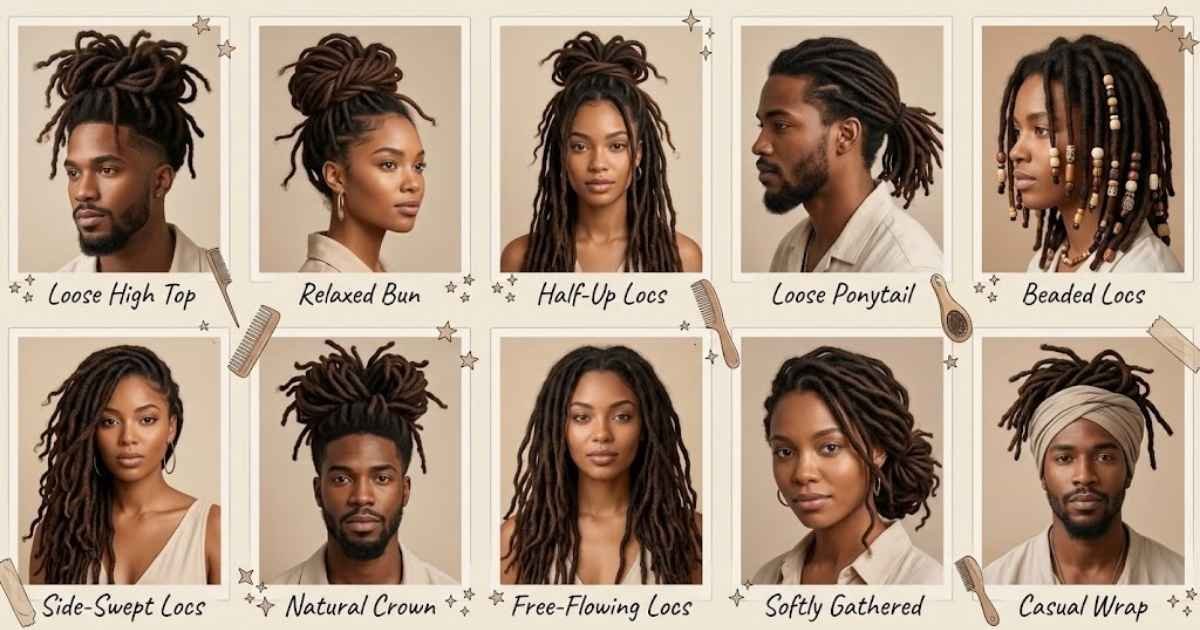
Styling Freeform Loc Hairstyles doesn’t mean giving up its organic character. The trick is choosing styles that arrange your locs without constantly reshaping the roots.
Loose styling usually works best.
Natural-Looking Freeform Loc Styles
- Loose high-top arrangement
- Relaxed bun
- Half-up loc style
- Loose ponytail
- Beaded individual locs
- Side-swept locs
- Natural crown style
- Free-flowing locs
- Softly gathered locs
- Casual wrapped locs
For freeform locs for men, high-top arrangements, tapered sides, and loose crown styles can create a defined silhouette while keeping the locs organic.
For freeform locs for women, loose buns, side arrangements, beads, and half-up styles offer plenty of flexibility without requiring tight manipulation.
Keep the Natural Character
When styling, remember these simple rules:
- Don’t pull the roots too tightly.
- Avoid excessive brushing.
- Use lightweight accessories.
- Give your scalp breaks between styles.
- Let some locs remain loose.
- Avoid forcing every section into symmetry.
The best freeform loc styling ideas work with your existing texture rather than fighting it. Whether you’re beginning with short hair or caring for mature freeform locs, the natural irregularity is what gives the style its personality.
FAQ’s
How Does Natural Loc Growth Work?
Freeform Hair grows through natural tangling, minimal manipulation, and consistent care instead of regular retwisting.
How Should You Care for Developing Locs?
Wash Freeform Hair regularly, dry it completely, and use lightweight products to reduce buildup daily.
Does Freeform Loc Hairstyles Need Regular Retwisting?
Freeform Hair usually needs little retwisting, especially when you want an organic appearance and development.
Can Different Hair Textures Create Different Loc Patterns?
Different textures shape Freeform Hair uniquely, creating varied loc sizes, patterns, density, movement, and naturally.
How Long Can Natural Locs Take to Mature?
Freeform Hair can mature at different speeds, depending on texture, density, length, care, and manipulation.
Conclusion
Choosing Freeform Hair means giving your natural texture room to lead. Each stage can bring a different shape, density, and personality to your locs. Freeform locs, organic locs, and natural dreadlocks can all develop in distinctive ways when you keep manipulation low. You don’t need every loc to match. That natural variation creates much of the style’s charm.
Good care keeps the journey enjoyable. Regular washing, gentle drying, light moisture, and sensible styling can help maintain healthy Freeform Hair without taking away its character. You can wear semi-freeform locs, add beads, create a loose bun, or let mature freeform locs flow freely. With patience and a simple freeform loc routine, your hair can grow into a look that feels natural, comfortable, and personal. The goal is simple: support your locs while allowing their character to shine through every stage of your loc journey with confidence and patience.

HairVist is a helpful destination for hair care tips, hairstyle ideas, and beauty inspiration, managed by Ava Reynolds, an SEO content writer with 2 years of experience, focused on creating simple, useful, and engaging content that helps readers learn more about hair care and styling.
1 thought on “10 Amazing Freeform Hair Ideas for a Natural Look ”