
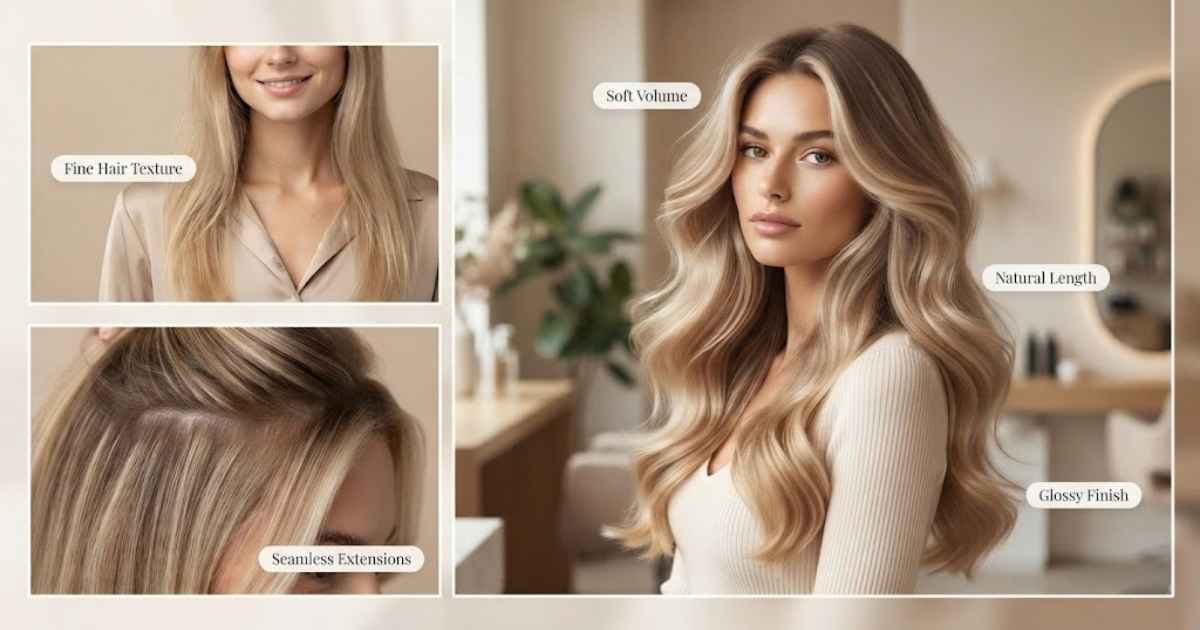
If your strands look flat or your ends seem sparse, Hair Extensions for Fine Hair can create a fuller, more polished style. The right extensions can add body without making your natural hair feel heavy. However, fine strands need thoughtful choices. Lightweight hair extensions, seamless hair extensions, and natural-looking hair extensions can blend beautifully when you choose the right weight and attachment method.
From tape-in extensions and clip-in extensions to halo hair extensions, several options can suit delicate strands. Your ideal choice depends on hair density, desired volume, lifestyle, and comfort. With proper hair extension placement and gentle care, Hair Extensions for Fine Hair can enhance your look while supporting a natural blend. This guide covers smart options for beautiful, comfortable results.
Best Hair Extensions for Fine Hair: What to Consider
Choosing the right Hair Extensions for Fine Hair isn’t simply about adding length. Fine strands need a careful balance between hair volume, comfort, weight, and a natural blend. If extensions feel too heavy, they can pull on thin strands and make your natural hair look flatter.
The best Hair Extensions for Fine Hair usually have lightweight construction, discreet attachment methods, and enough flexibility to move naturally with your own hair. Before buying, consider these key factors:
| Factor | What to Look For |
| Hair extension weight | Lightweight options that create minimal tension |
| Attachment | Tape-ins, halo, or carefully installed micro-links |
| Thickness | Moderate density that matches your natural hair |
| Material | High-quality human hair for better blending |
| Placement | Strategic areas with enough natural hair to support extensions |
| Length | A realistic length that doesn’t overwhelm fine strands |
| Maintenance | Easy upkeep and gentle removal |
| Styling | Options that suit straight, wavy, or curly textures |
For Hair Extension for Fine Hair, less can often look like more. A smaller amount of well-placed hair can create impressive fullness without creating unnecessary strain.
What Makes Extensions Suitable for Fine Hair?
Look for extensions that offer:
- Lightweight construction for reduced tension
- Natural-looking hair extensions that blend into your own strands
- Soft attachment points that don’t feel bulky
- High-quality human hair for realistic movement
- A suitable hair extension weight for your hair density
- Flexible styling without excessive pulling
- Professional installation when required
If your goal involves both length and fullness, choose Hair Extensions for Fine Hair based on your current hair density rather than the amount of hair you wish you had. That’s one of the easiest ways to achieve a believable result.
Hair Extensions for Fine Hair With Thin Ends
Thin ends create a unique challenge because extensions can make the difference between a polished style and an obvious one. When your roots have moderate density but your ends become sparse, adding too much extension hair can create an uneven transition.
The right Hair Extension for Fine Hair should gradually build fullness rather than create a sudden jump in thickness.
Consider these strategies:
- Match the extension thickness to your natural ends.
- Choose extensions for fine thin hair with lightweight construction.
- Keep the extension length reasonable.
- Use professional hair extension placement when possible.
- Blend the ends with subtle layers.
- Avoid attaching heavy pieces to very fragile areas.
- Choose extensions that add volume without excessive weight.
100% human hair extensions work especially well when you want flexible styling. You can trim, curl, straighten, and blend them more naturally than many synthetic alternatives.
For women searching for hair extensions for thin hair women, the main goal should be balance. Your extensions shouldn’t overpower your natural strands. Instead, they should quietly fill gaps and create a fuller silhouette.
Tape-In Hair Extensions for Fine Hair
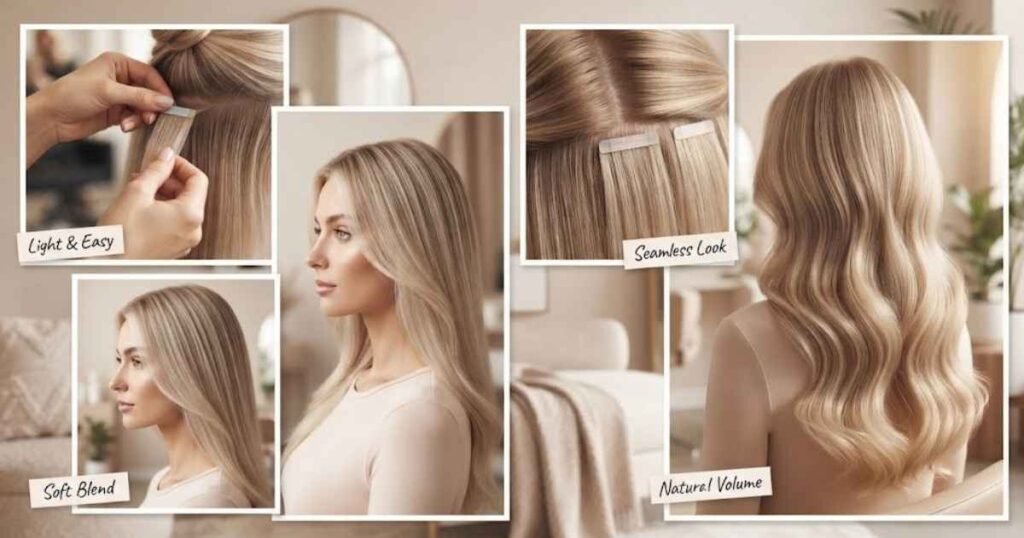
Tape-in extensions remain a popular choice because they distribute hair across a relatively broad attachment area. That design can make them suitable for many people with fine or low-density hair when installed correctly.
With the right application, Hair Extensions for Fine Hair can create a smooth transition from the roots to the ends while adding noticeable fullness.
Lightweight Design
Weight matters enormously when dealing with fine strands. Heavy extensions can create unwanted tension, especially when several pieces sit close together.
Look for:
- Lightweight wefts
- Thin adhesive tabs
- Flexible extension panels
- Moderate hair density
- Comfortable attachment points
- Minimal tension around the scalp
Lightweight hair extension for fine hair can provide fullness without making your natural hair feel weighed down. However, the amount installed matters just as much as the individual extension weight.
A stylist should assess your hair density before choosing the number and placement of pieces. More hair isn’t automatically better.
Natural-Looking Blend
A seamless appearance depends on more than color matching. Your stylist should consider your texture, length, thickness, and natural movement.
For the best blend:
- Match the extension color to your mid-lengths and ends.
- Choose a texture close to your natural hair.
- Keep the added length proportionate.
- Layer the ends when appropriate.
- Place extensions where your natural hair can cover the attachment points.
Seamless tape-in extensions can create a discreet finish when properly placed. They’re particularly useful when you want extensions for adding volume without obvious attachment points.
For everyday styling, tape-ins can also function as low-maintenance hair extensions when you follow proper maintenance and removal instructions.
Clip-In Hair Extensions for Fine Hair
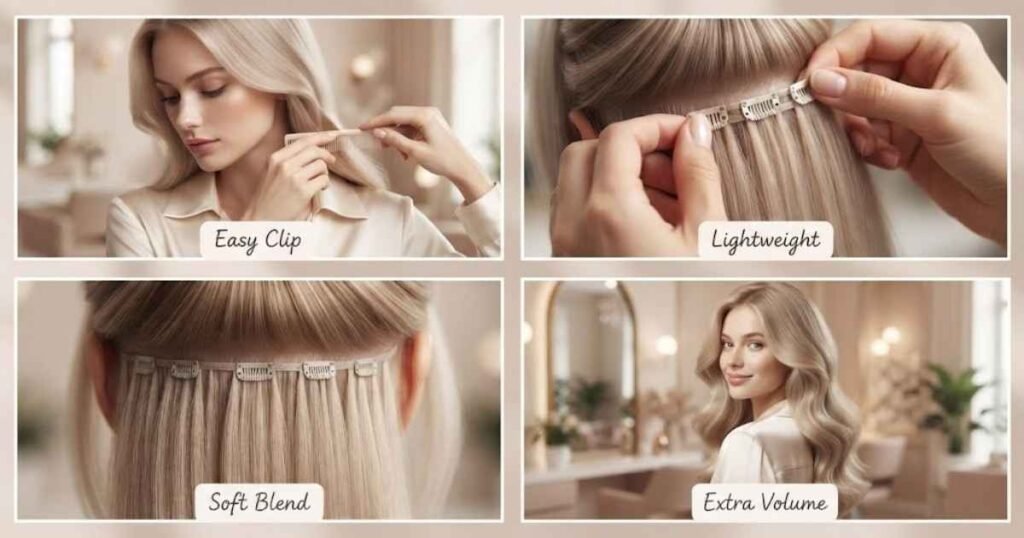
Clip-in extensions offer flexibility because you can remove them whenever you want. They’re useful for people who don’t want a permanent commitment or who mainly need extra fullness for events.
Among Hair Extension for Fine Hair, lightweight clip-ins can work particularly well for temporary styling. You can add them for weddings, dinners, photoshoots, or a night out, then remove them before sleeping.
Easy Application
One major advantage of clip-ins is their straightforward application.
A simple routine includes:
- Section clean, dry hair.
- Tease or lightly secure the attachment area if needed.
- Place smaller pieces where your hair has enough density.
- Avoid attaching wide, heavy pieces to fragile sections.
- Release the natural hair over the clips.
- Blend the lengths with a brush or styling tool.
Easy-to-install hair extensions give you control over how much volume you want each day.
For particularly fine hair, though, avoid stacking too many pieces in one location. Concentrated weight can increase tension and make clips more noticeable.
Choosing Lightweight Clip-Ins
The best clip-ins for fine strands usually feature smaller wefts and lightweight clips. You don’t need a thick curtain of added hair to make your style look fuller.
Choose clip-ins that offer:
- Lightweight wefts
- Small attachment clips
- Thin bases
- Soft human hair
- Flexible styling
- A close color match
Hair Extensions for Fine Hair should enhance your natural appearance rather than cover it completely. If your hair has low density, fewer lightweight pieces often create a better result than one very heavy set.
Clip-ins also work well as temporary hair extensions because you can control when you wear them and how much weight your hair carries.
Halo Hair Extensions for Fine Hair
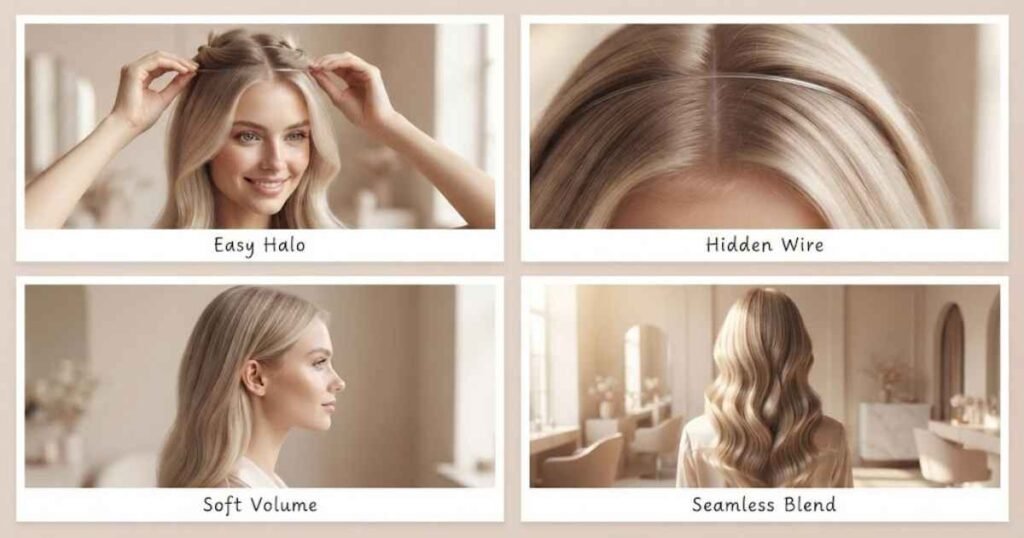
Halo hair extensions use a thin wire or similar support system that sits around the head while your natural hair covers the attachment area. This design can reduce the need for multiple clips or individual bonds.
For many people seeking Hair Extension for Fine Hair, halo pieces offer a quick way to create additional fullness and length.
Comfortable Hair Placement
Placement makes a major difference. A halo should sit securely without pressing uncomfortably against your scalp.
Keep these points in mind:
- Choose a halo designed for fine or low-density hair.
- Select an appropriate size for your head.
- Make sure your natural hair can cover the wire.
- Avoid excessive tension.
- Adjust the placement before adding styling products.
Comfortable hair extensions should feel secure without constantly reminding you that you’re wearing them.
Halo pieces can also suit people who prefer hair extensions for everyday wear without committing to permanent installation.
Adding Volume Without Bulk
A halo works best when its density matches your own hair. Extremely thick hair pieces can expose the difference between your natural strands and the added hair.
For a softer finish:
- Choose moderate-density hair.
- Keep the added length realistic.
- Blend the lower layers carefully.
- Use gentle waves to merge textures when suitable.
- Avoid excessive layering that removes too much natural density.
The result should look like your hair simply became fuller. That’s the real advantage of well-selected Hair Extension for Fine Hair.
Micro-Link Hair Extensions for Fine Hair
Micro-link extensions attach small sections of extension hair to natural strands using tiny beads or links. Because the method doesn’t require adhesive, some users prefer it for its adjustable nature.
However, micro-links require careful judgment when working with fragile hair. The attachment must remain small and light enough for the natural strand to support.
Small and Discreet Links
Tiny links can create a more discreet finish when they match your hair color and receive proper placement.
Look for:
- Small attachment beads
- Lightweight extension sections
- Color-matched links
- Even spacing
- Adequate natural hair around each attachment
Invisible hair extensions depend heavily on correct placement. Even a high-quality extension can become noticeable when the attachment sits too close to the surface.
Because fine hair has less structural support, avoid placing heavy sections near delicate edges or sparse areas.
Proper Installation
Professional installation matters more with micro-links than many people realize. A stylist should assess your hair strength, density, texture, and preferred hairstyle before attaching the extensions.
Proper installation includes:
- Selecting suitable strand sizes
- Maintaining balanced extension weight
- Avoiding excessive tension
- Leaving adequate spacing
- Checking scalp comfort
- Scheduling appropriate maintenance
For extensions for fragile hair, installation isn’t the place to cut corners. Poor hair extension attachment methods can create unnecessary stress on thin strands.
With careful hair extension maintenance, micro-links may provide a natural finish while allowing styling flexibility. Still, they’re not automatically suitable for every person with fine hair.
ALSO READ: 10 Amazing Renaissance Hair Styles for a Timeless Look
Hand-Tied Hair Extensions for Fine Hair
Hand-tied extensions use thin, flexible wefts designed to sit flatter against the head. Their slim construction can make them appealing for people who want fullness without a bulky appearance.
When selected and installed correctly, they can serve as volume hair extensions while maintaining a soft, natural profile.
Lightweight Wefts
The biggest attraction of hand-tied extensions is their slim construction. Lightweight wefts can sit flatter than thicker extension systems, which helps create a smoother finish.
When shopping for Hair Extensions for Fine Hair, consider:
- Thin weft construction
- Lightweight materials
- High-quality human hair
- Flexible movement
- Moderate density
- Comfortable attachment
For extensions for low-density hair, the stylist should use enough natural hair to support each section without placing excessive weight in one area.
The goal isn’t maximum thickness. It’s proportional fullness.
Natural Movement
Movement separates convincing extensions from obvious ones. Your added hair should swing, curl, and settle naturally alongside your own strands.
Hand-tied extensions can provide natural movement because their wefts are thin and flexible. They’re also useful for people who want extensions for volume and length while maintaining a softer silhouette.
To improve your hair extension blending:
- Match the texture carefully.
- Blend the ends with your natural haircut.
- Use suitable heat protection when styling.
- Avoid overloading the roots.
- Brush gently from the ends upward.
- Follow a consistent hair extension care routine.
Whether you have fine straight hair, fine wavy hair, or fine curly hair, texture matching remains essential. The best Hair Extensions for Fine Hair should look like an extension of your natural hairstyle rather than a separate layer.
Ultimately, focus on minimal tension, proper placement, suitable hair extension thickness, and realistic length. Those four details can make lightweight extensions look fuller, softer, and far more natural.
How to Choose the Right Hair Extensions for Fine Hair
Choosing Hair Extensions for Fine Hair starts with understanding what your natural strands can comfortably support. Fine hair has a smaller strand diameter, while thin hair refers more to lower overall density. That difference matters when selecting extensions.
The best Hair Extension for Fine Hair should add fullness without creating unnecessary tension. Instead of choosing the thickest set available, focus on lightweight construction, discreet attachment, and a believable natural blend.
Consider These Factors
| Factor | Best Choice for Fine Hair |
| Weight | Lightweight hair extensions |
| Material | High-quality human hair |
| Attachment | Tape-ins, halo, or suitable lightweight methods |
| Density | Moderate rather than extremely thick |
| Length | Proportional to your natural hair |
| Texture | Close match to your natural texture |
| Color | Blended with your mid-lengths and ends |
| Maintenance | Simple, gentle upkeep |
When comparing extensions for fine hair, pay close attention to the hair extension weight. Heavy pieces may place unnecessary stress on thin strands.
You should also consider your lifestyle. Clip-in extensions work well for occasional styling, while tape-in extensions may suit someone who wants a more consistent look. Halo hair extensions can provide temporary volume without numerous attachment points.
For the most natural result, look for:
- Lightweight extensions for fine hair
- Natural-looking hair extensions
- 100% human hair extensions
- Seamless attachment systems
- Comfortable hair extensions
- Extensions for adding volume
- Extensions for adding length
- Low-maintenance hair extensions
If your ends look particularly sparse, consider hair extensions for thin hair women that add fullness gradually. A shorter, lighter set often looks more convincing than an extra-long, heavy one.
How to Apply Hair Extensions Without Damaging Fine Hair
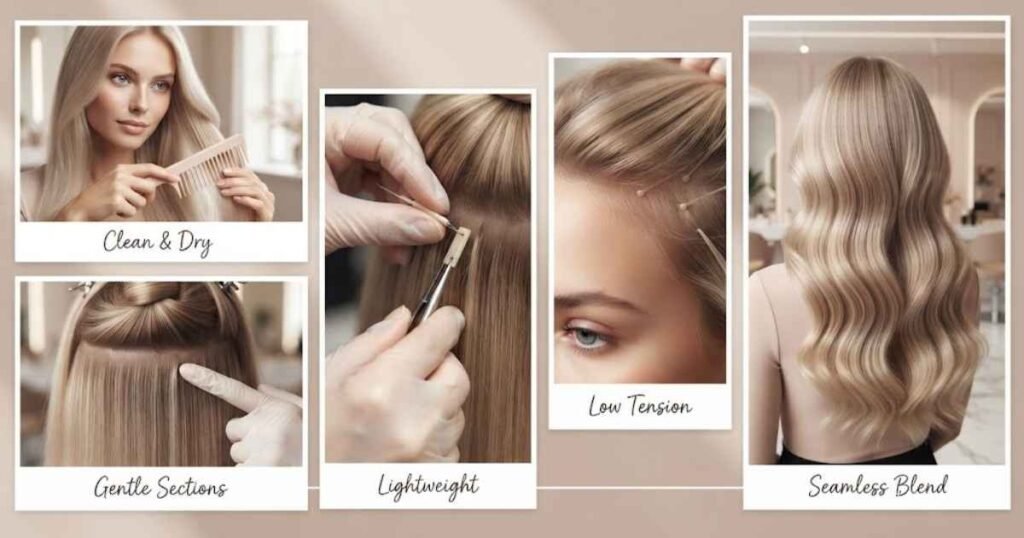
Proper hair extension application can make a huge difference when you have fine or fragile strands. Even excellent Hair Extensions for Fine Hair can cause problems when you install them incorrectly.
The golden rule is simple: spread the weight instead of concentrating it.
Start With Clean, Dry Hair
Before application, wash and completely dry your hair according to the extension type. Avoid coating the attachment areas with heavy oils or conditioners because they can affect grip.
Then:
- Detangle your hair gently.
- Create clean, even sections.
- Identify areas with enough natural density.
- Keep extensions away from fragile edges.
- Attach pieces without pulling tightly.
- Check that your scalp feels comfortable.
Avoid Excessive Weight
Fine strands can’t always support the same amount of extension hair as thick hair. That’s why lightweight hair extensions remain a smart option.
Choose smaller pieces when necessary. You can always add more fullness later rather than starting with an overloaded installation.
For extensions that do not damage hair, focus on:
- Minimal tension
- Lightweight attachment points
- Proper extension placement
- Suitable hair extension thickness
- Professional installation when needed
- Gentle extension removal
Hair Extensions for Fine Hair should never feel painfully tight. Mild awareness may occur initially, but persistent pulling, soreness, or discomfort means the installation needs attention.
Give Your Hair Room to Move
Avoid placing extensions directly on the hairline or very sparse areas. Instead, use stronger sections underneath the top layer so your natural hair can conceal the attachment.
This approach improves hair extension blending while reducing unnecessary strain. It also helps create a more discreet finish.
How to Care for Hair Extensions on Fine Hair
Good hair extension care doesn’t need to become a complicated routine. A few consistent habits can protect both the extensions and your natural hair.
Because fine strands can tangle easily, gentle handling matters from morning until bedtime.
Brush Carefully
Start at the ends and gradually work upward. Hold the hair near the attachment area while brushing to reduce pulling.
A gentle extension-friendly brush can help minimize:
- Tangling
- Snagging
- Unnecessary tension
- Breakage
- Matting around attachment points
Never aggressively drag a brush through tangled Hair Extensions for Fine Hair.
Wash With Care
Keep your cleansing routine gentle. Concentrate shampoo on the scalp while allowing the lather to move through the lengths.
After washing:
- Apply conditioner mainly to the mid-lengths and ends.
- Avoid heavy products around attachment points.
- Rinse thoroughly.
- Pat the hair dry instead of rubbing it.
- Detangle carefully while appropriate for your extension type.
Protect Your Extensions at Night
Sleeping with loose, tangled hair can create friction and knots. Before bed, gently brush your hair and use a loose braid or low ponytail when suitable.
Silk or satin accessories can also reduce friction.
Limit Excessive Heat
Human hair extensions can usually handle styling, but repeated high heat can dry them out. Use heat protection and moderate temperatures whenever possible.
Proper hair extension maintenance should also include regular checks for slipping, tangling, matting, or uncomfortable attachment points.
Whether you use seamless hair extensions, tape-ins, clip-ins, or hand-tied extensions, consistent care helps preserve their appearance.
Common Mistakes to Avoid With Fine Hair Extensions
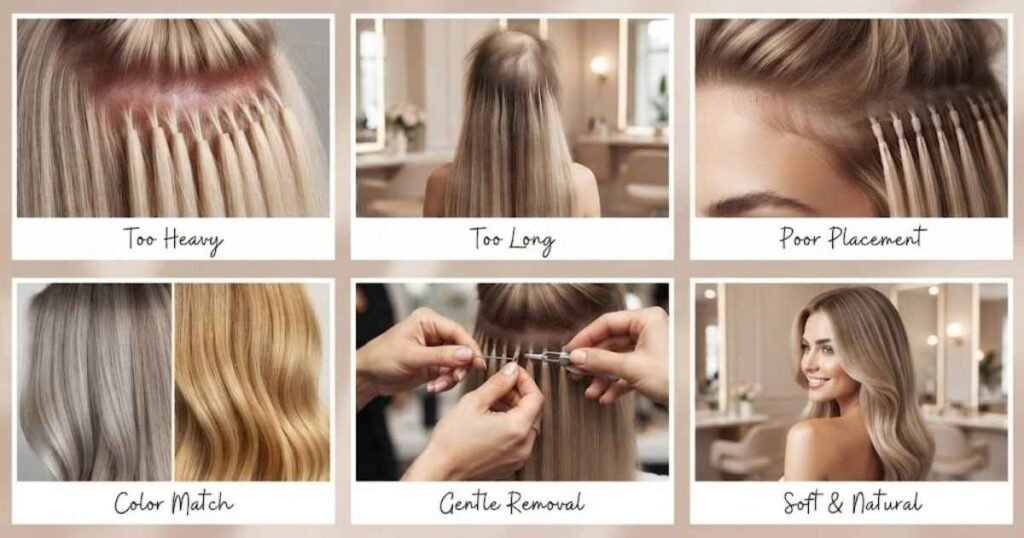
Even the best extensions for thin hair can look unnatural or cause unnecessary stress when you choose or use them incorrectly. Fortunately, most mistakes are easy to prevent.
Choosing Extensions That Are Too Heavy
This is one of the biggest problems. Heavy extensions may overwhelm fine strands and create excessive tension.
Choose lightweight hair extensions for fine hair instead. Your extensions should complement your natural density rather than compete with it.
Adding Too Much Length
Longer isn’t always better. Extremely long extensions can make fine hair look visibly thinner near the top.
For hair extensions for short fine hair, choose a length that creates a gradual transition. A moderate increase often looks fuller and more believable.
Ignoring Hair Density
Your stylist should consider your overall density before selecting the extension amount. Someone with very low-density hair may need a different approach from someone with fine but dense hair.
Using Poor Placement
Avoid placing heavy pieces around:
- Hairline
- Temples
- Very thin areas
- Weak strands
- Sensitive scalp sections
Strategic hair extension placement distributes weight more effectively.
Skipping Color Matching
Even premium human hair extensions can look obvious when the color doesn’t match.
For better color matching, compare the extension with your mid-lengths and ends rather than focusing only on your roots.
Neglecting Removal
Never rip, pull, or rush extension removal. Follow the correct removal process for your attachment method.
Improper removal can stress the natural hair more than the original application.
Overusing Heat and Styling Products
Frequent heat styling can weaken both natural strands and extensions. Heavy styling products can also create buildup.
Instead:
- Use heat protection.
- Choose moderate temperatures.
- Detangle gently.
- Avoid excessive product near attachments.
- Give your hair occasional breaks when appropriate.
Ignoring Scalp Comfort
Your Hair Extensions for Fine Hair should feel secure without constant pulling. If you notice persistent discomfort, tightness, or unusual shedding, reassess the installation.
Ultimately, successful Hair Extensions for Fine Hair come down to three things: low weight, smart placement, and gentle care. When those basics work together, you can add hair volume and length while keeping the finished style soft, natural, and comfortable.
FAQ’s
What type of extensions work best for delicate strands?
Hair Extensions for Fine Hair should feel lightweight, comfortable, and balanced while adding natural-looking volume without excessive tension.
Can extensions make fine strands look fuller?
Yes, Hair Extensions for Fine Hair can add volume when you choose lightweight pieces matching your natural density.
Are tape-ins suitable for people with fine strands?
Tape-in Hair Extensions for Fine Hair can provide seamless volume when installed carefully with minimal tension and proper placement.
How can extensions blend naturally with finer strands?
Choose Hair Extensions for Fine Hair that match your texture, color, thickness, and length for seamless blending.
How do you protect delicate strands while wearing extensions?
Use lightweight Hair Extensions for Fine Hair, gentle brushing, proper maintenance, and professional removal to minimize unnecessary tension.
Conclusion
Choosing Hair Extensions for Fine Hair becomes easier when you focus on weight, placement, texture, and overall hair density. Fine strands don’t need excessive bulk to look fuller. Instead, lightweight extensions can create balanced volume while maintaining comfortable movement. Tape-in extensions, clip-in extensions, halo hair extensions, and hand-tied extensions each offer different benefits. The best option depends on your styling routine and how much length or fullness you want.
Quality human hair extensions can also improve the final appearance because they blend naturally with your own texture. Still, proper installation and maintenance matter just as much as the extension type. Use minimal tension, protect fragile areas, and follow gentle hair extension care habits. When selected carefully, Hair Extensions for Fine Hair can give you beautiful volume without overwhelming thin strands. A thoughtful approach creates natural-looking hair extensions that feel comfortable, move naturally, and complement your everyday style.

HairVist is a helpful destination for hair care tips, hairstyle ideas, and beauty inspiration, managed by Ava Reynolds, an SEO content writer with 2 years of experience, focused on creating simple, useful, and engaging content that helps readers learn more about hair care and styling.
1 thought on “10 Best Hair Extensions for Fine Hair: Expert Picks ”