
Great hair doesn’t always require a professional appointment. With the right routine, you can create polished looks at home. How to Style Hair becomes much easier when you understand your texture, choose suitable hair products, and use the right hair tools. Whether you have straight, wavy, curly, thick, or fine hair, simple techniques can transform your everyday look. Good hair preparation also helps your style hold longer while reducing frizz and unnecessary heat exposure.
Learning How to Style Hair gives you more control over your daily appearance. You can create easy hairstyles for work, weekends, special occasions, or busy mornings. From heatless hairstyles and natural waves to sleek styles and voluminous blowouts, the possibilities are surprisingly broad. The key involves matching your technique to your hair type and using styling products thoughtfully. With practical hair styling tips and consistent care, How to Style Hair can become a quick, enjoyable part of your hair care routine.
How to Style Hair Based on Your Hair Type
Your hair type changes everything from product choice to technique. When you learn how to style hair based on its natural texture, you can create better results with less effort.
The best approach starts with understanding whether you have straight, wavy, curly, thick, thin, or fine hair. Each type responds differently to heat, moisture, styling products, and hair tools.
| Hair Type | Best Styling Approach | Helpful Products |
| Straight hair | Add movement, volume, or sleekness | Hair mousse, serum, texturizing spray |
| Wavy hair | Enhance natural waves | Leave-in conditioner, curl cream |
| Curly hair | Define curls and reduce frizz | Hair cream, styling gel |
| Thick hair | Control bulk and create shape | Smoothing cream, serum |
| Thin hair | Build body without weighing it down | Volumizing products, lightweight mousse |
| Fine hair | Create lift and texture | Root spray, texturizing spray |
For example, thick curly hair may need moisture and definition. Fine straight hair often needs lightweight volumizing products instead. Styling your hair becomes much easier once you stop treating every hair type the same.
Hair styling tips for different textures
- Use lightweight products on fine or thin hair.
- Apply richer creams to dry or coarse hair.
- Enhance wavy hair instead of fighting its natural pattern.
- Use frizz control products when humidity affects your hairstyle.
- Avoid excessive heat styling when your hair already feels dry.
- Match your hair tools to the finish you want.
Learning how to style hair this way helps you work with your texture rather than against it.
Essential Tools You Need for Easy Hair Styling
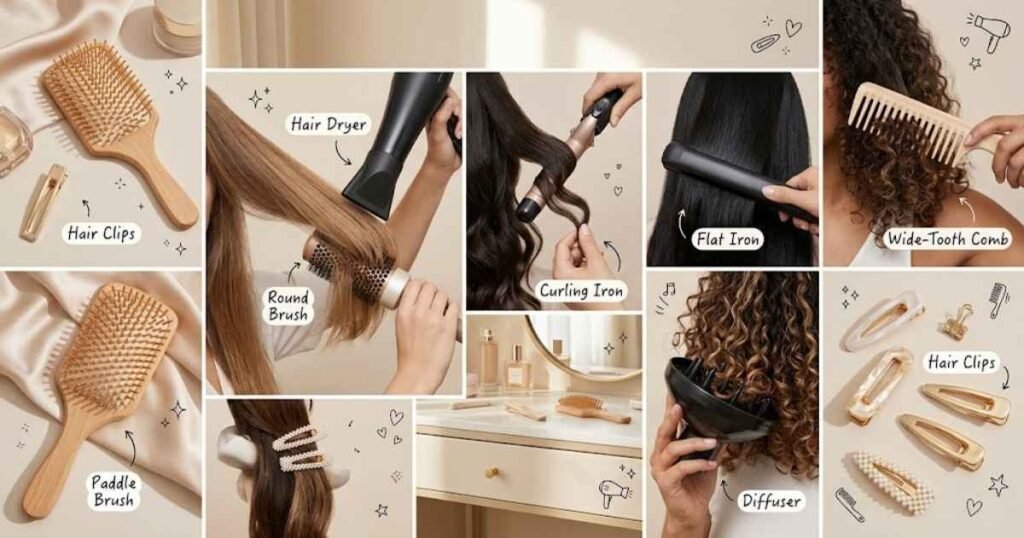
You don’t need a bathroom cabinet packed with professional equipment. A few reliable tools can handle most everyday hairstyles and hair styling techniques.
Basic tools for styling your hair
- Hair dryer: Speeds up drying and creates volume.
- Round brush: Helps shape layers and create a smooth blowout.
- Curling iron: Creates waves, curls, and soft bends.
- Flat iron: Smooths strands and creates sleek hairstyles.
- Wide-tooth comb: Gently detangles wet or curly hair.
- Paddle brush: Works well for straight and medium-to-long hair.
- Clips: Keep sections separated during styling.
- Diffuser: Helps define curly and wavy hair.
Your tools for styling hair should match your texture and routine. For instance, a diffuser makes sense for curls, while a round brush works beautifully for a bouncy blowout.
When you’re learning how to style hair at home, start with a small toolkit. More equipment doesn’t automatically mean better hair.
How to Prep Your Hair Before Styling
Great styling starts before you pick up a curling iron or hair dryer. Proper hair preparation creates a smoother foundation and can help your finished style last longer.
A simple preparation routine
- Wash with a shampoo suited to your hair type.
- Condition the mid-lengths and ends.
- Apply leave-in conditioner if your hair needs extra moisture.
- Gently remove excess water with a towel.
- Detangle without aggressively pulling the strands.
- Apply the right styling products.
- Add heat protection before using hot tools.
- Let your hair become mostly dry before intensive heat styling.
If you’re how to style hair step by step planning, think of preparation as your first real styling step. Clean, conditioned hair behaves more predictably.
For dry or frizz-prone hair, a small amount of hair serum or hair cream can smooth rough-looking strands. Fine hair may benefit from mousse or volumizing products instead.
Avoid these common preparation mistakes
- Applying too much product.
- Brushing wet curls aggressively.
- Skipping heat protection.
- Using high heat unnecessarily.
- Styling soaking-wet hair with hot tools.
- Applying heavy oils to fine hair.
Good preparation can make simple hairstyles look surprisingly polished.
How to Style Short Hair for Everyday Looks
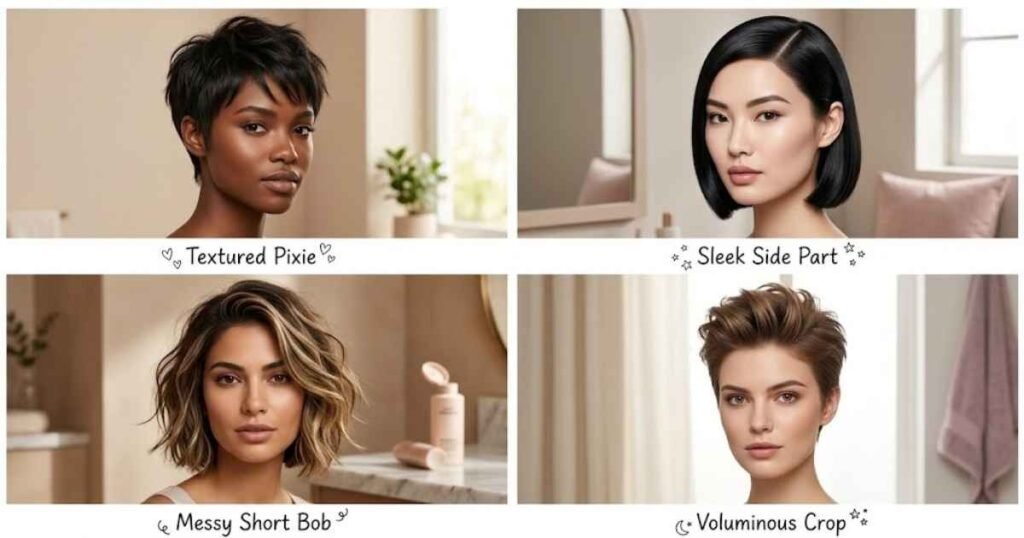
Short hair can look effortlessly chic because you need less length to create definition. The trick lies in controlling texture, direction, and volume.
When considering how to style short hair, work with the shape of your haircut. Layers, bangs, and face-framing pieces can completely change the final effect.
Textured Pixie Style
A textured pixie creates instant personality without requiring a complicated routine.
- Start with slightly damp hair.
- Apply a small amount of hair mousse or styling cream.
- Blow-dry while directing pieces into place.
- Add texturizing spray for separation.
- Finish with a tiny amount of styling gel on stubborn pieces.
This works especially well when you want a low-maintenance hairstyle with visible movement.
Sleek Side-Parted Style
A deep side part gives short hair a refined, polished appearance.
- Create a clean side part.
- Apply a lightweight smoothing product.
- Use a flat iron on longer sections if needed.
- Tuck one side behind the ear.
- Finish with hair spray for hold.
This is an easy option for workdays, dinners, and dressier occasions.
Messy Short Bob
A messy bob gives short hair a relaxed, modern finish.
Use a curling iron to create loose bends rather than tight curls. Alternate the direction of each section to prevent the style from looking too uniform. Finish with texturizing spray, then gently separate the waves with your fingers.
If you’re wondering how to style hair quickly on a busy morning, this technique takes very little time.
Voluminous Crop
A cropped haircut can look fuller when you lift the roots during blow-drying hair.
- Apply lightweight volumizing mousse.
- Lift the roots with your fingers.
- Direct the hair upward while drying.
- Use a round brush on longer sections.
- Add a light mist of hair spray.
The result is short hair with height, structure, and movement rather than a flat finish.
How to Style Medium-Length Hair With Ease
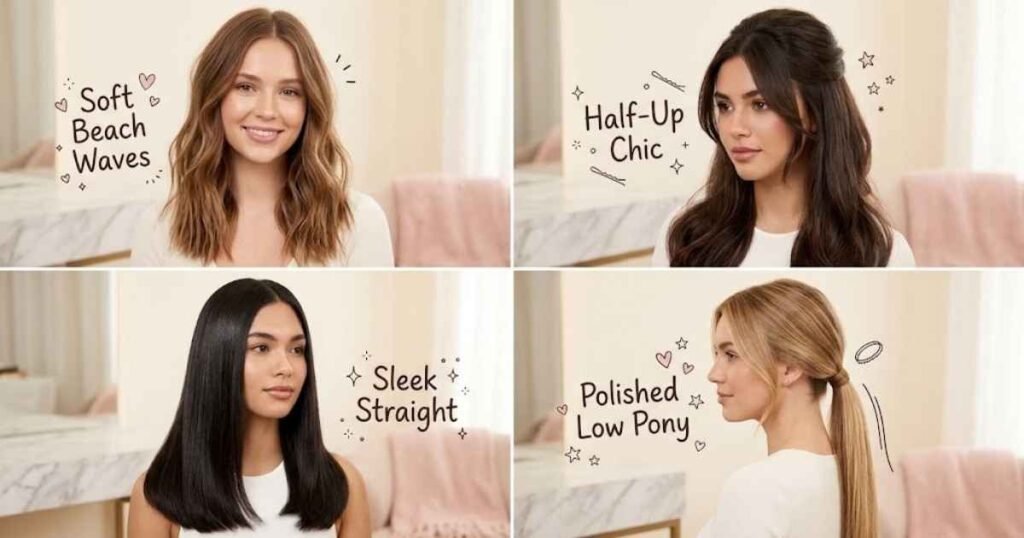
Medium-length hair offers plenty of styling flexibility. You can wear it straight, wavy, pulled back, or partially pinned without dealing with excessive length.
For how to style medium hair, focus on creating shape while keeping the ends healthy-looking.
Soft Beach Waves
Beach waves work beautifully for everyday hairstyles because they don’t need perfect symmetry.
- Apply heat protectant to dry hair.
- Divide your hair into manageable sections.
- Wrap sections loosely around a curling iron.
- Leave the ends slightly straighter.
- Break up the waves with your fingers.
- Finish with texturizing spray.
For a heatless alternative, braid slightly damp hair before bed and release it in the morning.
Half-Up Hairstyle
How to Style Hair? A half-up style gives you the best of both worlds. Your hair stays away from your face while the remaining length adds softness.
Pull the top section backward and secure it with a clip, elastic, or decorative barrette. Leave a few face-framing pieces loose for a relaxed finish.
This simple style works particularly well for naturally wavy hair.
Sleek Straight Style
How to Style Hair? Straight medium-length hair looks sophisticated when the surface stays smooth.
Apply heat protectant before flat iron styling. Work with small sections and glide the iron from roots toward the ends without repeatedly passing over the same area.
Finish with a tiny amount of hair serum to enhance shine and reduce frizz.
Low Ponytail
How to Style Hair? A low ponytail takes minutes but can look remarkably polished.
Create a center or side part, smooth the hair backward, and secure it near the nape. Wrap a small strand around the elastic if you want a more finished appearance.
For extra volume, gently loosen the crown after securing the ponytail.
How to Style Long Hair Without Losing Volume
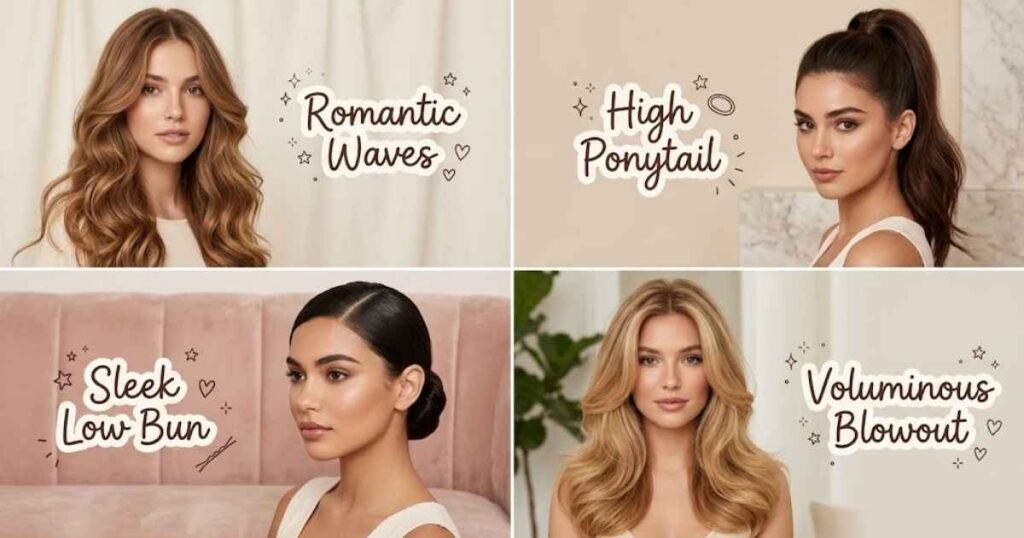
Long hair can look gorgeous, yet excessive length sometimes pulls the roots downward. That’s why volume-focused techniques matter when learning how to style long hair.
Start with lightweight styling products. Heavy creams and oils can flatten long strands, especially when you have fine hair.
Loose Romantic Waves
How to Style Hair? Loose waves add movement without making long hair look overly styled.
Use a medium or large curling iron and wrap broad sections away from your face. Allow the curls to cool before gently separating them.
A light texturizing spray can provide grip while maintaining natural-looking movement.
High Ponytail
How to Style Hair? A high ponytail instantly creates a lifted appearance.
- Brush the hair toward the crown.
- Secure it firmly with an elastic.
- Tease the crown slightly if you need extra height.
- Wrap a strand around the elastic.
- Finish with hair spray.
For thin hair, use a lightweight volumizing product before styling.
Sleek Low Bun
How to Style Hair? A low bun creates an elegant look with minimal fuss.
Apply a small amount of hair cream to smooth flyaways. Create a middle or side part, gather the hair at the nape, twist it into a bun, and secure it with pins.
This polished hairstyle works for office outfits, formal events, and evenings out.
Voluminous Blowout
How to Style Hair? A blowout can make long hair look fuller from roots to ends.
Apply mousse to damp roots and lengths. Divide your hair into sections, then use a round brush while blow-drying hair. Lift each section away from the scalp as you dry it.
Once finished, allow the hair to cool before brushing through it. This helps preserve the shape and creates long-lasting volume.
MORE INFO: Hair Shaft Diagram: 7 Essential Parts Explained Simply
How to Style Straight Hair for a Polished Finish
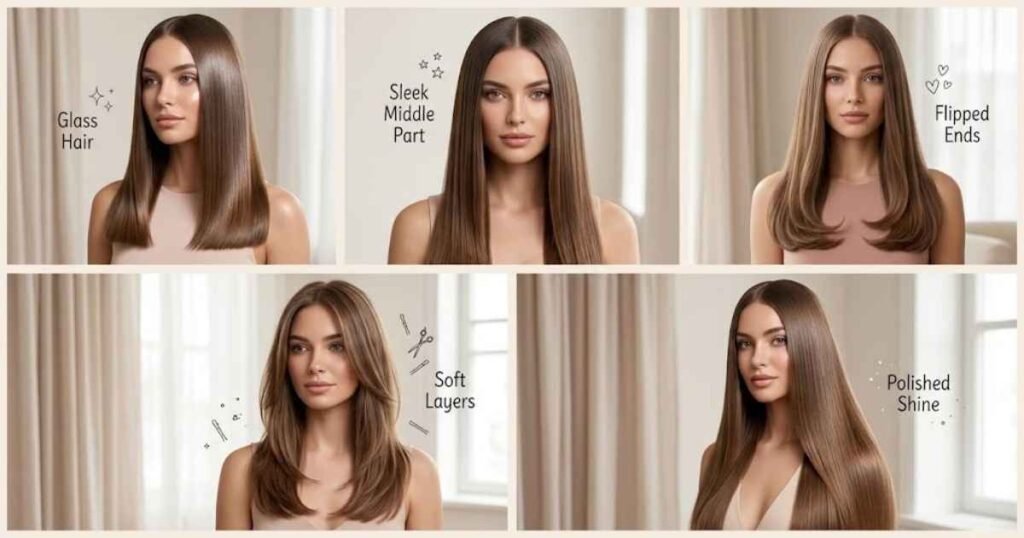
Straight hair provides a smooth canvas for sleek and structured styles. However, naturally straight hair can sometimes appear flat.
When learning how to style straight hair, focus on shine, movement, and strategic volume rather than piling on heavy products.
Glass Hair Look
How to Style Hair? The glass hair look focuses on an exceptionally smooth and glossy finish.
Start with clean, conditioned hair. Apply heat protectant, then blow-dry the hair smoothly using a round brush. Follow with careful flat iron styling on small sections.
A tiny amount of hair serum can add shine. Don’t overapply it because excess product may make the hair appear greasy.
Sleek Middle Part
How to Style Hair? A center part creates an instantly polished appearance.
- Create a precise middle part.
- Smooth the roots with a brush.
- Apply lightweight styling cream.
- Use a flat iron where needed.
- Finish with a light layer of hair spray.
This style works especially well with long hair and medium-length hairstyles.
Straight Hair With Flipped Ends
How to Style Hair? Flipped ends bring playful movement to otherwise straight hair.
Use a flat iron or round brush to curve the ends slightly outward. Keep the bend soft rather than creating a dramatic curl.
A little texturizing spray can help maintain the shape while keeping the style touchable.
Soft Layered Style
How to Style Hair? Layers give straight hair movement without sacrificing its naturally sleek appearance.
Apply a lightweight leave-in conditioner before styling. Blow-dry the layers with a round brush, directing the ends slightly inward or outward.
For extra body, concentrate volumizing products around the roots rather than the ends.
This approach creates a polished hairstyle that still feels natural. It’s also one of the easiest ways to make straight hair look fuller.
Quick guide to styling straight hair
| Desired Result | Technique | Best Product |
| More volume | Lift roots while blow-drying | Hair mousse |
| More shine | Smooth the surface | Hair serum |
| Less frizz | Seal dry ends | Hair cream |
| More movement | Bend ends with heat | Texturizing spray |
| Sleek finish | Use a flat iron carefully | Heat protectant |
| Longer hold | Finish lightly | Hair spray |
Whether you’re creating easy hairstyles or a more polished look, how to style hair successfully comes down to preparation, technique, and using the right amount of product. Work with your natural hair texture instead of forcing it into an unsuitable shape.
Once you understand how to style hair for your length and texture, everyday styling becomes much less complicated. You can switch between heatless hairstyles, sleek looks, soft waves, protective hairstyles, and quick hairstyles for busy mornings without completely changing your routine.
Most importantly, how to style hair shouldn’t feel like a daily battle. Choose techniques that fit your schedule, protect your strands during heat styling, and let your natural texture do some of the work.
How to Style Wavy and Curly Hair Naturally
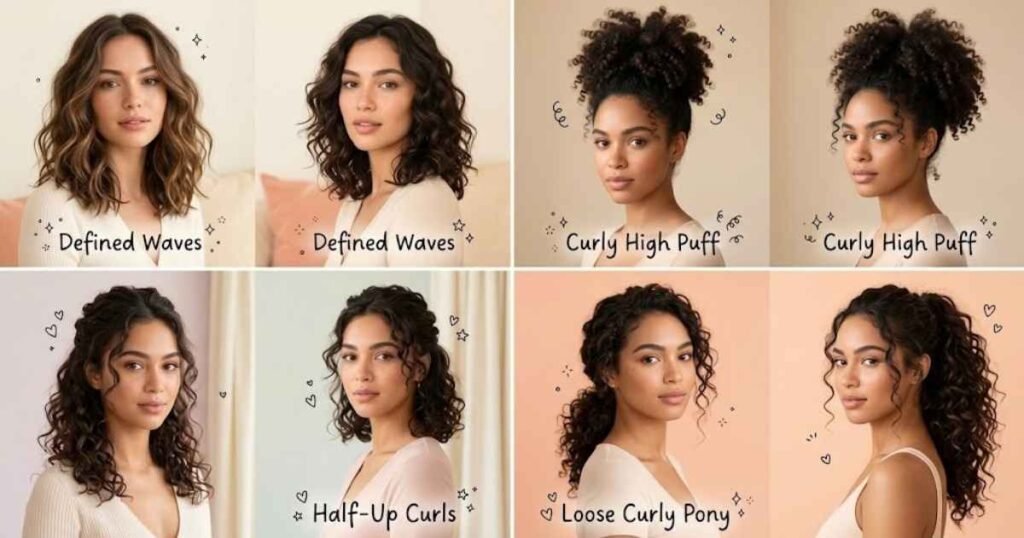
Natural texture already gives your hair plenty of character. Instead of trying to flatten every wave or curl, learn how to style hair in a way that enhances its natural shape.
Wavy and curly hair often needs moisture, definition, and gentle handling. A good hair care routine can make styling much easier. Start with damp hair, apply a leave-in conditioner, then add a lightweight hair cream or curl-friendly styling product.
For curls that need stronger definition, styling gel can help hold the shape. If frizz is your main concern, avoid rough towel drying and excessive brushing. A diffuser attachment can also make blow-drying hair easier without disturbing your curl pattern.
Defined Natural Waves
How to Style Hair? Defined waves look effortless when you preserve their natural movement instead of overworking them.
- Start with freshly washed, damp hair.
- Apply leave-in conditioner through the lengths.
- Add a small amount of hair cream.
- Scrunch your hair upward with your hands.
- Use a diffuser on low heat if needed.
- Let the waves cool completely before touching them.
- Finish with a light texturizing spray for flexible hold.
For how to style wavy hair, less manipulation usually creates better results. Too much brushing can separate the wave pattern and create unwanted frizz.
If your waves fall flat easily, apply volumizing products near the roots. This simple adjustment can improve hair volume without making your lengths feel heavy.
Curly High Puff
How to Style Hair? A curly high puff offers height, personality, and a quick styling routine. It’s especially useful when you want a protective hairstyle with minimal manipulation.
Gather your curls toward the crown and secure them gently with a soft hair tie. Avoid pulling the edges too tightly. Smooth only the areas that need control with a small amount of styling gel.
For added definition, refresh individual curls with water and a little hair cream. This technique works particularly well for naturally curly and textured hair.
When considering how to style curly hair, remember that moisture matters. Well-conditioned curls generally look more defined and feel easier to manage.
Half-Up Curly Style
How to Style Hair? A half-up style keeps curls away from your face while allowing the rest of your hair to maintain its natural shape.
Separate the top portion of your hair and secure it loosely at the crown. Use your fingers rather than a brush if you want to preserve your curl pattern.
Add a small amount of hair serum to dry-looking ends. For special occasions, you can add a decorative clip or barrette for a polished hairstyle.
This look works for casual weekends, office days, dinners, and even special events.
Loose Curly Ponytail
How to Style Hair? A loose curly ponytail creates a relaxed appearance without sacrificing volume.
Gather your curls at the back of your head and secure them with a soft elastic. Keep the ponytail slightly loose to avoid flattening the curls.
Common Hair Styling Mistakes to Avoid
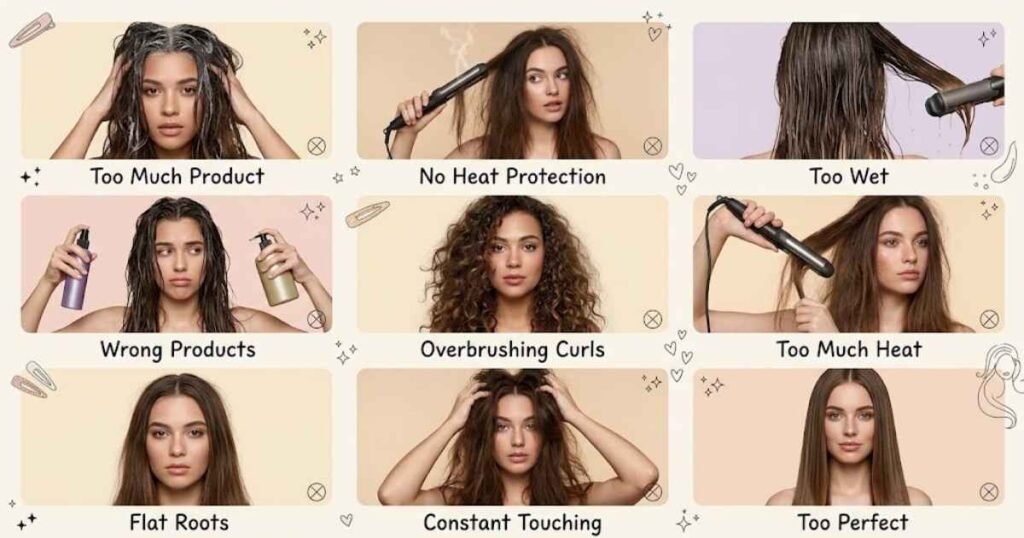
Even a great hairstyle can fall flat when your routine includes a few avoidable mistakes. Understanding how to style hair properly means knowing what not to do, too.
Using too much product
More product doesn’t always mean better results. Heavy layers of styling products can make fine hair greasy and leave thick hair feeling coated.
Instead, start with a small amount. Add more only when your hair actually needs it.
Skipping heat protection
Heat styling can make straightening, curling, and blowouts easier. However, frequent high temperatures can leave hair looking dry and brittle.
Always apply a suitable heat protectant before using a curling iron, flat iron, or hair dryer.
Styling soaking-wet hair with hot tools
Hot tools and excessive moisture don’t make a good combination. Let your hair dry sufficiently before using direct heat.
When learning how to style hair at home, patience during hair preparation can prevent unnecessary damage.
Choosing products that don’t match your hair type
A rich hair cream may work beautifully for thick curls but weigh down fine hair.
Choose products according to your:
- Hair density
- Hair texture
- Porosity
- Natural curl pattern
- Desired finish
- Styling method
Overbrushing curly or wavy hair
Brushing can disturb natural waves and curls. It may also increase frizz.
Use your fingers or a wide-tooth comb when your hair is damp. Work gently from the ends upward.
Applying heat repeatedly to the same section
Repeated passes with a flat iron can increase unnecessary heat exposure.
Work with manageable sections and use an appropriate temperature. One controlled pass is often better than several rushed passes.
Ignoring your roots
Long hair can look heavy when the roots sit completely flat.
If you want to know how to add volume to hair, lift the roots during blow-drying hair. A lightweight mousse or root-volumizing product can also help.
Touching your hairstyle constantly
Your hands can disturb curls, waves, and smooth finishes. They can also transfer oils to freshly styled hair.
Once the hairstyle looks finished, give it time to settle.
Making every strand perfectly identical
Natural-looking hairstyles often look better with slight variation. Overworking every section can make the style appear stiff.
Leave some movement. That’s often where the charm comes from.
Expert Tips to Make Your Hairstyle Last Longer
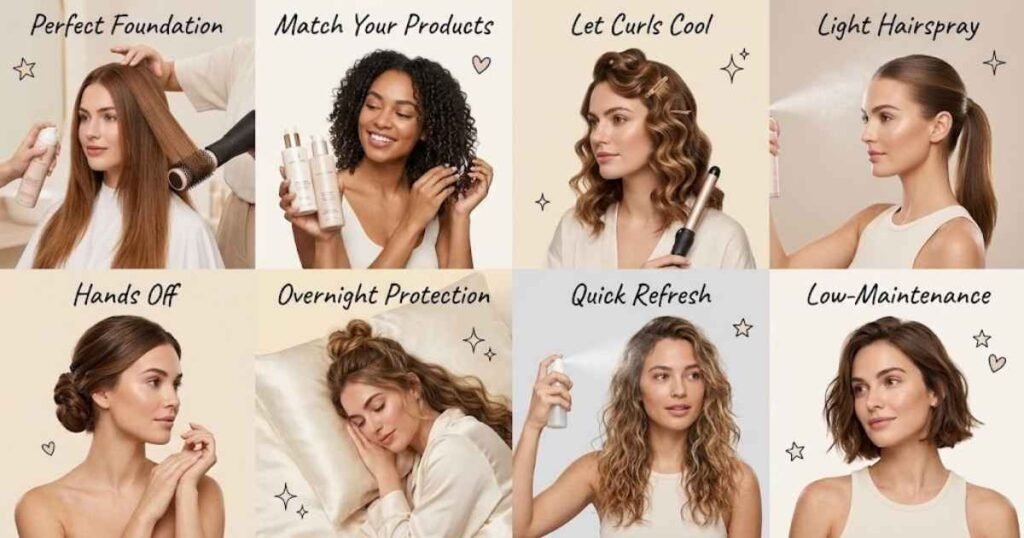
A long-lasting hairstyle starts with smart preparation rather than excessive finishing products. Once you understand how to style hair for durability, you won’t need to restyle it every few hours.
Start with the right foundation
Clean hair isn’t always the only factor. Depending on your hair type, freshly washed strands may be too slippery for certain styles.
For waves or curls, a small amount of texturizing spray can provide useful grip. For sleek hairstyles, smooth and conditioned hair creates a better foundation.
Match your products to the finish
| Styling Goal | Helpful Product |
| Extra volume | Hair mousse |
| Smooth finish | Hair serum |
| Frizz control | Hair cream |
| Curl definition | Styling gel |
| Added texture | Texturizing spray |
| Flexible hold | Light hair spray |
| Extra moisture | Leave-in conditioner |
Let curls and waves cool
One of the easiest hair styling techniques for longer-lasting curls involves cooling time.
After using a curling iron, don’t immediately brush through the curls. Let each section cool first. The shape becomes more stable as it cools.
Use the correct amount of hairspray
Hair spray works best when you don’t drench your hairstyle. Hold the can several inches away and apply a light, even mist.
For flexible everyday hairstyles, choose a lighter hold. Stronger formulas can help when you’re styling hair for an event.
Avoid unnecessary touching
Once your hairstyle is complete, hands off. Constant touching can create frizz and flatten volume.
This matters particularly with wavy hair and curly hair, where repeated handling can disturb definition.
Protect your hairstyle overnight
If you want your style to survive until morning, think beyond the initial styling session.
- Use a loose ponytail or protective hairstyle.
- Consider a satin or silk pillowcase.
- Avoid sleeping with wet hair.
- Keep curls loosely gathered rather than tightly tied.
- Refresh flattened areas with a little water and styling product.
Refresh instead of restyling
You don’t always need to start from scratch. A quick refresh can bring an existing hairstyle back to life.
For wavy hair, mist the lengths lightly with water and scrunch. For curly hair, reshape individual curls with a small amount of hair cream or leave-in conditioner.
For straight hair, smooth the ends with a small amount of hair serum.
Choose low-maintenance hairstyles when needed
Busy mornings call for practical choices. Low-maintenance hairstyles such as loose ponytails, half-up styles, simple buns, and natural waves can save valuable time.
The best way to style hair isn’t always the most complicated method. Sometimes the smartest routine is the one you’ll actually maintain.
Ultimately, how to style hair successfully comes down to preparation, suitable products, controlled heat, and proper finishing. Once these habits become part of your routine, your hairstyle can stay fresh, smooth, and defined for much longer.
FAQ’s
What should you do before using heat styling tools?
How to Style Hair starts with clean, detangled strands and heat protectant to minimize unnecessary damage.
How can you add volume to fine or thin hair?
Use lightweight mousse near your roots, then lift sections while blow-drying for lasting How to Style Hair volume.
Which products help control frizz during styling?
A leave-in conditioner, hair cream, and lightweight serum can support smooth How to Style Hair results.
Can you create attractive hairstyles without heat?
Yes, braids, twists, buns, and rollers provide practical heatless options for How to Style Hair naturally.
How can you make a hairstyle last longer?
Use suitable styling products, allow curls to cool, and finish your How to Style Hair routine with hairspray.
Conclusion
Once you understand your texture, length, and styling goals, How to Style Hair feels far less complicated. The right hair preparation creates a strong foundation, while suitable hair products help shape and protect your strands. Whether you prefer sleek hairstyles, messy hairstyles, soft waves, or protective hairstyles, small technique changes can make a noticeable difference. You don’t need countless products or complicated routines to create attractive everyday hairstyles.
The best results come from consistency and smart choices. Use heat protectant before heat styling, select tools that suit your hair texture, and avoid excessive product buildup. If you prefer a softer routine, heatless hairstyles can add movement without relying on hot tools. Ultimately, How to Style Hair is about working with your natural texture instead of fighting it. With practice, you can create polished, natural-looking hairstyles that fit your schedule, personality, and daily routine.

HairVist is a helpful destination for hair care tips, hairstyle ideas, and beauty inspiration, managed by Ava Reynolds, an SEO content writer with 2 years of experience, focused on creating simple, useful, and engaging content that helps readers learn more about hair care and styling.
1 thought on “How to Style Hair: 10 Proven & Easy Techniques”