
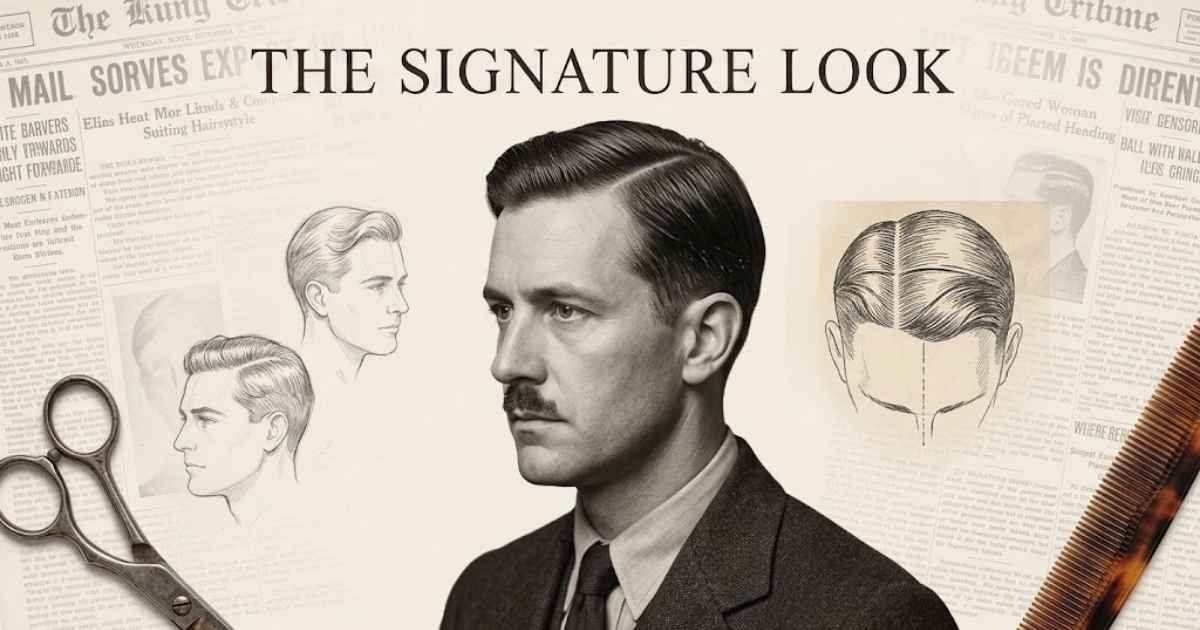
Hitler Hair remains a recognizable historical hairstyle because of its neat side part and controlled shape. The Hitler Side Part style often featured side-parted hair, shorter sides, and longer hair on top. Historical photographs show how this classic side-part hairstyle became closely connected with Adolf Hitler’s public image. The Adolf Hitler Side Part style wasn’t simply one fixed haircut. Small changes appeared in hair length, direction, and grooming across different periods.
The Hitler haircut style included neatly combed hair, short hair on the sides, longer hair on top, and a relatively flat finish. A hair comb and styling products could help create the controlled shape associated with this vintage men’s hairstyle. The Adolf Hitler Side Part seen in historical photographs also changed slightly over time. Different angles, lighting, and grooming choices affected its appearance. Today, the Hitler Side Part style is mainly discussed as a historical example of early 20th-century hairstyles.
The Historical Background of Hitler Hair
When people search for Hitler Side Part, they usually mean the distinctive grooming pattern associated with Adolf Hitler in historical photographs. His look commonly featured a short, controlled haircut with a noticeable side part and hair directed across the forehead.
The Hitler hairstyle became recognizable because photographs repeatedly showed similar grooming details during his public appearances. These images span important periods of his political career, including the 1930s and World War II era.
Rather than treating the style as a modern haircut trend, it’s more accurate to view Hitler Side Part as a historical hairstyle associated with a specific period.
Key characteristics often seen in historical images
| Feature | Common appearance |
| Hair length | Short around the sides with more length on top |
| Part | Defined side part |
| Direction | Hair combed or swept toward one side |
| Texture | Usually controlled and relatively flat |
| Finish | Neatly groomed rather than loose |
| Overall shape | Conservative, formal appearance |
The Adolf Hitler hairstyle also appeared alongside his small rectangular mustache, creating a highly recognizable facial and grooming combination. Historical photographs from the era provide the main visual evidence for these characteristics.
Why Hitler’s Hairstyle Became Recognizable
A hairstyle becomes memorable when people see the same basic shape repeatedly. That happened with Hitler Side Part because photographs, public appearances, newspapers, posters, and other forms of historical media repeatedly presented Hitler’s image.
His official photographer, Heinrich Hoffmann, produced numerous photographs that helped shape Hitler’s public image. The US Holocaust Memorial Museum notes that Hoffmann worked with Hitler from the early 1920s and that his images became important to Nazi propaganda.
This repeated visual exposure made several hairstyle characteristics easy to recognize:
- A pronounced side part
- Side-swept or combed-over hair
- Short hair on the sides
- Longer hair on top
- A controlled, flat appearance
- Neatly groomed edges
- A conservative overall shape
- A formal men’s hair presentation
That’s why Hitler Side Part can still be identified quickly when viewed in historical photographs.
Importantly, the exact appearance wasn’t identical in every photograph. Lighting, camera angle, hair length, grooming, and the period in which a photograph was taken could change the way the style appeared.
10 Surprising Hitler Hair Facts
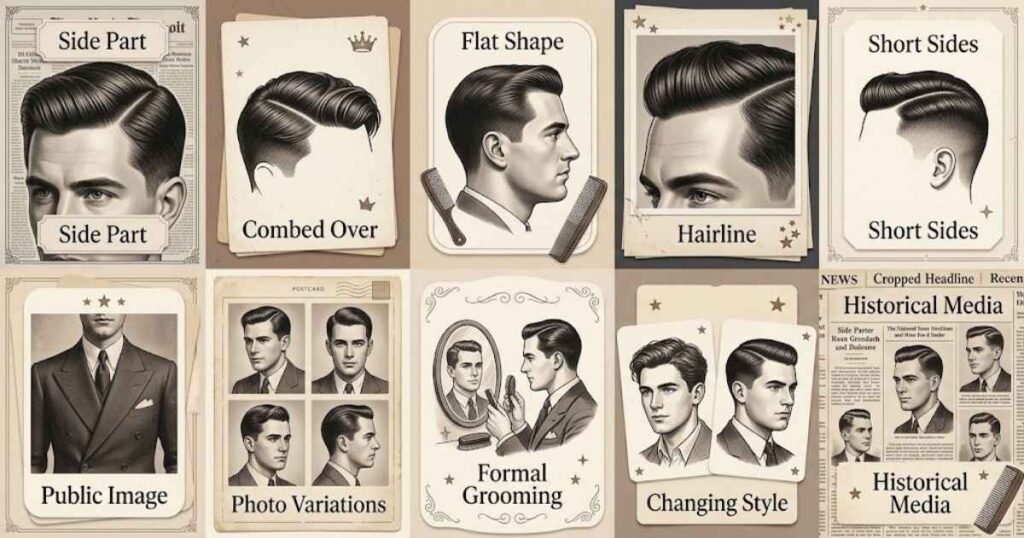
Historical photographs make Hitler Side Part look simple at first glance. However, closer attention reveals several small details that explain why the style became so recognizable.
Short, Side-Parted Hair Was a Key Feature
The most noticeable characteristic of Hitler Side Part was the side-parted structure.
The hair typically appeared longer on top than around the sides. A visible part helped direct the top section across the head. This created a traditional side-part haircut with a tidy silhouette.
The look fits within broader 1930s men’s hairstyles, when neat grooming and controlled hair were common features of formal men’s fashion.
The Hair Was Usually Combed to One Side
The Hitler side part wasn’t simply a dividing line. It helped control the direction of the hair.
Much of the top section appeared combed toward one side. This produced the familiar Hitler side-swept hair appearance seen in many photographs.
A hair comb could create a sharper direction while grooming products such as pomade could help keep individual strands controlled.
The Hairstyle Was Kept Relatively Flat
Another noticeable detail was the lack of dramatic height.
Hitler Side Part generally appeared close to the head rather than lifted into a high-volume style. The result resembled a flat, controlled version of a classic side part.
This characteristic separates the look from many modern hairstyles that rely on textured volume, fades, spikes, or loose curls.
His Hairline Influenced the Overall Look
The hairline also affected the visual balance of the hairstyle.
When the top hair moved sideways across the forehead, it created a specific frame around the face. Depending on the photograph, the hairline could look more prominent or less noticeable because of lighting and camera angle.
That’s one reason historical photographs shouldn’t be treated as identical representations of his exact everyday hair.
Hair Length Stayed Short Around the Sides
The sides generally looked shorter than the top.
This created a familiar combination:
- Short hair around the sides
- Longer hair on top
- A visible side part
- Controlled side-swept movement
- Neatly groomed edges
That combination resembles several traditional historical men’s haircuts from the period.
The Style Became Closely Linked With His Public Image
Hair alone didn’t create the recognizable image. His hairstyle appeared together with his clothing, facial hair, posture, and carefully circulated photographs.
The Hitler mustache and hairstyle became part of the visual identity repeatedly presented to the public.
Photographer Heinrich Hoffmann played a major role in producing and circulating these images. The US Holocaust Memorial Museum describes his photographs as central to the creation of Hitler’s carefully cultivated public image.
Historical Photos Show Variations in Hair Styling
Not every photograph shows exactly the same arrangement.
Some images make the combed-over hair look more pronounced. Others show a softer side sweep or slightly different hair length.
Several factors can create these differences:
- Hair growth between photographs
- Grooming choices
- Weather
- Lighting
- Camera angle
- Formal versus informal settings
- Different photographic periods
So, Hitler Side Part style shouldn’t be treated as one perfectly fixed haircut.
Hair Grooming Was Part of His Formal Appearance
The overall presentation was highly controlled.
His hair grooming generally matched the formal clothing and structured appearance visible in many official photographs. This created a polished visual presentation rather than a casual everyday look.
The result resembles the broader formal hairstyle culture of early 20th-century Europe, where neatly arranged hair often signaled a carefully maintained appearance.
The Hairstyle Changed Slightly Over Different Periods
Historical photographs from different years show subtle differences in Adolf Hitler Side Part.
The basic side-parted structure remained recognizable, but the top could appear fuller, flatter, longer, or more strongly swept depending on the period.
Photographs from the 1930s and later wartime years therefore shouldn’t be assumed to show precisely the same grooming routine.
Hitler Hair Became Recognizable Through Historical Media
Repeated photography helped turn Hitler Side Part Hair into a recognizable historical image.
Hoffmann photographed Hitler in numerous settings, including private environments, rallies, and major public events. His work helped reinforce a consistent visual identity.
This matters when considering Hitler Side Part hair in historical photos. The hairstyle wasn’t remembered simply because of the haircut itself. Its repeated appearance across widely circulated imagery made the overall look especially identifiable.
10 Hitler Hair Styles and Variations
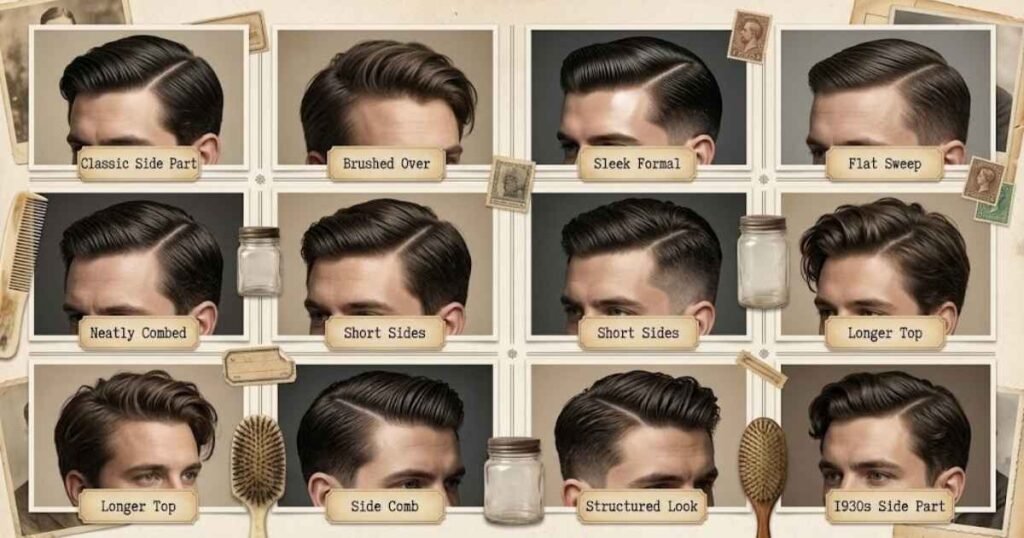
The following variations describe visual patterns seen in historical photographs or modern descriptions of the associated haircut. They aren’t official historical haircut names. Instead, they’re useful ways to understand the different appearances of Hitler Side Part Hair.
Classic Side-Parted Hitler Hair
The classic version features a strong side part with the top hair directed across the head.
It has a simple structure:
- Shorter sides
- Longer top
- Defined part
- Controlled side sweep
- Flat finish
This variation most closely represents the familiar Hitler Side Part hairstyle seen in many historical images.
Short Brushed-Over Hitler Hair
In this version, the top section appears relatively short and brushed toward one side.
The result is less dramatic than a long comb-over. It resembles a short side-part haircut with controlled movement.
This style also fits the conservative character of many 1930s grooming trends.
Sleek Formal Hitler Hair
The sleek version emphasizes neatness and a polished finish.
The hair appears carefully arranged with little stray movement. A small amount of pomade could create a smoother appearance in period-inspired styling.
This variation resembles a formal men’s hair look rather than a relaxed modern haircut.
ALSO READ: 10 Amazing Partial Highlights on Black Hair Ideas
Flat Side-Swept Hitler Hair
Here, the top hair lies close to the scalp while moving clearly toward one side.
The defining feature is direction rather than volume. The style therefore creates a flatter silhouette.
It’s one of the easiest Hitler Side Part hairstyle characteristics to identify when comparing historical images.
Neatly Combed Hitler Hair
This version focuses on precise grooming.
A hair comb would help create orderly strands and a clear directional pattern. The result looks structured without excessive shine or height.
It reflects traditional grooming habits associated with many European men’s hairstyles during the period.
Short Back and Sides Style
The back and sides appear shorter while the top retains enough length for side styling.
That contrast gives the haircut its recognizable shape. However, it shouldn’t automatically be confused with a modern skin fade or contemporary undercut.
The overall finish remains closer to a vintage haircut.
Slightly Longer Top Style
Some photographs make the top section appear longer than others.
That extra length provides more material for the characteristic side sweep. It can also make the Hitler side part hairstyle appear fuller.
Hair length could naturally change between periods, which helps explain some photographic differences.
Vintage Side-Comb Hairstyle
This variation emphasizes the combed direction of the top hair.
The hair moves from the part toward the opposite side in a controlled pattern. It has the appearance of an old-fashioned men’s hairstyle from the early 20th century.
The style also connects visually with broader vintage grooming trends.
Structured Formal Hair Look
This version highlights the overall shape rather than one specific technical haircut detail.
The hair looks:
- Controlled
- Neatly parted
- Relatively flat
- Professionally groomed
- Formal
- Conservative
These qualities made the Hitler Side Part haircut style visually distinctive when combined with his other recognizable features.
Historical 1930s-Inspired Side Part
The final variation places the look within its broader period.
A 1930s Hitler Side Part hairstyle can be understood as a side-parted, neatly groomed men’s haircut with shorter sides and a longer top.
It shares characteristics with other 1930s men’s hairstyles, although the specific association with Hitler comes from his repeated public image rather than from the haircut being unique to him.
What Hairstyle Did Hitler Have?
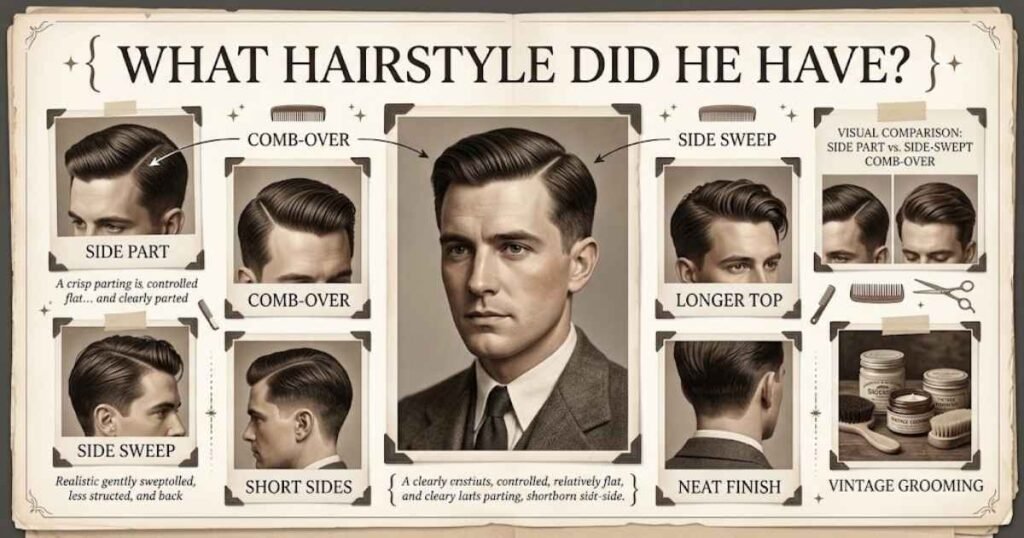
So, what hairstyle did Hitler have? Historical photographs generally show a conservative side-parted haircut with shorter sides and longer hair across the top.
The Hitler hair style name isn’t a standardized historical haircut term. Modern descriptions often use phrases such as side part, comb-over, side-swept hair, or Hitler Side Part haircut to describe its appearance.
Similarly, when people ask what was Hitler’s haircut called, there isn’t one universally established professional name.
| Search term | What it generally describes |
| Hitler Side Part hairstyle | The recognizable historical overall look |
| Hitler Side Part haircut | Short-sided, side-parted appearance |
| Hitler side part | Defined part directing hair sideways |
| Hitler side-swept hair | Top hair combed toward one side |
| Hitler Side Part haircut style | Modern descriptive term |
| Adolf Hitler Side Part hair style history | Historical discussion of his grooming |
| Historical Hitler Side Part haircut | Period-focused description |
| Hitler Side Part haircut and mustache | Combined facial and hair appearance |
Understanding these terms makes it easier to interpret searches about how Hitler styled his hair, Hitler Side Part hairstyle characteristics, and famous historical men’s hairstyles without assuming that every photograph shows exactly the same arrangement.
Overall, Hitler Side Part is best understood as a recognizable historical grooming pattern rather than a single formally named haircut. Its combination of a side part, controlled top length, shorter sides, and neat styling made the look visually memorable across decades of historical photographs.
Common Misconceptions About Hitler Hair
When people search for Hitler Side Part Hair, they often encounter simplified descriptions that don’t fully match the historical record. The hairstyle looks distinctive in photographs, yet it wasn’t a completely unique haircut invented for Adolf Hitler.
One common misconception is that every photograph shows exactly the same Hitler Side Part hairstyle. In reality, historical images show small changes in hair length, direction, fullness, and grooming. Camera angle and lighting also changed its appearance.
Another misconception involves the idea that his hairstyle had one official name. The phrase Hitler Side Part haircut is mainly a modern descriptive term. Period sources don’t establish one universal professional name for the style.
Common misunderstandings include:
- It wasn’t a completely unique haircut: Side-parted hair was common among men’s hairstyles of the period.
- Every photo doesn’t look identical: His Adolf Hitler Side Part hair varied slightly across different photographs.
- The style wasn’t always highly slicked: Some images show relatively natural-looking, flat hair.
- The side part wasn’t the only feature: Hair length, direction, grooming, and overall shape worked together.
- Modern versions can look different: Today’s interpretation of a Hitler Side Part haircut style may exaggerate the side sweep or comb-over.
- The hairstyle shouldn’t be separated from its era: 1930s grooming and 1940s grooming followed broader fashion conventions.
The distinction matters because historical hairstyles often evolve in the way people remember them. A repeated image can eventually become more familiar than the original style itself.
Hitler Hair in Modern Popular Culture
Today, Hitler Side Part Hair appears in documentaries, historical discussions, films, cartoons, satire, educational material, and online discussions about famous historical figures. Its visual simplicity makes it easy for artists and filmmakers to recognize the character without adding much detail.
Modern media often exaggerates recognizable features. A dramatic Hitler side part, exaggerated combed-over hair, or highly flat top can communicate the historical reference almost instantly.
However, these portrayals don’t always reproduce the exact Hitler Side Part hair style shown in historical photographs.
Why the hairstyle remains recognizable
- The side part creates an immediate visual cue.
- Short sides contrast with longer hair on top.
- Side-swept hair gives the silhouette a distinct shape.
- Neatly combed hair suggests the period’s formal grooming.
- The hairstyle is often shown with his recognizable mustache.
- Historical photographs provide a strong visual reference.
In modern historical fashion, the look is usually discussed as an example of how grooming can become attached to a person’s public identity. That’s different from saying the haircut itself was unusual for its era.
The Hitler mustache and hairstyle combination has become especially recognizable because both features frequently appeared together in widely circulated historical imagery.
How to Identify the Historical Hairstyle Today
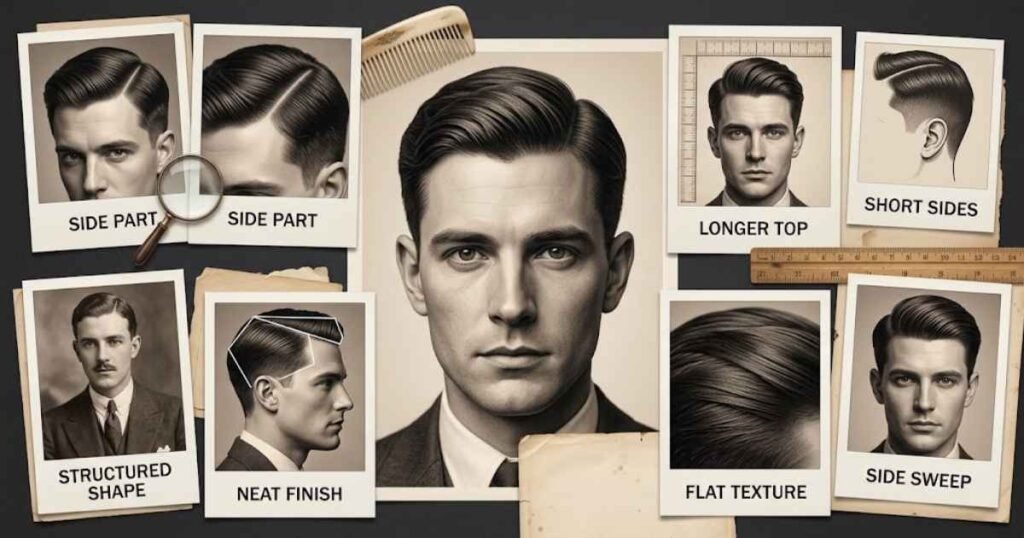
Identifying Hitler Hair from a historical photograph requires more than spotting a side part. Several characteristics usually work together to create the familiar appearance.
Start by looking at the overall silhouette. The top generally appears longer than the sides, while the hair stays controlled rather than standing upright.
Look for these hairstyle characteristics
| Feature | What to look for |
| Part | A noticeable side part |
| Top | Longer hair compared with the sides |
| Sides | Relatively short and controlled |
| Direction | Hair swept or combed sideways |
| Texture | Generally flat or neatly arranged |
| Finish | Groomed rather than deliberately messy |
| Shape | Conservative, structured silhouette |
| Era | Styling consistent with early 20th-century grooming |
The Hitler side part hairstyle can sometimes resemble other vintage men’s haircuts. That’s why context matters. Clothing, photography date, facial hair, and surrounding historical details can help establish the period.
A useful comparison involves side-parted hair from the same era. Many men wore variations featuring short hair on the sides, longer hair on top, and a traditional side-part haircut. The combination wasn’t exclusive to one individual.
A simple identification checklist
When examining Hitler Side Part hair in historical photos, check:
- Is there a visible side part?
- Does the top look longer than the sides?
- Does the hair move across the forehead?
- Does the style remain relatively flat?
- Does the hair appear carefully combed?
- Does the overall grooming match a formal period style?
- Does the photograph provide enough historical context?
This approach helps separate a genuine historical Hitler haircut from modern drawings or exaggerated pop-culture versions.
What Hitler Hair Teaches Us About Historical Hairstyles
Hitler Side Part Hair offers an interesting lesson about how historical hairstyles become recognizable. A haircut doesn’t need to be completely unique to become strongly associated with a particular person.
The key is repetition. When the same general Hitler Side Part hairstyle appears across photographs, public appearances, newspapers, posters, and other historical media, viewers begin connecting that visual pattern with the person.
This pattern also applies to many other famous historical men’s hairstyles. A vintage men’s hairstyle can become culturally significant because of the person who repeatedly wore it.
Important lessons from historical grooming
- Context matters: Hairstyles reflect the fashion standards of their period.
- Small details create recognition: A part, hairline, or side sweep can change the entire appearance.
- Photography shapes memory: Repeated images can strengthen a hairstyle’s association with one person.
- Styles aren’t always fixed: Hair length and styling technique can change over time.
- Modern interpretations can distort details: Today’s versions may simplify historical appearances.
- Grooming reflects culture: Traditional grooming often connects with clothing, social expectations, and formal presentation.
The Hitler hair style also demonstrates why historical photographs deserve careful interpretation. What looks like a highly unusual haircut today may have shared features with ordinary 1930s men’s hairstyles, 1940s men’s hairstyles, and other early 20th-century styles.
Ultimately, Hitler Hair is best understood through its historical context. Its recognizable side part, controlled shape, short sides, and combed top became strongly associated with Hitler because those features appeared repeatedly in his public image. That makes the hairstyle useful for studying historical men’s haircuts, vintage grooming trends, and the powerful connection between personal appearance and historical memory.
FAQ’s
What hairstyle did Adolf Hitler commonly wear?
Hitler Hair typically featured side-parted hair, shorter sides, longer top, and neatly controlled styling.
Was the Hitler haircut unique during the 1930s?
Hitler Hair shared several characteristics with common 1930s men’s hairstyles and traditional side-parted haircuts.
How did Hitler style his hair?
Historical images suggest Hitler Hair was usually combed sideways with a controlled, relatively flat appearance.
What made the hairstyle easy to recognize?
The Hitler hairstyle combined a noticeable side part, short sides, longer top, and neatly groomed appearance.
Did the hairstyle change over time?
Yes, Hitler Hair showed variations in length, direction, fullness, and grooming across different historical periods.
Conclusion
Hitler Hair became one of the most recognizable grooming features associated with Adolf Hitler. Its defined side part, controlled top, and shorter sides created a structured appearance that appeared repeatedly in historical photographs. The Hitler Side Part hairstyle also shared characteristics with broader 1930s men’s hairstyles and conservative men’s grooming of the period. Rather than viewing the Hitler Side Part haircut as one perfectly fixed design, it’s more useful to consider its different hairstyle variations.
Modern discussions of Hitler Hair often simplify the original appearance. However, studying the Hitler Side Part haircut style closely reveals more subtle details. Short hair on the sides, longer hair on top, side-swept hair, and careful hair grooming worked together to create its recognizable shape. The Adolf Hitler Side Part hair seen in historical photos also demonstrates how repeated imagery can strongly connect a hairstyle with a public figure.

HairVist is a helpful destination for hair care tips, hairstyle ideas, and beauty inspiration, managed by Ava Reynolds, an SEO content writer with 2 years of experience, focused on creating simple, useful, and engaging content that helps readers learn more about hair care and styling.
1 thought on “10 Surprising Hitler Hair Facts and Style Details ”