

Hair extensions can transform your look without waiting months for natural growth. But How Do Hair Extensions Work in Real Life? The answer depends on the extension method, attachment technique, and your natural hair. From clip-in hair extensions to tape-in hair extensions, each option uses a different approach. Hair Extensions Work with natural hair also depends on proper placement, weight, and blending. Human hair extensions can create realistic length and volume when matched correctly.
Before choosing a method, it helps to understand How Hair Extensions Work and how each attachment stays secure. Professional hair extension installation can improve comfort, blending, and longevity. You’ll also want to consider hair extension maintenance, removal, and aftercare. Whether you want hair extensions for added length, added volume, or everyday styling, learning How Do Hair Extensions Work helps you choose confidently. With the right method, extensions can look polished, comfortable, and natural.
What Are Hair Extensions and How Do They Work?
If you’ve ever wondered How Do Hair Extensions Work, the answer starts with one simple idea: extensions add extra hair to your existing strands. Depending on the method, they can create more length, fuller ends, or noticeable volume without waiting months for natural growth.
How Do Hair Extensions Work in a salon? A stylist attaches additional strands or wefts to sections of your natural hair. The attachment may use clips, adhesive tape, thread, beads, or keratin bonds. Each technique offers a different level of hold, comfort, maintenance, and wear time.
Most hair extensions fall into two main categories:
| Type | Best For | Typical Wear |
| Human hair extensions | Natural appearance and styling | Temporary to long-term |
| Synthetic hair extensions | Budget-friendly styling | Short-term |
| Clip-in hair extensions | Beginners and special events | Temporary |
| Tape-in hair extensions | Lightweight everyday wear | Semi-permanent |
| Sew-in hair extensions | Thick or textured hair | Semi-permanent |
| Fusion hair extensions | Long-lasting results | Semi-permanent |
| Microlink hair extensions | No-adhesive installation | Semi-permanent |
The hair extension application process depends on your chosen method. Some options take only a few minutes, while professional hair extension installation can take several hours.
How Do Hair Extensions Work With Natural Hair?
So, How Do Hair Extensions Work once They’re Attached to your natural hair? The extension becomes an added layer that follows the movement of your own strands. A skilled stylist places the attachment close enough to create a secure hold while leaving enough space for comfortable movement.
The goal isn’t simply to add hair. It’s to create natural-looking hair extensions that blend smoothly with your haircut, texture, and color.
During a consultation, your stylist may consider:
- Your current hair length and density
- Hair texture and natural curl pattern
- Desired length or volume
- Scalp sensitivity
- Daily styling habits
- Previous chemical treatments
- Whether you want temporary or permanent hair extensions
- Your budget for installation and maintenance
This process helps determine choosing the right hair extension method for your needs.
For example, hair extensions for thin hair usually require lightweight attachments. Heavy extensions can place unnecessary tension on delicate strands. On the other hand, hair extensions for thick hair may need more wefts or stronger attachment methods.
If you’re wondering How Do Hair Extensions Work without looking obvious, proper matching makes the biggest difference. Extensions should match your color, density, and texture. Layering also helps the added hair move naturally instead of looking like a separate piece.
Different Types of Hair Extensions You Can Choose
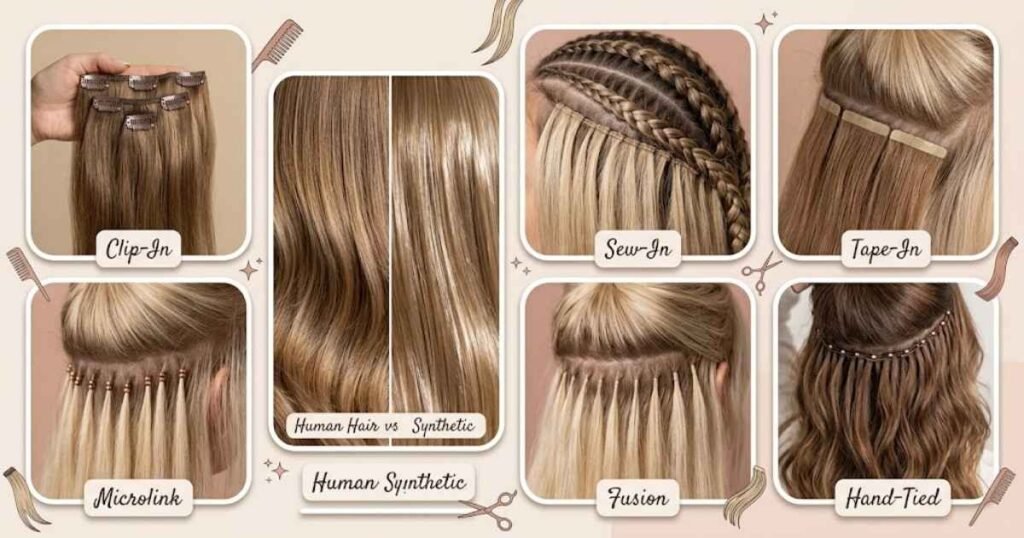
Now that you know How Do Hair Extensions Work, it’s easier to compare the main hair extension methods. Each option has its own application process, maintenance needs, and hair extension lifespan.
Clip-In Hair Extensions
Clip-ins attach with small clips sewn onto wefts. You can put them in and remove them whenever you want.
They’re popular among beginners because they don’t require permanent installation.
Tape-In Hair Extensions
Tape-ins use thin adhesive strips that sandwich sections of natural hair. They’re lightweight and sit relatively flat against the head.
They’re a practical choice when you want hair extensions for everyday wear without a lengthy daily application.
Sew-In Hair Extensions
Sew-in extensions attach to braided sections of natural hair using a needle and thread. This method works particularly well for thicker or textured hair.
Stylists often recommend sew-ins when the natural hair can support the added weight comfortably.
Fusion Hair Extensions
Fusion extensions use small keratin bonds to attach individual strands to natural hair. The bonds create a secure connection and can provide a highly natural appearance.
Microlink Hair Extensions
Microlinks use small beads or rings to connect extension strands to natural hair. Unlike fusion methods, they don’t require heat or adhesive during installation.
Hand-Tied Hair Extensions
Hand-tied wefts are thin and lightweight. They can provide volume while creating a flatter appearance against the head.
Human Hair vs Synthetic Extensions
Choosing between human hair vs synthetic extensions often comes down to styling flexibility and budget.
| Feature | Human Hair | Synthetic Hair |
| Natural appearance | Excellent | Good |
| Heat styling | Usually yes | Depends on fiber |
| Color customization | More flexible | Limited |
| Longevity | Generally longer | Generally shorter |
| Cost | Higher | Lower |
| Styling versatility | High | Moderate |
How Do Clip-In Hair Extensions Work?
Wondering How Do Hair Extensions Work when you use clip-ins at home? Clip-in hair extensions use small pressure clips attached to hair wefts. You open each clip, position it near the roots, and snap it closed around a section of natural hair.
The process is simple:
- Section your hair horizontally.
- Tease the roots lightly if extra grip helps.
- Open the extension clips.
- Position the weft close to the roots.
- Snap the clips securely into place.
- Release the natural hair over the weft.
- Blend and style the layers together.
That’s how hair extensions are attached with the clip-in method.
Clip-ins are considered one of the best hair extensions for beginners because you control when you wear them. You can use them for weddings, parties, photos, date nights, or everyday volume.
They’re also useful for hair extensions for short hair when enough natural length exists to hide the attachments.
The biggest advantage? You don’t need a salon appointment every time you want longer hair.
However, remove clip-ins before sleeping unless the manufacturer or stylist specifically recommends otherwise. Taking them out reduces pulling and helps protect your natural strands.
How Do Tape-In Hair Extensions Work?
If you’re asking How Do Hair Extensions Work with adhesive, tape-ins offer one of the clearest examples. These extensions contain thin adhesive strips that attach to sections of natural hair.
A stylist generally follows this process:
- Separates a clean section of hair
- Places one extension underneath the section
- Positions natural hair over the adhesive
- Adds a matching extension piece from above
- Presses the layers together
- Checks the bond for secure attachment
- Blends the extensions with the haircut
This explains how hair extensions stay in place with tape-in technology.
Tape-ins are popular because they feel relatively lightweight and can create seamless hair extensions when installed correctly. They’re also useful for adding both length and fullness.
Still, proper hair extension maintenance matters. Oil-heavy products can weaken adhesive bonds. Excessive pulling can also shorten the hair extension lifespan.
During maintenance appointments, a stylist usually removes and repositions the extensions closer to the roots as your natural hair grows.
If you’re considering tape-ins, ask about:
- Hair extension installation cost
- Hair extension maintenance cost
- Recommended shampoo and conditioner
- How often hair extensions need maintenance
- Proper brushing techniques
- Safe sleeping and styling habits
These details make a major difference in how long your extensions look fresh.
How Do Sew-In Hair Extensions Work?
So, How Do Hair Extensions Work when they’re sewn into the hair? Sew-in extensions use a thread-based attachment system. A stylist creates secure braids or tracks using sections of natural hair. The extension wefts then get sewn onto those tracks.
This method can provide strong support, especially for people with thicker or textured hair.
The general hair extension installation process includes:
- Washing and preparing the natural hair.
- Creating clean sections.
- Building secure braids or tracks.
- Positioning the extension weft.
- Sewing the weft onto the track.
- Checking tension and comfort.
- Cutting and blending the finished style.
Sew-ins can work well for hair extensions for thick hair because the natural density provides a strong foundation.
However, comfort matters. Extensions shouldn’t feel painfully tight. Excessive tension can stress the scalp and natural strands.
Good hair extension care includes gentle brushing, proper cleansing, careful drying, and regular salon checks. You should also learn how to wash hair with extensions without creating unnecessary tangles.
Sew-ins can provide impressive volume and length, but they’re not completely maintenance-free. Your stylist can recommend an appropriate schedule based on your hair growth and extension type.
How Do Keratin and Fusion Hair Extensions Work?
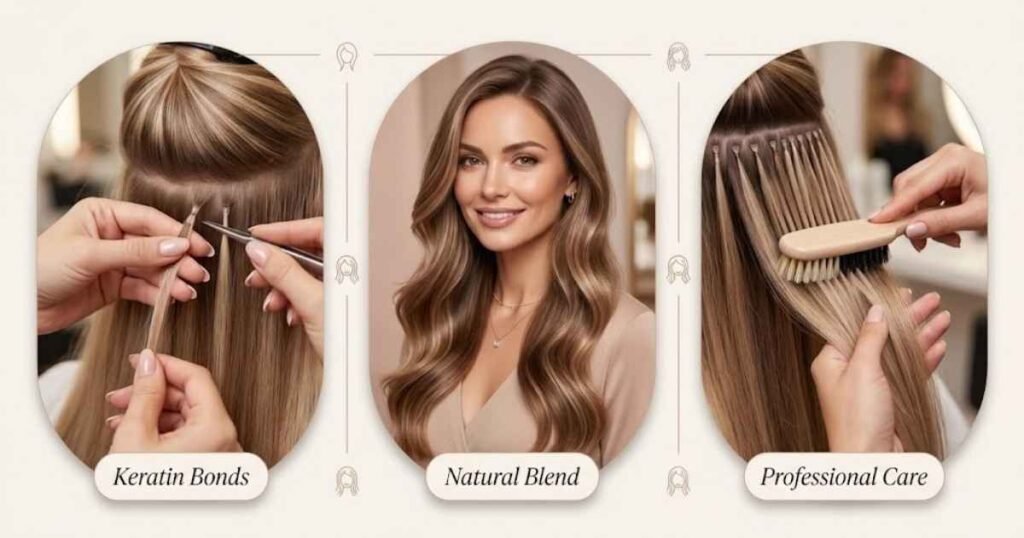
Finally, How Do Hair Extensions Work when Keratin bonds Attach individual strands? Fusion and keratin hair extensions use small bonded connections that attach extension strands to sections of natural hair.
A professional typically separates a small piece of natural hair, places an extension strand nearby, and uses specialized equipment to activate or secure the keratin bond.
This creates individual attachment points rather than one large weft.
Why People Choose Fusion Extensions
- They can create highly natural movements.
- Individual strands allow detailed placement.
- They work well for adding length.
- They can create targeted volume.
- They’re suitable for customized blending.
- They can support many styling options.
Because the bonds sit close to the roots, proper professional hair extension installation matters. Poor placement can cause discomfort or make the extensions easier to notice.
Keratin extensions also require thoughtful extension-friendly hair care. Avoid aggressive brushing around the bonds. Use products recommended for extensions and follow your stylist’s washing instructions.
The hair extension removal process also deserves professional attention. Never pull bonded extensions out yourself. A stylist uses the appropriate technique to loosen the attachment before gently separating the extension from your natural hair.
When cared for correctly, fusion extensions can provide long-lasting results. However, how long hair extensions last depends on the method, natural hair growth, maintenance routine, product use, and installation quality.
Ultimately, How Do Hair Extensions Work comes down to matching the attachment method with your hair type and lifestyle. Whether you choose clip-ins for occasional volume, tape-ins for regular wear, sew-ins for added fullness, or keratin bonds for detailed length, the right application makes your results look polished and natural.
ALSO READ: 10 Surprising Hitler Hair Facts and Style Details
How Do Microlink Hair Extensions Work?
If you’re wondering How Do Hair Extensions Work without glue, heat, or sewing, microlinks offer a simple answer. These extensions use tiny beads, rings, or cylinders to connect extension strands to your natural hair. A stylist threads a small section of hair through the bead, adds the extension, and gently clamps the connection in place.
Because microlinks don’t use adhesive, they’re a popular choice for people who want flexible hair extension attachment methods.
How the microlink process works
- Your stylist sections clean, dry hair.
- Small strands of natural hair are separated.
- A tiny bead is placed near the root.
- The extension strand passes through the bead.
- Specialized pliers secure the connection.
- The stylist repeats the process across the desired areas.
- Finally, the extensions get trimmed and blended.
This method can create natural-looking hair extensions because individual strands move similarly to natural hair. Microlinks also make it easier to add targeted hair volume extensions or hair length extensions.
However, proper placement matters. Extensions shouldn’t feel excessively tight or heavy. A professional can also adjust the number of strands based on your natural hair density.
How Long Do Hair Extensions Typically Last?
One of the most common questions about How Do Hair Extensions Work is actually about longevity: how long hair extensions last depends heavily on the method you choose.
Some extensions last only for one day. Others can remain usable for several months with regular maintenance.
| Extension Type | Typical Wear Period* | Maintenance |
| Clip-in hair extensions | One day per use | Remove after wearing |
| Tape-in hair extensions | About 6–8 weeks before repositioning | Regular salon visits |
| Sew-in hair extensions | About 6–8 weeks | Scalp and weave care |
| Microlink hair extensions | About 6–8 weeks before adjustment | Professional tightening |
| Fusion hair extensions | About 3–4 months | Professional monitoring |
| Hand-tied hair extensions | About 6–8 weeks before adjustment | Regular repositioning |
*Actual wear varies according to hair growth, installation quality, lifestyle, products, and maintenance.
Your hair extension lifespan can improve when you brush gently, avoid excessive heat, and follow an appropriate washing routine.
It’s also important to separate extension lifespan from reusability. Some extensions can be repositioned or reused, while others need replacement after removal.
What Are the Benefits of Using Hair Extensions?
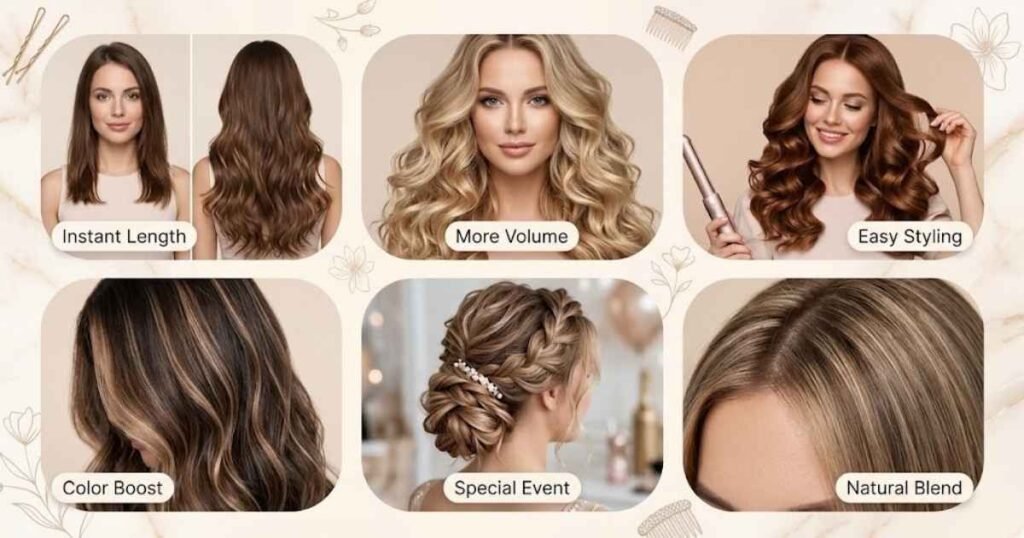
Once you understand How Do Hair Extensions Work, their popularity makes much more sense. Extensions don’t only create longer hair. They can change your overall shape, fullness, and styling options in a relatively short time.
Major benefits include:
Instant length:
You can achieve hair extensions for added length without waiting for months of natural growth.
More volume:
Thin or flat hair can look fuller with strategically placed hair volume extensions.
Flexible styling:
Many human hair extensions can be curled, straightened, or styled similarly to your own hair.
Color enhancement:
Extensions can add highlights, lowlights, or contrast without coloring all your natural hair.
Easy transformation:
Temporary options let you change your hairstyle for events without committing to a permanent method.
Natural-looking results:
When the color, texture, density, and placement match properly, extensions that match natural hair can blend beautifully.
Other advantages
- More hairstyle options
- Fuller ponytails and braids
- Better-looking thin ends
- Added body around the face
- Convenient special-event styling
- Different lengths without waiting for growth
- Options for short, medium, and long hair
However, results depend on choosing the best hair extension method for your hair. The wrong weight or attachment can create discomfort instead of the polished finish you want.
Are Hair Extensions Safe for Natural Hair?
So, How Do Hair Extensions Work without damaging your natural hair? The answer depends on installation, extension weight, maintenance, and your everyday habits.
Hair extensions aren’t automatically damaging. Problems usually arise when attachments create excessive tension, the hair doesn’t receive proper care, or extensions stay installed beyond their recommended maintenance period.
Are hair extensions safe?
Generally, yes, when they’re properly selected and installed. A professional should assess your natural hair before recommending a method.
Pay particular attention if you have:
- Very fine or fragile hair
- Significant breakage
- Weak or chemically processed strands
- A sensitive scalp
- Recent hair treatments
- Existing areas of thinning
How Do Hair Extensions Work? Lightweight hair extensions for thin hair may be more suitable than heavy wefts. Your stylist can also recommend temporary options when your natural hair needs less tension.
Smart safety habits
- Don’t ignore persistent scalp pain.
- Avoid excessively tight installations.
- Brush from the ends upward.
- Keep attachment points clean.
- Schedule recommended maintenance.
- Don’t pull or rip extensions out.
- Use extension-friendly products.
- Give your stylist feedback about discomfort.
If you notice unusual breakage, soreness, or scalp irritation, stop using the extensions and speak with a qualified hair professional.
How Much Do Hair Extensions Cost in the USA?
When researching How Do Hair Extensions Work, cost is another major consideration. The cost of hair extensions in the USA can vary widely because you’re paying for more than the hair itself.
The final price may include the extension hair, consultation, installation, blending, maintenance, and removal.
| Method | Typical U.S. Price Range* |
| Clip-ins | 100–500+ |
| Tape-ins | 300–1,000+ |
| Sew-ins | 200–1,000+ |
| Microlinks | 400–1,500+ |
| Fusion | 500–2,000+ |
| Hand-tied | 500–2,000+ |
Prices vary considerably by location, hair quality, amount of hair, stylist experience, and salon.
Human hair extensions usually cost more than synthetic options because they offer greater styling flexibility and a more natural appearance.
Your hair extension installation cost can also rise when you need extra length, higher-density hair, premium-quality extensions, or extensive blending.
Before booking, ask about:
- Hair price
- Installation fee
- Maintenance cost
- Removal charges
- Reinstallation pricing
- Required maintenance appointments
- Recommended products
- Expected hair extension lifespan
How Do Hair Extensions Work? A hair extension consultation helps you understand the total investment before committing. That’s especially useful when comparing hair salon extensions across different U.S. cities.
How to Care for Hair Extensions for Longer Wear
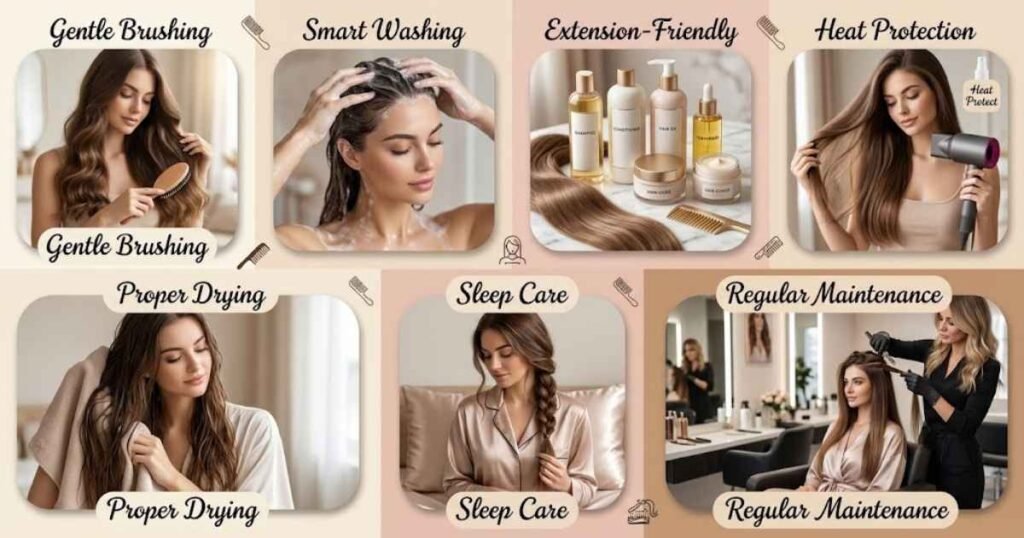
Knowing How Do Hair Extensions Work is only half the equation. Good hair extension care determines how polished they stay between appointments.
Think of extensions like delicate fabric. You don’t need to baby them every second, but rough handling can shorten their life.
Follow these practical hair extension aftercare tips:
Brush carefully.
Start at the ends and slowly work toward the roots. Hold the attachment area gently while brushing.
Wash strategically.
Learn how to wash hair with extensions based on your specific method. Avoid aggressive scrubbing around bonds, tapes, beads, or sewn tracks.
Use suitable products.
Choose extension-friendly hair care products that won’t weaken adhesive or dry out the added hair.
Control heat.
Human hair extensions can often tolerate styling tools, but excessive heat can still cause dryness and split ends.
Dry thoroughly.
Don’t leave attachment areas damp for long periods. Follow your stylist’s drying instructions for your specific method.
Sleep carefully.
Loose braids or a gentle ponytail can help reduce tangling while you sleep. Follow your stylist’s recommendation for your attachment type.
Schedule maintenance.
How often hair extensions need maintenance depends on the method and your natural hair growth. Delaying appointments can make extensions harder to manage.
Quick maintenance checklist
| Care Habit | Why It Matters |
| Gentle brushing | Reduces pulling and tangles |
| Regular washing | Keeps the scalp and extensions clean |
| Limited heat | Helps prevent dryness |
| Proper drying | Protects attachment areas |
| Regular maintenance | Keeps extensions secure |
| Professional removal | Helps protect natural hair |
| Suitable products | Supports longer wear |
Ultimately, How Do Hair Extensions Work comes down to a combination of secure attachment and proper care. The right method can provide impressive length and volume, but your maintenance routine keeps the result looking fresh. With thoughtful hair extension maintenance, careful styling, and professional checkups, you can enjoy comfortable, natural-looking extensions for much longer.
FAQ’s
How Are Extensions Attached to Natural Hair?
How Do Hair Extensions Work by attaching added hair with clips, adhesive, beads, thread, or keratin bonds.
Can Extensions Add Both Length and Volume?
How Do Hair Extensions Work for volume by placing additional strands where your natural hair needs fullness.
Which Extension Method Lasts the Longest?
How Do Hair Extensions Work with fusion methods that can provide longer wear when professionally installed and maintained.
Can You Sleep While Wearing Hair Extensions?
How Do Hair Extensions Work during sleep depends on attachment type, with gentle preparation reducing tangling and tension.
How Should Hair Extensions Be Maintained?
How Do Hair Extensions Work best when you brush gently, wash carefully, protect attachments, and schedule maintenance appointments.
Conclusion
Choosing extensions becomes much easier when you understand How Do Hair Extensions Work. Each method offers a different balance of comfort, longevity, styling freedom, and maintenance. Clip-in hair extensions work well for temporary changes, while tape-in hair extensions provide convenient semi-permanent wear. Sew-in, microlink, and fusion options offer other solutions based on your hair type and styling goals. Understanding Hair Extensions Work also helps you recognize why professional application matters. Proper placement can support comfortable wear and natural blending.
Whether you’re considering human hair extensions or synthetic hair extensions, always think about your routine first. Your ideal choice should suit your hair density, desired length, budget, and maintenance habits. Hair Extensions Work isn’t only about attaching extra strands. It’s about creating a secure connection that complements your natural hair. Once you know How Do Hair Extensions Work, you can make smarter decisions about installation, care, removal, and long-term wear while keeping your hairstyle fresh and manageable.

HairVist is a helpful destination for hair care tips, hairstyle ideas, and beauty inspiration, managed by Ava Reynolds, an SEO content writer with 2 years of experience, focused on creating simple, useful, and engaging content that helps readers learn more about hair care and styling.
1 thought on “10 Proven How Do Hair Extensions Work? A Simple Guide ”