
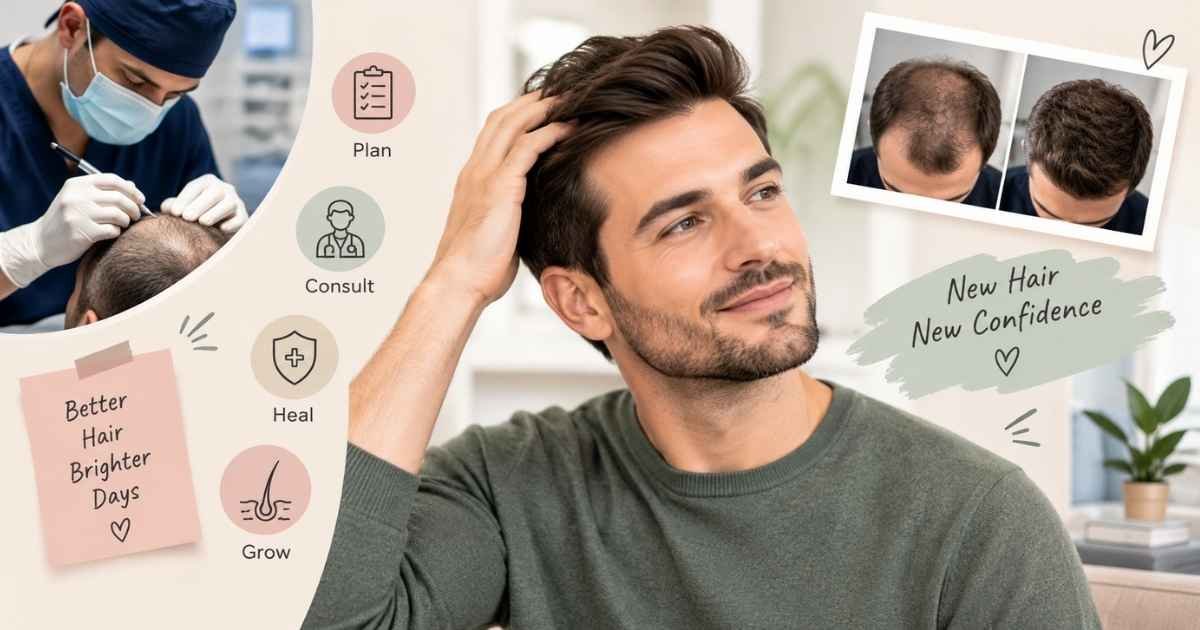
Choosing the right Hair Transplant Clinic can make a big difference in your hair restoration journey. With many options across the USA, finding a trusted provider takes careful research. A reputable Hair Transplant Clinic offers qualified surgeons, personalized treatment plans, and clear pricing. Before booking surgery, compare credentials, patient reviews, and available procedures. Understanding follicular unit extraction (FUE) and follicular unit transplantation (FUT) can also help you make informed decisions. Every patient has different needs, so your treatment should match your hair loss pattern, donor hair supply, and personal goals.
A reliable Hair Transplant Clinic should explain potential risks, recovery time, and realistic results. During your hair transplant consultation, ask about surgeon experience, safety standards, and financing options. Review before-and-after photos to understand the clinic’s approach to natural-looking results. Whether you need hairline restoration or treatment for thinning hair, choose a provider who prioritizes your health. These practical tips will help you compare clinics confidently and plan your next steps toward lasting hair restoration.
How to Choose the Right Hair Transplant Clinic
Finding the right hair transplant clinic starts with understanding your needs, budget, and treatment goals. Not every patient needs surgery, and not every clinic offers the same level of medical care.
Start by researching several providers instead of choosing the first clinic you see online. Compare their credentials, techniques, patient feedback, consultation process, and approach to follow-up care.
Here are the most important factors to consider:
- Medical qualifications: Check the surgeon’s training, credentials, and experience with hair restoration surgery.
- Treatment options: Look for clinics that offer suitable techniques, including follicular unit extraction (FUE) and follicular unit transplantation (FUT).
- Personalized care: Choose a team that assesses your scalp, donor hair, medical history, and future hair loss.
- Transparent pricing: Request a written estimate covering the procedure, medications, follow-up appointments, and other potential fees.
- Patient satisfaction: Review consistent feedback from patients with similar hair loss patterns and treatment goals.
- Realistic recommendations: Avoid providers who guarantee perfect density or promise identical results for every patient.
You can search for a hair transplant clinic near me to create an initial shortlist. However, location shouldn’t be your only deciding factor. A slightly longer trip may be worthwhile if another provider offers stronger medical credentials and better patient care.
Check the Surgeon’s Credentials and Experience
The surgeon’s skill plays a major role in the safety and appearance of your results. When comparing a hair transplant clinic, look beyond attractive advertisements and focus on the medical professional who will perform your surgery.
In the United States, verify the surgeon’s medical license, relevant training, and board certification. Board certification should relate to an appropriate specialty, and you should independently confirm the issuing board’s recognition and the surgeon’s current credentials.
What to check before choosing a surgeon
- Medical license: Confirm the surgeon holds an active license in the state where surgery will take place.
- Relevant experience: Ask how frequently the surgeon performs hair transplant procedures and which techniques they use.
- Specialized training: Look for specific experience in hairline design, donor hair management, and follicular unit transplantation.
- Surgical involvement: Confirm who performs the critical steps, including graft extraction, hairline planning, and recipient-site creation.
- Professional standing: Check for relevant disciplinary actions or restrictions when publicly available.
A qualified hair restoration specialist should also explain whether you’re a suitable candidate. Your age, hair loss pattern, donor hair supply, scalp condition, and medical history all influence treatment planning.
Helpful tip: Ask to speak directly with the surgeon before paying a deposit. A trustworthy provider should welcome questions instead of pressuring you into immediate surgery.
Compare Hair Transplant Procedures and Techniques
Not every patient needs the same treatment. A reputable hair transplant clinic should explain the available surgical hair restoration options and recommend a technique based on your needs.
The two established methods are follicular unit extraction (FUE) and follicular unit transplantation (FUT). Some providers also offer robotic assistance for specific stages of FUE procedures.
| Technique | How it works | Main consideration |
| FUE | The surgeon extracts individual follicular units from the donor area. | Usually leaves small, scattered scars rather than one linear scar. |
| FUT | The surgeon removes a strip of scalp and separates it into grafts. | Leaves a linear scar and may suit selected patients who need many grafts. |
| Robotic-assisted FUE | A robotic system assists with selected extraction tasks. | Availability and benefits depend on the system, surgeon, and patient. |
When comparing a hair transplant center, ask about the advantages and limitations of each method. Don’t assume newer technology automatically produces better results.
Your surgeon should consider your hairstyle preferences, donor density, scalp flexibility, and the number of grafts needed. A minimally invasive hair transplant may sound appealing, but the best approach depends on your individual assessment.
Review Before-and-After Patient Photos

Before-and-after photographs can help you judge a clinic’s work. They show how the surgeon approaches hairline design, hair density restoration, and overall appearance.
However, a few impressive pictures shouldn’t determine your decision. A reliable hair transplant clinic should provide consistent examples of patients with hair loss patterns similar to yours.
How to evaluate patient photographs
- Check lighting: Look for comparable lighting, camera angles, hair length, and styling.
- Review the timeline: Ask whether the photographs show results at 6, 9, 12, or 18 months after surgery.
- Examine the hairline: Look for natural irregularities rather than an unusually straight or artificial-looking edge.
- Assess density: Consider whether the transplanted hair blends naturally with surrounding hair.
- Compare similar cases: Review patients with comparable hair types, donor areas, and degrees of hair loss.
- Ask about graft numbers: Understand how many grafts the surgeon used to achieve the displayed result.
Natural-looking hair transplant results depend on several factors, including surgical planning, graft survival, donor supply, and existing hair characteristics.
Also, ask whether the clinic has permission to share its patient photographs. Be cautious if a provider refuses to explain the timeline or cannot clarify whether the displayed images represent its own work.
Read Verified Patient Reviews and Testimonials
Online reviews offer useful insight into the patient experience. They can reveal how a hair transplant clinic handles consultations, communication, scheduling, billing, and follow-up appointments.
Still, online ratings don’t tell the whole story. A clinic with hundreds of positive reviews may not necessarily be the best medical choice for you.
What to look for in patient feedback
- Consistent experiences: Look for recurring comments about professionalism, cleanliness, communication, and aftercare.
- Detailed accounts: Specific descriptions of consultations and recovery often provide more context than brief five-star ratings.
- Balanced feedback: Consider how the clinic responds to reasonable complaints or concerns.
- Long-term updates: Reviews written months after surgery may provide insight into the recovery process.
- Independent platforms: Compare feedback across multiple review websites rather than relying exclusively on testimonials published by the clinic.
When comparing hair transplant clinic reviews, pay attention to how patients describe the surgeon’s involvement. Did the medical team answer their questions? Were costs explained clearly? Did patients receive instructions after surgery?
Patient testimonials can help you identify patterns, but they cannot establish a surgeon’s medical competence on their own. Combine reviews with credential checks, consultation findings, and documented safety standards.
Understand Hair Transplant Clinic Costs in the USA
Cost is often one of the biggest concerns for first-time patients. The price of a hair transplant clinic procedure varies according to the number of grafts, surgical technique, provider experience, geographic location, and complexity of treatment.
In the United States, a hair transplant may cost approximately $4,000 to $15,000 or more. Some smaller procedures cost less, while extensive restoration can exceed this range. These figures are general estimates rather than guaranteed quotes.
Typical hair transplant costs
| Treatment factor | How it affects the price |
| Number of grafts | Larger sessions generally cost more. |
| FUE technique | Pricing may reflect the time and labor required for individual extraction. |
| FUT technique | Costs depend on the surgical plan, graft count, and clinic pricing structure. |
| Surgeon experience | Specialized expertise and clinic location may influence fees. |
| Additional services | Medication, testing, and follow-up care may affect the final bill. |
A hair transplant clinic in New York, Los Angeles, Miami, or Beverly Hills may charge differently from a provider in another market. However, location alone doesn’t establish quality.
When requesting a quote, ask whether the hair transplant procedure cost includes:
- The surgeon’s professional fee and surgical facility charges.
- Local anesthesia and necessary medical supplies.
- Postoperative medications and scalp care instructions.
- Follow-up visits and access to the clinical team.
- Any additional fees for unexpected or supplementary services.
If you’re seeking an affordable hair transplant clinic, compare the total treatment plan rather than the lowest advertised price. Some providers offer hair transplant financing options or payment plans, but review the interest rate, fees, and repayment terms carefully.
Ask About FUE and FUT Hair Transplants
Understanding the difference between FUE and FUT helps you make a more informed decision. A trustworthy hair transplant clinic should explain both methods without pushing you toward whichever procedure it prefers.
Follicular unit extraction (FUE)
FUE involves removing individual follicular units from a donor area, usually the back or sides of the scalp. The surgeon then places the grafts into areas affected by thinning or baldness.
Potential advantages include:
- Small, scattered scars rather than one continuous linear scar.
- Flexibility for some patients who prefer shorter hairstyles.
- An option for patients whose treatment plans suit individual graft extraction.
However, FUE can still cause visible scarring, and extensive extraction may reduce donor-area density. It also requires careful graft handling to avoid damaging follicles.
Follicular unit transplantation (FUT)
FUT involves removing a narrow strip of scalp from the donor area. A trained team separates the strip into follicular units for transplantation.
Potential advantages include:
- Efficient graft preparation for some larger procedures.
- An option for patients whose donor characteristics favor strip harvesting.
- Potentially less widespread shaving of the donor area, depending on the plan.
The main trade-off is a linear scar, along with possible tightness or discomfort during healing.
Which method should you choose?
There is no universally superior option. Your surgeon should compare FUE vs FUT based on your donor hair assessment, desired hairstyle, scalp characteristics, graft requirements, and future restoration needs.
Ask how many grafts you may need and how the surgeon will protect your remaining donor hair. The best technique is the one that supports your goals while preserving options for future treatment.
ALSO READ: Do Frogs Have Hair? 7 Surprising Facts You Should Know
Check the Clinic’s Safety and Hygiene Standards

A clean, properly equipped surgical environment is essential for safe treatment. Before choosing a hair transplant clinic, make sure the provider follows appropriate infection-control procedures and operates in a suitable medical setting.
Hair transplant surgery involves incisions and the handling of delicate tissue. Even when a procedure is minimally invasive, it carries medical risks that require careful planning and monitoring.
Important safety checks
- Facility standards: Ask where the procedure takes place and whether the facility meets applicable state licensing requirements.
- Sterilization procedures: Confirm that surgical instruments undergo appropriate cleaning and sterilization.
- Medical staff: Check the training and responsibilities of everyone involved in your care.
- Emergency planning: Ask how the team responds to unexpected reactions or medical complications.
- Anesthesia safety: Understand who administers local anesthesia and monitors you during surgery.
- Patient screening: Expect a review of your medical history, medications, allergies, and relevant health concerns.
Hair Transplant Clinic accreditation and safety standards can offer additional reassurance, depending on the facility and accrediting organization. However, accreditation alone doesn’t guarantee excellent surgical outcomes.
Be cautious if staff dismiss questions about hygiene, avoid explaining anesthesia procedures, or pressure you to proceed without an appropriate medical evaluation.
A responsible hair restoration clinic should prioritize your safety before discussing cosmetic improvements. If the medical team cannot explain its safety procedures clearly, consider another provider.
Learn What Happens During Your First Consultation
Your first appointment should help you understand your hair loss and determine whether surgery makes sense. A reputable hair transplant clinic uses this meeting to assess your needs rather than simply sell a procedure.
Depending on the provider, your initial visit may take place in person or through a preliminary virtual consultation. However, surgical planning generally requires an appropriate clinical assessment before treatment.
What happens during a consultation?
1. Hair loss discussion
The specialist asks when your hair loss started, whether it runs in your family, and how it has changed. You may also discuss previous treatments, medications, and your restoration goals.
2. Scalp examination
The clinician examines your scalp to assess thinning, hair density, scalp condition, and potential donor areas. Additional testing may be appropriate if the cause of hair loss remains unclear.
3. Donor hair assessment
Your specialist evaluates the available donor hair and considers how much can be safely harvested. This helps determine whether your expectations match your long-term donor supply.
4. Treatment planning
The surgeon discusses suitable techniques, estimated graft numbers, hairline design, potential risks, and expected outcomes. You should receive recommendations tailored to your characteristics rather than a generic treatment package.
5. Cost and follow-up discussion
Ask for an itemized estimate and a clear explanation of postoperative care. The clinic should also describe follow-up appointments and whom to contact if concerns arise.
Questions to ask during your consultation
- Am I a suitable candidate for hair transplant surgery?
- What is causing my hair loss?
- How many grafts might I need?
- Who will perform each part of the procedure?
- What results are realistic for my hair type?
- How will you protect my remaining donor hair?
- What complications should I understand before deciding?
- What happens if I need additional treatment later?
A personalized hair transplant consultation should leave you feeling informed, not rushed. Take your time, compare your options, and request clarification whenever something feels unclear.
Ask About Hair Transplant Risks and Side Effects
Every surgical procedure carries some risk, and hair restoration is no exception. Before booking with a hair transplant clinic, understand the possible complications and how the medical team works to reduce them.
Most patients experience some temporary discomfort during recovery. However, individual experiences vary according to the procedure, personal health, and surgical technique.
Possible side effects and complications
- Swelling: Temporary swelling may develop around the forehead or scalp.
- Redness and tenderness: The treated areas can remain sensitive during early healing.
- Scabbing: Small scabs commonly form around transplanted grafts.
- Temporary shedding: Transplanted hairs may shed before new growth begins.
- Infection: Infection is uncommon but possible after surgery.
- Scarring: FUE can leave scattered scars, while FUT produces a linear scar.
- Poor growth: Some grafts may not survive or produce the expected growth.
- Uneven density: The final appearance may differ from your original expectations.
- Numbness or altered sensation: Some patients experience temporary changes in scalp sensation.
In some cases, patients may develop prolonged discomfort, noticeable scarring, or an unnatural hairline. Corrective surgery may be possible, but it can be complicated by limited donor hair.
A qualified hair transplant surgeon should explain your individual risks and discuss ways to manage them. Your medical history, smoking habits, medications, and underlying scalp conditions may affect treatment planning.
Ask how the Hair Transplant Clinic handles complications and what support remains available after surgery. Seek prompt medical advice if you develop fever, worsening pain, spreading redness, unusual discharge, or other concerning symptoms.
Understand Recovery Time and Aftercare

Hair transplant recovery takes time, so plan your schedule before surgery. A responsible hair transplant clinic should provide written instructions explaining how to protect grafts and care for your scalp.
Your initial healing period may last around 7 to 14 days, although redness and other changes can persist longer. Most patients need several months to evaluate early growth, with fuller results often becoming apparent around 9 to 12 months. Some patients require 12 to 18 months for the final appearance to develop.
General hair transplant recovery timeline
| Time after surgery | What you may experience |
| First 1–3 days | Mild swelling, tenderness, and small scabs may appear. |
| First 1–2 weeks | Scabs gradually clear as the scalp heals. Follow your surgeon’s washing instructions. |
| First few weeks | Transplanted hairs may shed, which is often an expected part of the process. |
| Months 3–4 | Early new growth may begin to appear. |
| Months 6–9 | Visible improvement in coverage and hair density may develop. |
| Months 9–12+ | Results continue maturing, with some patients needing additional time. |
These stages are general estimates, not a guarantee of your personal healing timeline.
How to support a smoother recovery
- Follow the surgeon’s instructions for washing and drying your scalp.
- Avoid rubbing, scratching, or picking at scabs around grafts.
- Sleep in the recommended position during the early recovery period.
- Follow guidance about exercise, heavy lifting, swimming, and sun exposure.
- Take prescribed medication exactly as directed.
- Attend scheduled hair transplant follow-up appointments.
- Contact your clinical team if symptoms worsen or recovery seems unusual.
Ask about the complete hair transplant healing timeline before booking time off work. Some people return to desk jobs within several days, while visible redness or swelling may require additional flexibility.
Your Hair Transplant Clinic should also explain how to manage existing hair loss after surgery. Transplanted follicles may resist the effects of pattern baldness, but surrounding native hair can continue thinning.
Know What Results You Can Realistically Expect
A successful hair transplant should create a natural appearance that suits your face, hair type, and existing growth pattern. However, even the best hair transplant clinic cannot guarantee perfect density or identical results for every patient.
Your outcome depends on several factors, including donor hair quality, the extent of hair loss, surgical planning, graft survival, and individual healing. Understanding these factors helps you set realistic expectations before treatment.
What influences your final results?
- Donor hair quality: Strong, healthy donor follicles can support better coverage when the surgeon uses them carefully.
- Number of grafts: Your available donor supply and the size of the treatment area determine achievable coverage.
- Hair characteristics: Hair thickness, texture, curl pattern, and contrast with your scalp affect the appearance of density.
- Hairline design: Thoughtful planning helps create a hairline that suits your facial features and age.
- Surgeon expertise: Precise graft placement and careful handling can support natural-looking growth.
- Future hair loss: Existing hair may continue thinning, potentially changing the overall appearance over time.
How long do hair transplant results last?
Transplanted follicles often retain characteristics from their donor area, which can make their growth relatively long-lasting. However, individual outcomes vary, and transplanted hair isn’t immune to every cause of hair loss.
Your surgeon may recommend medical treatment to help manage ongoing thinning when appropriate. Long-term planning matters because today’s hairline should still look natural as you age.
Before choosing a hair transplant clinic, ask to see mature results from patients with similar hair loss patterns. Discuss the likely coverage you can achieve and whether you may need another procedure later.
Be cautious of promises such as guaranteed full density, immediate permanent results, or a completely scar-free procedure. An honest surgeon will explain both the potential benefits and the limitations of hair restoration.
FAQ’s
What should I check before booking hair restoration surgery?
Check surgeon credentials, patient reviews, safety standards, and pricing before choosing a Hair Transplant Clinic for treatment.
How much does hair restoration surgery cost in the USA?
A Hair Transplant Clinic may charge $4,000 to $15,000 or more, depending on grafts and surgical technique.
What is the difference between FUE and FUT procedures?
A Hair Transplant Clinic may offer FUE for individual graft extraction or FUT for strip-based follicular transplantation.
How long does recovery take after hair restoration surgery?
A Hair Transplant Clinic typically advises initial healing within two weeks, while visible growth takes several months.
Can women benefit from hair restoration procedures?
A Hair Transplant Clinic may help eligible women with thinning hair after evaluating causes, donor supply, and treatment options.
Conclusion
Choosing the right Hair Transplant Clinic requires more than comparing prices or browsing attractive advertisements. You need a qualified surgeon, safe facilities, honest advice, and a treatment plan suited to your needs. Take time to review credentials, compare FUE and FUT procedures, and read patient testimonials. A thorough consultation should cover graft requirements, possible complications, recovery expectations, and long-term hair loss management. These details help you make a confident decision without unnecessary pressure.
Before booking, request a complete estimate and ask about available financing options. The best Hair Transplant Clinic will set realistic expectations rather than promise perfect results. Whether you’re considering hair replacement surgery for a receding hairline or thinning hair, prioritize medical expertise and patient safety. Compare several providers, review their results, and choose a team that supports you throughout recovery. With careful planning, you can take a more informed step toward natural-looking hair restoration.

HairVist is a helpful destination for hair care tips, hairstyle ideas, and beauty inspiration, managed by Ava Reynolds, an SEO content writer with 2 years of experience, focused on creating simple, useful, and engaging content that helps readers learn more about hair care and styling.
1 thought on “10 Helpful Hair Transplant Clinic Tips for First-Time Patients”