
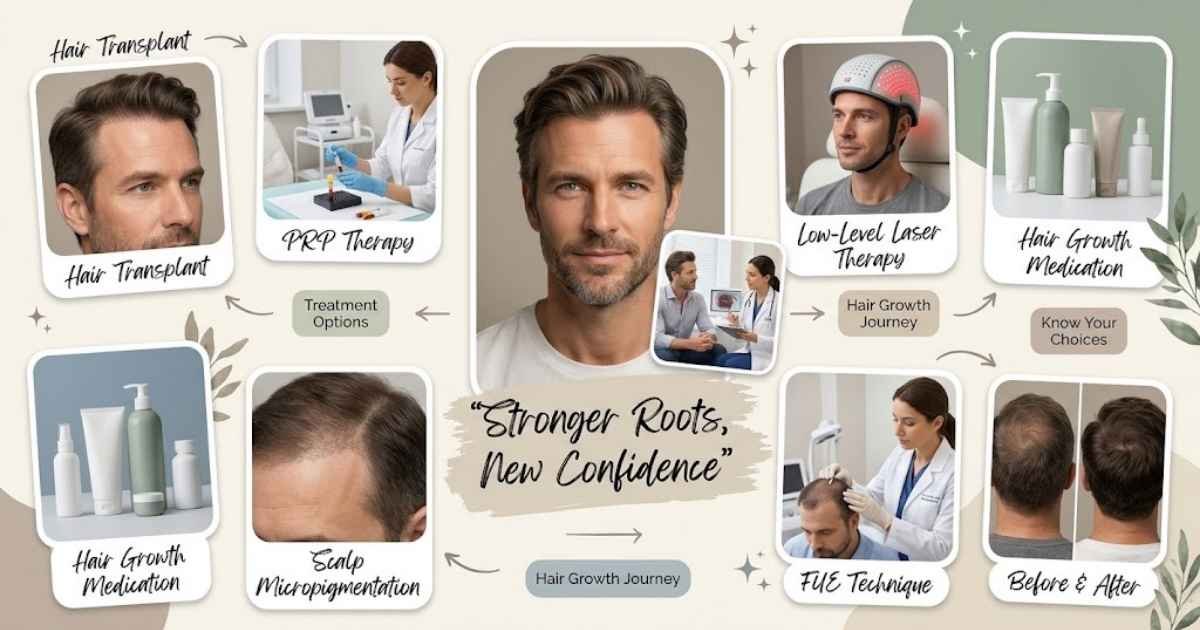
Hair loss can affect your confidence, appearance, and daily routine. Whether you’re noticing a receding hairline, thinning hair, or widening part, today’s treatment options offer several ways to address the problem. Advanced Hair Restoration combines modern technology, medical treatments, and personalized care to help improve hair density and support healthier growth.
From FUE hair transplants to platelet-rich plasma (PRP) therapy and low-level laser therapy, the right approach depends on your hair loss pattern, scalp health, budget, and long-term goals. Some treatments help preserve existing hair, while others restore coverage in areas where hair has stopped growing.
If you’re researching advanced hair restoration treatments in the United States, understanding the available options is a practical first step. This guide covers treatment types, typical costs, recovery, potential risks, and tips for choosing a qualified specialist.
What Is Advanced Hair Restoration?
Advanced Hair Restoration refers to modern medical and cosmetic approaches designed to address hair loss, improve hair density, and create natural-looking results. Depending on your needs, treatment may involve medication, non-surgical procedures, hair transplantation, or a combination of methods.
Unlike one-size-fits-all solutions, advanced hair restoration starts with understanding why your hair is thinning. Genetics, hormonal changes, medical conditions, stress, nutritional deficiencies, and certain medications can all contribute to hair loss.
A qualified specialist can evaluate your scalp, examine your hair growth pattern, and recommend an appropriate treatment plan.
What Makes Hair Restoration Advanced?
Modern hair restoration techniques focus on precision, personalized care, and realistic results.
- Better diagnosis: A scalp evaluation helps identify possible causes of hair loss.
- Improved precision: Modern transplant tools help specialists place hair grafts carefully.
- Minimally invasive procedures: FUE techniques can avoid the long linear scar associated with traditional FUT surgery.
- Non-surgical choices: Medication, PRP therapy, and low-level laser therapy may help selected patients.
- Personalized treatment plans: Specialists consider your age, hair density, donor hair, and future hair loss risk.
Advanced hair restoration doesn’t guarantee a full head of hair. However, the right treatment can improve coverage, protect existing hair, and help you make informed decisions about your appearance.
How Advanced Hair Restoration Treatments Work
The way advanced hair restoration works depends on the procedure you choose. Some treatments target hair follicles directly, while others help slow hair loss or redistribute existing hair to thinning areas.
Your specialist should first determine whether your follicles remain active and whether an underlying condition needs treatment.
The Hair Restoration Process
Initial scalp evaluation
Your provider reviews your medical history, examines your scalp, and assesses the pattern and severity of hair loss.
Diagnosis and planning
The specialist identifies likely causes and discusses suitable hair regrowth solutions, expected costs, and realistic outcomes.
Treatment selection
You may receive medication, a non-surgical procedure, surgical hair restoration, or a combined treatment plan.
Follow-up and progress
Regular checkups help your provider assess hair growth, manage side effects, and adjust treatment when necessary.
How Long Does Hair Restoration Take to Work?
Patience matters because hair grows gradually. Different procedures also have different timelines.
| Treatment | Typical timeline |
| Hair loss medication | Initial changes may appear within 3 to 6 months |
| PRP therapy | Improvement may develop over 3 to 6 months |
| Low-level laser therapy | Changes may take 3 to 6 months or longer |
| Hair transplant | Visible growth often develops over 6 to 12 months |
| Final transplant assessment | Results may continue maturing for 12 to 18 months |
These timelines are estimates, not guarantees. Your starting hair density, diagnosis, treatment consistency, and individual response can affect progress.
Types of Advanced Hair Restoration Treatments
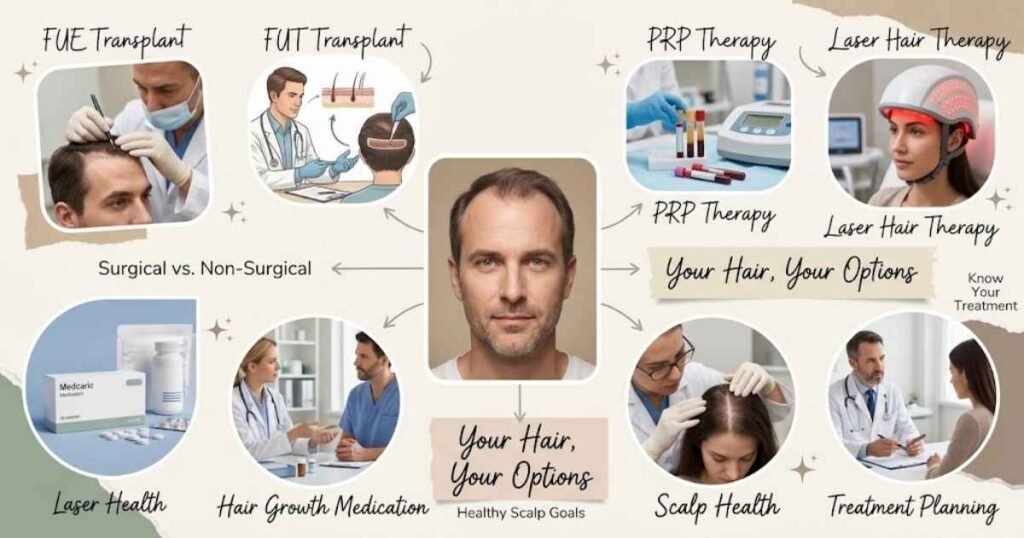
Several advanced hair restoration treatments are available in the United States. Each option serves a different purpose, so the best choice depends on your diagnosis and goals.
Popular Hair Restoration Options
| Treatment | Best suited for | Main purpose |
| FUE hair transplant | Suitable candidates with pattern hair loss | Moves follicles into thinning areas |
| FUT hair transplant | Selected candidates needing many grafts | Transplants follicles collected from a scalp strip |
| PRP therapy | Some people with thinning hair | Uses concentrated platelets from your blood |
| Low-level laser therapy | Selected people with early hair thinning | Uses light energy to support hair growth |
| Prescription medication | Certain types of hair loss | Slows progression or supports regrowth |
| Scalp health treatments | People with diagnosed scalp problems | Addresses conditions affecting scalp health |
Choosing Between Surgical and Non-Surgical Treatments
Surgical treatments redistribute existing hair follicles. Non-surgical options may help preserve hair or improve growth without transplant surgery.
For example, someone with a receding hairline and sufficient donor hair may consider FUE. Someone experiencing early thinning across the scalp may benefit more from medical treatment.
In some cases, combining treatments makes sense. A specialist might recommend medication to protect existing hair after a transplant, provided it’s appropriate for your health and diagnosis.
Remember that advanced hair restoration should address the underlying problem whenever possible. Treating the wrong cause can waste money and delay effective care.
Advanced Hair Restoration Costs in the USA
Cost is one of the biggest factors when comparing advanced hair restoration treatments. Prices vary based on the procedure, provider experience, location, number of grafts, and number of treatment sessions required.
In the United States, surgical procedures usually cost more upfront than non-surgical treatments. However, recurring sessions and long-term medication can also increase the total expense.
Average Hair Restoration Cost
The following estimates provide a general budgeting guide for patients in the USA.
| Treatment | Estimated US cost |
| Hair restoration consultation | $0 to $300 |
| FUE hair transplant | $6,000 to $15,000+ |
| FUT hair transplant | $4,000 to $12,000+ |
| PRP hair treatment | $500 to $1,500 per session |
| Low-level laser therapy | $300 to $3,000+ |
| Prescription hair loss medication | $15 to $100+ per month |
| Surgical hair restoration with extensive grafting | $10,000 to $20,000+ |
These are broad estimates, not guaranteed quotes. Actual prices vary by clinic, treatment plan, geographic area, and individual needs.
What Affects Hair Restoration Treatment Costs?
Several factors determine how much you’ll pay for advanced hair restoration.
- Number of grafts: Larger transplant areas generally require more time and resources.
- Treatment method: FUE, FUT, and robotic-assisted procedures have different pricing structures.
- Clinic location: Providers in major markets such as New York City and Los Angeles may charge more.
- Specialist experience: A surgeon’s qualifications and expertise can affect the total fee.
- Number of sessions: PRP therapy and other repeated treatments may require ongoing payments.
- Additional services: Tests, medications, follow-up appointments, and aftercare products may add to your expenses.
How to Find Affordable Hair Restoration Options
A lower price isn’t always a better deal. When comparing affordable hair restoration options, review the complete treatment package rather than focusing only on the advertised starting price.
Ask each clinic whether its quote includes anesthesia, follow-up visits, medication, and post-treatment care. If you’re considering a transplant, request the planned graft count and a clear explanation of the surgeon’s role.
Many clinics offer financing or monthly payment plans. These can make advanced hair restoration more manageable, but review interest rates and fees before signing an agreement.
Most insurance plans don’t cover elective hair transplantation. However, coverage may differ when hair loss relates to an underlying medical condition or reconstructive need. Contact your insurer to confirm your specific benefits.
Hair Transplant Surgery and Modern Techniques

Surgical hair restoration can provide lasting coverage for people with suitable donor hair. Modern hair transplant procedures move healthy follicles from a donor area, usually the back or sides of the scalp, into thinning or bald areas.
The two main approaches are follicular unit extraction (FUE) and follicular unit transplantation (FUT). Both can produce natural-looking results when a qualified surgeon selects and places grafts carefully.
FUE Hair Transplant
Advanced follicular unit extraction involves removing individual follicular units from the donor area and placing them into recipient areas.
Key advantages include:
- No long, linear donor-area scar.
- Small extraction marks that are usually less noticeable after healing.
- Flexible hairstyle options after recovery.
- Useful for many patients seeking hairline restoration.
- Potentially less discomfort at the donor site than strip surgery.
FUE may suit people who prefer short hairstyles. However, it requires careful donor management because excessive extraction can leave visible thinning or scarring.
FUT Hair Transplant
Follicular unit transplantation involves removing a narrow strip of scalp from the donor area. A trained team then separates it into individual grafts for implantation.
FUT can be useful when a patient needs many grafts and has suitable scalp characteristics. It typically leaves a linear scar, which may become visible with very short hairstyles.
FUE vs. FUT: What’s the Difference?
| Feature | FUE | FUT |
| Collection method | Individual follicular units | A strip of scalp |
| Scarring | Multiple small scars | One linear scar |
| Donor-area healing | Small extraction sites | Stitched or closed incision |
| Hairstyle considerations | Often better for very short styles | Linear scar may limit very short styles |
| Best approach | Depends on donor supply and goals | Depends on graft needs and scalp suitability |
Neither method is best for everyone. Your surgeon should assess donor density, scalp flexibility, hair characteristics, and future hair loss before recommending a procedure.
Robotic Hair Restoration
Robotic hair restoration uses imaging and computer-assisted tools to support selected steps of follicle harvesting. The technology can help with consistency and precision, depending on the system and procedure.
However, robotic assistance doesn’t eliminate surgical risks or replace medical judgment. The surgeon’s experience, planning, and handling of grafts remain important.
Hair Transplant Recovery and Results
Recovery varies, but most patients can return to routine, non-strenuous activities within several days. Your surgeon may advise avoiding strenuous exercise, swimming, direct sun exposure, and activities that could disturb grafts during early healing.
You may notice transplanted hairs shedding during the first few weeks. This can be a normal part of the process because the follicles may remain in place while new growth develops.
With advanced hair restoration, visible changes often emerge over several months. Full results can take 12 months or longer, and ongoing hair loss in untreated areas may affect your appearance over time.
More info: Hair Mechanix: 10 Best Services for Modern Hairstyles
Non-Surgical Hair Restoration Options
Not everyone needs surgery. Non-surgical hair restoration can help selected patients slow hair loss, support hair growth, or address scalp conditions without moving follicles.
These options may be especially useful when thinning begins early or when surgery isn’t suitable. Advanced hair restoration plans often combine medical treatment with lifestyle adjustments and scalp care.
Common Non-Surgical Treatments
- Minoxidil: Available in topical forms and, in some cases, oral formulations prescribed by a clinician. It may help certain types of hair loss.
- Finasteride: A prescription medication commonly used for male pattern hair loss. It isn’t suitable for everyone and requires a discussion of potential side effects.
- Low-level laser therapy: Uses specific light wavelengths to support hair growth in some people.
- PRP therapy: Uses concentrated platelets from your blood and injects them into the scalp.
- Scalp treatments: Address diagnosed issues such as inflammation, dandruff, or other conditions that may contribute to shedding.
The effectiveness of these options varies. Minoxidil and finasteride have different indications and risks, so a healthcare professional should help determine whether either medication is appropriate.
Are Non-Surgical Treatments Effective?
They can be effective for some people, particularly when treatment begins early and matches the cause of hair loss. However, results aren’t guaranteed, and maintenance is often necessary.
For example, medication may help slow genetic hair loss, but it generally won’t restore extensive bald areas completely. In that situation, advanced hair restoration may involve surgery or a combination of treatments.
Avoid products that promise instant growth or claim to reverse every type of hair loss. A sound treatment plan relies on evidence, a correct diagnosis, and realistic expectations.
PRP Therapy for Hair Regrowth
Platelet-rich plasma therapy, commonly called PRP, is a procedure that uses a concentrated portion of your own blood. A provider draws a small blood sample, processes it to concentrate platelets, and injects the prepared plasma into selected scalp areas.
Platelets release growth factors involved in tissue repair. Researchers are studying how these factors may support hair follicles, although results vary and treatment protocols aren’t fully standardized.
Potential Benefits of PRP Therapy
PRP may be considered for people with certain forms of thinning hair, particularly when follicles remain active.
- May improve hair density in some patients.
- Uses material obtained from your own blood.
- Doesn’t require a surgical transplant.
- Can be combined with other treatments when clinically appropriate.
- Usually involves limited downtime.
PRP is not a guaranteed solution for advanced baldness. It may be less useful where follicles have been lost or damaged beyond recovery.
PRP Hair Treatment Cost in the USA
A PRP session often costs around $500 to $1,500. Some patients need an initial series of treatments followed by maintenance sessions, which can increase the overall expense.
Ask your provider about the number of sessions, expected results, preparation requirements, and total treatment cost. Also confirm that the clinician has appropriate training in scalp injections.
Common temporary side effects include tenderness, swelling, redness, and mild bruising. Infection is possible, although appropriate sterile technique helps reduce the risk.
Low-Level Laser Therapy for Hair Loss

Low-level laser therapy uses low-intensity light to treat the scalp. You may see it marketed as laser hair restoration or red-light therapy.
Devices include wearable caps, helmets, and comb-style products. Some cleared devices may help improve hair growth in people with certain forms of hair loss, but results vary.
Benefits of Laser Hair Restoration
Low-level laser therapy may offer several practical advantages:
- Non-invasive treatment without surgical incisions.
- Convenient home-use options for some devices.
- Little to no recovery time.
- Potential support for hair density in selected patients.
- Possible use alongside other treatments under professional guidance.
Laser Hair Therapy Cost
Costs depend on the device and treatment plan. Home-use devices may cost several hundred to a few thousand dollars, while clinic-based programs may charge separately for sessions.
Before purchasing a device, check whether it’s appropriate for your type of hair loss. Follow the manufacturer’s instructions and ask a specialist about expected benefits.
Laser therapy generally requires consistent use over several months. It shouldn’t replace medical evaluation when hair loss develops suddenly, progresses rapidly, or occurs alongside scalp pain or inflammation.
Who Is a Good Candidate for Hair Restoration?
The best candidates for advanced hair restoration are people whose treatment matches the cause of their hair loss, overall health, and long-term goals. Age alone doesn’t determine suitability.
A specialist should evaluate your scalp before recommending medication, PRP therapy, laser treatment, or surgery.
Signs You May Benefit From Treatment
You may be a suitable candidate if you experience:
- A gradually receding hairline or thinning crown.
- Male pattern baldness or female pattern hair loss.
- Reduced hair density despite a healthy scalp.
- Stable hair loss with enough donor hair for transplantation.
- Early thinning that may respond to medication or non-surgical treatment.
- Hair loss that affects your confidence and daily comfort.
Advanced hair restoration isn’t always the first step. Sudden shedding, patchy bald spots, scalp inflammation, or unexplained hair loss may signal a condition that needs medical attention.
Can Women Benefit From Advanced Hair Restoration?
Absolutely. Women can benefit from advanced hair restoration when a specialist identifies the cause and selects an appropriate treatment.
Female hair loss may result from genetics, hormonal changes, nutritional deficiencies, thyroid conditions, or other medical factors. Treatment may include medication, scalp care, PRP therapy, or transplantation for carefully selected patients.
Women considering a hair transplant need an assessment of donor hair and the pattern of thinning. Diffuse hair loss across the scalp may make transplantation less suitable.
Who May Need Another Approach?
Hair restoration surgery may not be appropriate if you have:
- Insufficient donor hair for the desired coverage.
- An untreated scalp condition or active infection.
- Uncontrolled medical conditions that increase surgical risk.
- Rapidly progressing hair loss without a clear diagnosis.
- Expectations that exceed what the available donor hair can provide.
A qualified clinician can help you understand your options and determine whether treatment should begin immediately or wait until the underlying problem is managed.
Benefits of Advanced Hair Restoration Treatments
Advanced hair restoration offers several potential benefits when the treatment suits your needs. The goal isn’t simply to add hair. It’s to improve coverage, preserve existing follicles when possible, and create results that look natural.
Key Benefits to Consider
- Improved hair density: Suitable treatments may make thinning areas look fuller.
- Natural-looking hairlines: Careful graft placement can follow your facial features and existing growth pattern.
- Personalized care: Specialists can tailor treatment to your hair type, scalp condition, and goals.
- Multiple treatment options: You can compare surgical and non-surgical approaches.
- Long-term improvement: Transplanted follicles can continue producing hair, although surrounding natural hair may keep thinning.
- Potential confidence boost: Improving hair coverage may help you feel more comfortable with your appearance.
What Results Can You Realistically Expect?
Results depend on your diagnosis, treatment method, existing hair density, and response to care. Some people see noticeable improvement, while others experience more modest changes.
Advanced hair restoration works best when you understand its limits. A transplant can redistribute available follicles, but it can’t create an unlimited supply of new donor hair. Medication may slow certain types of hair loss, but it usually requires continued use to maintain benefits.
Before treatment, ask to see relevant before-and-after photographs of patients with similar hair loss patterns. Review the time between photographs and discuss what results are realistic for your situation.
Possible Risks and Side Effects
Every medical treatment carries some risk. Advanced hair restoration procedures can cause temporary discomfort, and surgical treatments have additional risks that you should understand before proceeding.
A qualified provider should explain the possible complications, recovery requirements, and steps you can take to reduce them.
Common Risks by Treatment Type
| Treatment | Possible risks or side effects |
| FUE or FUT surgery | Swelling, bleeding, infection, scarring, numbness, and temporary shedding |
| PRP therapy | Tenderness, bruising, swelling, and infection risk |
| Low-level laser therapy | Scalp irritation or discomfort in some users |
| Minoxidil | Scalp irritation; oral forms may cause additional systemic side effects |
| Finasteride | Possible sexual side effects, mood changes, and other medication-specific risks |
Not everyone experiences these effects. Your personal risk depends on the treatment, health history, and provider’s technique.
How to Reduce Treatment Risks
Take these practical steps before starting advanced hair restoration:
- Choose a properly qualified medical professional.
- Share your medications, allergies, and medical history.
- Follow pre-treatment instructions carefully.
- Use only medications and products recommended for your situation.
- Attend follow-up appointments and report unusual symptoms.
- Seek prompt medical care for severe pain, fever, spreading redness, or significant bleeding.
If you’re considering prescription medication, discuss potential side effects and contraindications with your clinician. Don’t stop or change prescribed medication without appropriate medical guidance.
How to Choose a Hair Restoration Clinic
Choosing the right clinic can make a major difference in your experience. When searching for advanced hair restoration near me, look beyond advertisements and discounted packages.
Focus on medical qualifications, treatment transparency, patient safety, and the provider’s ability to explain realistic outcomes.
What to Check Before Booking
1. Verify the specialist’s credentials. Confirm the surgeon’s medical license, relevant training, and experience with the procedure you’re considering.
2. Ask who performs each step. Find out who plans the hairline, extracts grafts, makes recipient sites, and places follicles. Understand the surgeon’s direct involvement.
3. Review before-and-after results. Look for consistent lighting, similar camera angles, and patients with hair loss patterns like yours.
4. Request a personalized evaluation. A reputable clinic should examine your scalp and discuss possible causes rather than automatically recommending surgery.
5. Compare complete costs. Ask for a written quote that identifies graft numbers, treatment fees, medications, follow-up visits, and possible additional expenses.
6. Discuss risks openly. Your provider should explain limitations and possible complications without guaranteeing perfect results.
Questions to Ask During a Consultation
Use these questions to compare hair restoration specialists:
- What is causing my hair loss?
- Which treatment is most appropriate for my situation?
- Am I a good candidate for FUE or FUT?
- How many grafts might I need?
- Who will perform the surgical steps?
- What results can I realistically expect?
- What is included in the total cost?
- How will you manage future hair loss?
- What follow-up care will I receive?
Finding Clinics Across the United States
Patients often search for hair transplant clinics in New York, hair restoration in Los Angeles, a hair transplant surgeon in Chicago, or hair restoration clinics in Houston.
Others compare hair transplant services in Miami and hair restoration centers in Dallas. Regardless of location, apply the same standards when evaluating providers.
When you search for the best hair restoration clinics in the United States, prioritize qualifications and patient safety over popularity alone. A convenient location is helpful, but careful medical planning matters more.
How to Maintain Hair Restoration Results

Treatment doesn’t end when your procedure or initial sessions finish. Maintaining your results requires consistent aftercare, realistic expectations, and follow-up with your provider.
The right routine depends on whether you’ve had surgery, received PRP therapy, used laser treatment, or started medication.
Essential Aftercare Tips
- Follow recovery instructions: After surgery, clean your scalp and protect the grafts exactly as directed.
- Avoid strenuous activity initially: Follow your surgeon’s advice about exercise, swimming, and heavy lifting.
- Take medication as prescribed: Some treatments help preserve existing hair and require continued use.
- Maintain scalp health: Address dandruff, inflammation, or other diagnosed scalp conditions.
- Eat a balanced diet: Adequate protein and essential nutrients support normal hair growth.
- Attend follow-up appointments: Your provider can monitor progress and identify concerns early.
- Track your results: Periodic photographs under consistent lighting can help you assess changes.
Protecting Long-Term Hair Growth
Hair transplant results can last for many years because transplanted follicles often retain characteristics from their donor area. However, natural hair around the transplanted follicles may continue to thin.
That’s why advanced hair restoration may include a long-term plan for managing ongoing hair loss. Your clinician may recommend medication, monitoring, or additional treatment when appropriate.
Avoid unproven supplements and products that promise rapid regrowth. If you notice renewed shedding, don’t assume your treatment has failed. Arrange an evaluation to identify the cause before making changes.
FAQ’s
What Is Advanced Hair Restoration?
Hair Restoration combines modern medical treatments and transplant techniques to address thinning hair and support regrowth.
How Much Does Hair Restoration Cost in the USA?
Advanced Hair Restoration costs vary by procedure, clinic location, graft numbers, and required treatment sessions.
Which Hair Restoration Treatment Works Best?
Advanced Hair Restoration works best when treatment matches your hair loss cause, scalp condition, and individual needs.
How Long Does Hair Restoration Take?
Advanced Hair Restoration may show initial improvements within months, while transplant results often take twelve months.
Can Women Benefit From Hair Restoration Treatments?
Advanced Hair Restoration can help women manage certain hair loss conditions through personalized medical treatments and suitable procedures.
Conclusion
Hair loss can affect your confidence, but modern treatments offer practical ways to manage thinning hair. Advanced Hair Restoration includes surgical and non-surgical options designed to address different hair loss concerns. Whether you’re considering an FUE hair transplant, PRP therapy, medication, or laser hair restoration, choosing the right approach starts with a professional evaluation. Your age, donor hair, scalp condition, and treatment goals all influence the best option for you.
Before investing in Advanced Hair Restoration, compare clinic qualifications, treatment effectiveness, recovery requirements, and total costs. Ask about realistic hair restoration results and the care needed to maintain them. Although no procedure guarantees perfect results, a personalized treatment plan can help you make confident decisions. With appropriate medical guidance and consistent follow-up, Advanced Hair Restoration may improve hair coverage and help you manage future hair loss more effectively.

HairVist is a helpful destination for hair care tips, hairstyle ideas, and beauty inspiration, managed by Ava Reynolds, an SEO content writer with 2 years of experience, focused on creating simple, useful, and engaging content that helps readers learn more about hair care and styling.
1 thought on “7 Advanced Hair Restoration: Treatments, Costs, and Results”