
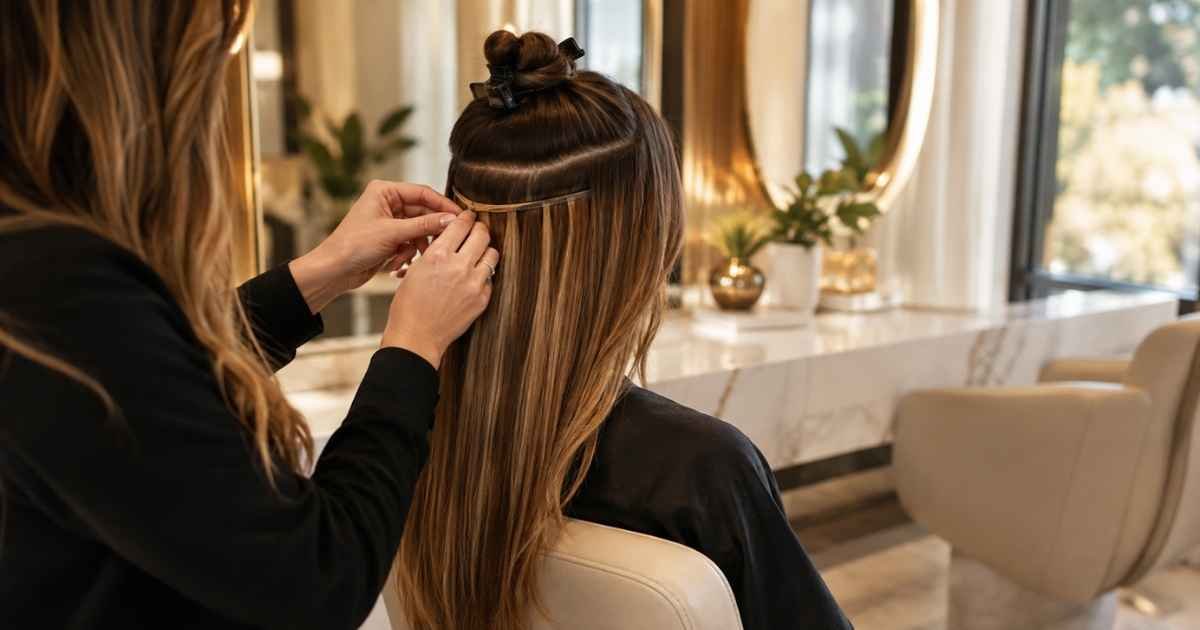
Choosing the Best Extensions for Thin Hair can make a noticeable difference when your natural strands lack volume. The right pieces can add fullness without creating unnecessary weight or tension. Best Extensions for Thin Hair should feel comfortable, blend naturally, and suit your hair density. Lightweight extensions can create fuller-looking hair while helping protect fragile strands. Whether you prefer clip-ins, tape-ins, or halo extensions, the goal remains natural volume.
With so many options available, choosing the Best Extensions for Thin Hair may feel confusing at first. Human hair extensions often provide a realistic texture and seamless blend. Meanwhile, discreet extensions can enhance sparse areas without looking bulky. The ideal choice should complement your natural hair while supporting healthy hair. Throughout this guide, you’ll learn how different methods work and which options can create beautiful, thicker-looking hair without overwhelming delicate strands.
Best Hair Extensions for Thin Hair That Add Natural Volume
Choosing the best hair extensions for fine hair isn’t simply about adding more strands. The right option should create natural volume while keeping your delicate hair comfortable and protected. For hair extensions for thin hair, lightweight designs usually work better because they place less stress on the hair roots and scalp. They can also help create fuller-looking hair without making your hairstyle appear bulky or artificial.
Before choosing extensions, consider your hair density, strand strength, desired hair length, and daily routine. Human hair extensions usually provide the most natural blend because you can style them much like your own hair. If your strands feel fragile, focus on lightweight hair extensions, discreet attachment methods, and extensions that blend with thin hair rather than heavy pieces that create unnecessary tension.
What to Look for in Extensions for Thin Hair
The best extensions for delicate strands should feel almost invisible once installed. A proper fit also matters because excessive Best Extensions for Thin Hair weight can pull on fragile strands and contribute to breakage. Your stylist can assess your scalp, hair density, and sparse areas before recommending an appropriate hair extension method.
- Lightweight construction: Choose lightweight extensions that won’t overload fine strands.
- Natural blend: Look for shades and textures that blend seamlessly with your natural hair.
- Low extension weight: Lighter pieces generally create less tension around the hair roots.
- Discreet attachment: Small, flat attachments can create a more polished appearance.
- Human hair quality: Remy hair offers a realistic texture and flexible styling options.
- Professional installation: A skilled stylist can adjust extension placement to suit your density.
- Easy maintenance: Choose an option that fits naturally into your existing hair care routine.
For many people, extensions for fuller-looking hair work best when placed strategically instead of covering the entire head. A few well-positioned pieces can add volume around the crown, sides, or ends. That approach can create natural volume while helping protect fragile strands from unnecessary traction.
Tape-In Extensions for Thin Hair
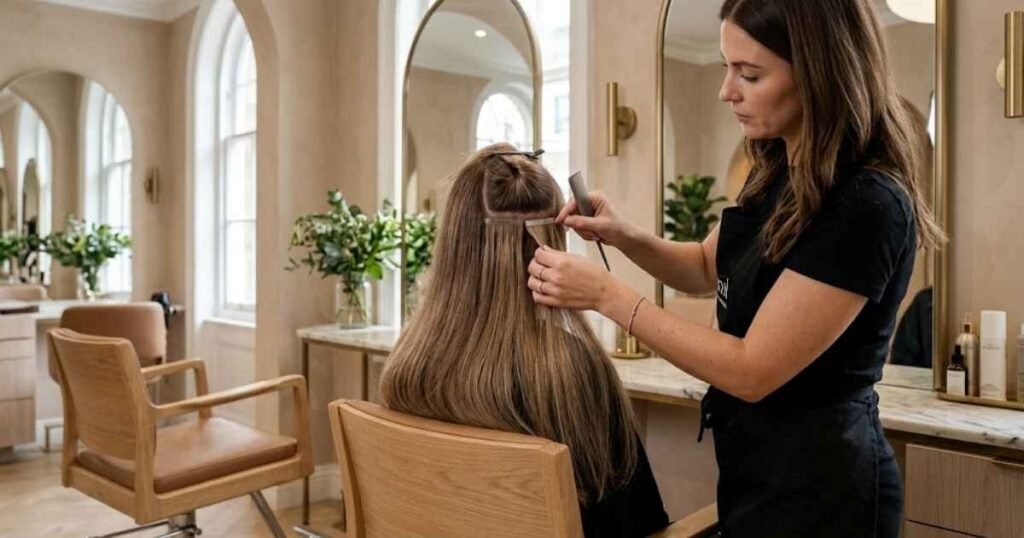
Tape-in hair extensions are popular among people who want added thickness without bulky attachments. They use thin adhesive tabs that sandwich sections of natural hair between extension panels. Because the panels sit relatively flat against the head, they can create a seamless blend when properly matched and placed.
For Best Extensions for Thin Hair, placement matters tremendously. Your stylist should avoid areas with very low density or excessive shedding. Instead, extensions can sit where your natural hair provides enough support. High-quality tape-in extensions for thin hair can add length and volume while maintaining a discreet appearance, especially when the extension color, texture, and density closely match your own.
Benefits of Tape-In Extensions
Tape-ins can suit people who want semi-permanent Best Extensions for Thin Hair without committing to more intensive installation methods. They typically remain in place for weeks before professional maintenance becomes necessary. Their flat profile also makes them easier to conceal under fine layers.
- Create noticeable added thickness without bulky wefts.
- Offer a relatively flat and discreet extension attachment.
- Work well for creating a natural blend with suitable placement.
- Can add both hair length and volume.
- Provide a polished look without daily application.
- Allow professional adjustment as natural hair grows.
- Work particularly well when extension weight remains low.
However, tape-ins aren’t automatically extensions that won’t damage thin hair. Improper placement, excessive weight, rough removal, or prolonged tension can contribute to hair damage and breakage. Professional installation and careful extension removal matter just as much as the initial application.
Clip-In Extensions for Thin Hair
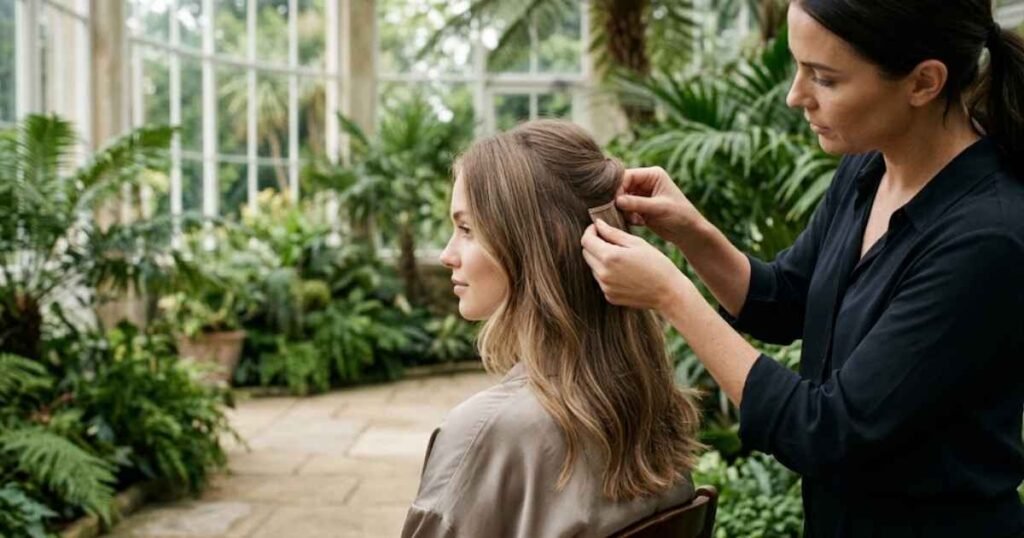
Clip-in hair extensions offer one of the easiest ways to add volume temporarily. Unlike permanent or semi-permanent options, you can attach them when you want fuller hair and remove them before sleeping. This makes them useful for weddings, parties, photographs, special occasions, or days when your hairstyle needs an extra lift.
For Best Extensions for Thin Hair, lightweight clip-ins are usually preferable to heavy sets. Large clips and dense wefts can become noticeable when natural hair lacks sufficient density to cover them. Instead, smaller pieces placed strategically can create thicker-looking hair without overwhelming delicate strands.
Why Clip-Ins Can Work Well
The biggest advantage is flexibility. You control when you wear them, where you place them, and how much volume you want. They’re also a practical choice for people who aren’t ready for permanent hair extensions.
- Easy to put in and remove at home.
- Ideal as temporary hair extensions.
- Allow you to control the amount of added volume.
- Work well for special occasions and occasional styling.
- Can add volume without long-term attachment.
- Offer flexibility when your hair needs a break.
- Come in human hair and synthetic hair options.
When using clip-ins on delicate hair, avoid attaching heavy pieces to the same spot repeatedly. Rotate the Best Extensions for Thin Hair placement when possible and remove them gently. If the clips pull, pinch, or create discomfort, the set may be too heavy for your current hair density.
Halo Extensions for Thin Hair
Halo hair extensions use a thin wire or band that rests around the head while the extension hair falls underneath the natural layers. Because the hair doesn’t rely on numerous clips or adhesive tabs, halos can offer a comfortable alternative for people seeking extensions for sparse hair.
They’re particularly useful when your goal is volume through the mid-lengths and ends rather than dramatic root volume. The Best Extensions for Thin Hair should sit securely without creating excessive tension. A correct size and suitable extension weight can make a significant difference in achieving a natural appearance.
Advantages of Halo Extensions
Halo Best Extensions for Thin Hair can be appealing if you want an uncomplicated styling routine. They’re generally quick to place, easy to remove, and don’t require permanent attachment to individual strands.
- Provide temporary hair extensions without adhesive.
- Can create fuller-looking hair within minutes.
- Reduce the need for multiple attachment points.
- Work well for occasional events and everyday styling.
- Offer a simple option for people with delicate hair.
- Can blend naturally beneath the top layer.
- Are easy to remove at the end of the day.
Still, halos aren’t ideal for every type of thinning hair. If your hair has significant sparse areas around the crown, the band may become difficult to conceal. A stylist can help determine whether a halo provides enough coverage and whether its weight suits your scalp and existing hair.
Hand-Tied Extensions for Fine, Thin Hair
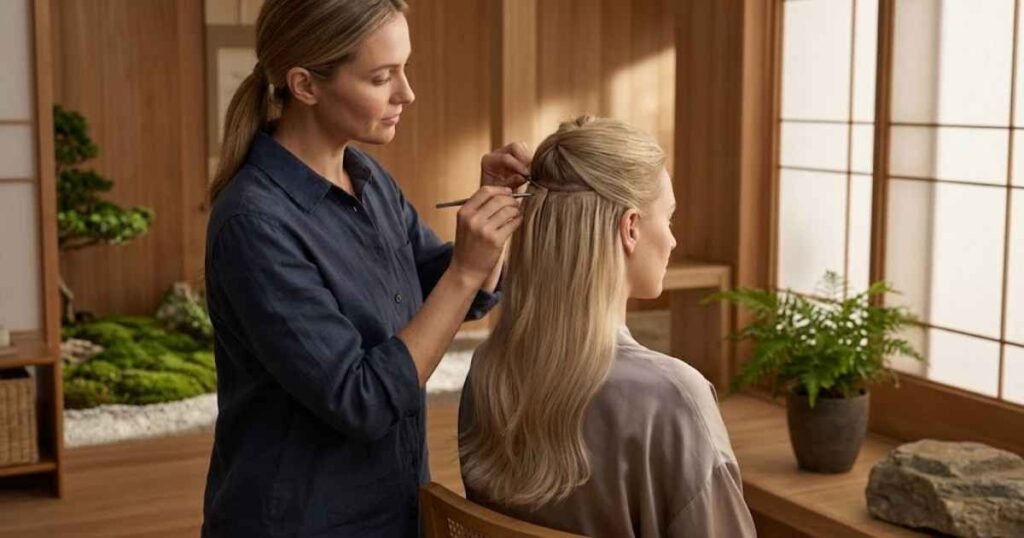
Hand-tied Best Extensions for Thin Hair use finely constructed wefts designed to lie flatter than many traditional wefts. Their slimmer profile can make them an attractive option for extensions for fine, thin hair, especially when you want longer-lasting volume with a natural finish.
Because these extensions still attach to your natural hair, professional installation remains essential. Your stylist should consider your hair density, scalp comfort, growth pattern, and desired result before selecting the right weft size. Strategic extension placement can distribute weight more evenly and help prevent unnecessary tension on fragile strands.
Why Hand-Tied Extensions May Suit Fine Hair
The appeal of hand-tied wefts comes from their lightweight, flexible construction. They can provide Best Extensions for Thin Hair for added volume without creating the thick, rigid appearance that some heavier wefts produce.
- Create soft, natural-looking volume.
- Sit relatively flat against the head.
- Can provide longer-lasting volume than temporary options.
- Work well when carefully matched to fine textures.
- Offer a natural blend with suitable layering.
- Can add length while improving perceived hair density.
- Allow customized placement based on your natural hair.
That said, hand-tied extensions aren’t automatically suitable for every person with fragile hair. Your stylist should assess the strength of your strands before installation. If your hair shows significant breakage, shedding, or extreme sensitivity around the scalp, reducing extension weight may be more important than maximizing volume.
Choosing the Right Method for Your Hair
Your ideal extension method depends on more than how thin your hair looks. Consider how much Best Extensions for Thin Hair volume you want, how often you’ll wear extensions, and how much maintenance you’re willing to handle. Someone seeking occasional fullness may prefer clip-ins or a halo, while another person may prefer professionally maintained tape-ins or hand-tied extensions.
The goal is simple: create fuller-looking hair without compromising healthy hair. Choose lightweight construction, avoid excessive tension, follow a gentle hair care routine, and schedule professional maintenance when needed. With thoughtful selection and proper care, extensions can enhance natural volume while helping you protect fragile strands.
Sew-In Extensions for Thin Hair
Sew-in Best Extensions for Thin Hair can provide long-lasting volume and length, but they require careful consideration when you have thin or fragile strands. Traditional sew-ins can create considerable tension because the extensions attach to braided natural hair. For that reason, they may not be the first choice for very fine hair or areas with low density. However, a skilled stylist can sometimes use lighter wefts and gentler placement to create a comfortable fit.
If you’re considering hair extensions for thinning hair, your stylist should examine your scalp, hair roots, and overall hair density first. Heavy extensions or overly tight braids can increase traction and contribute to breakage. When your natural hair can safely support them, lightweight sew-ins may provide substantial hair volume and a longer-lasting style.
When Sew-Ins May Work
Sew-ins can make sense when your hair has enough strength to support the attachment. Proper installation also helps distribute the extension weight instead of concentrating it in one small area.
- Add noticeable hair length and volume.
- Provide a longer-lasting styling solution.
- Can cover sparse areas with strategic placement.
- Work well with textured or naturally curly hair.
- Reduce the need for daily extension application.
- Can create a fuller overall hairstyle.
- Allow customized weft selection for different densities.
More Info: 10 Best Fairy Hair Tinsel Ideas for a Magical Look
Microlink Extensions for Thin Hair
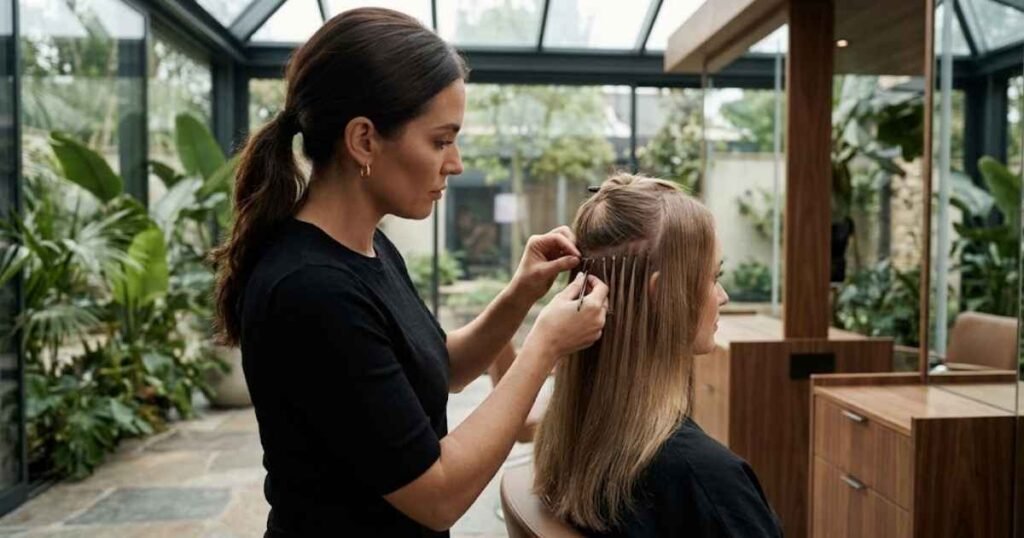
Micro link hair extensions attach small strands or wefts using tiny beads or links. They don’t require adhesive or heat, which makes them appealing to people who want a removable attachment method. However, the individual attachment points can still create tension on fine hair when the extensions are too heavy or installed too tightly.
For Best Extensions for Thin Hair, lightweight strands and careful spacing matter. A professional stylist should avoid attaching too much hair to a small section of natural hair. Proper extension placement helps distribute weight while maintaining a discreet appearance. Regular maintenance also prevents grown-out attachments from pulling unnecessarily on your natural strands.
Pros and Considerations
Micro links can provide a natural result when matched correctly to your hair density. Still, they’re not suitable for everyone with delicate hair.
- Don’t require adhesive during installation.
- Can provide natural-looking length and volume.
- Allow individual adjustment and repositioning.
- Offer a reusable extension option in many cases.
- Can create a discreet blend with fine textures.
- Work well with human hair extensions.
- Require careful professional maintenance.
If you notice pulling, soreness, increased shedding, or breakage, don’t ignore it. Those signs can indicate excessive tension or unsuitable extension weight. Removing or adjusting the extensions early may help protect fragile strands.
Keratin Fusion Extensions for Thin Hair
Keratin fusion extensions attach individual strands to natural hair using a keratin-based bond and controlled heat. They can create an exceptionally natural appearance because the extensions mimic the movement of individual hairs. For people wanting natural-looking hair extensions, this method can provide excellent versatility and a seamless finish.
However, fusion extensions require extra care when used on fragile hair. The bonds should remain small and appropriately weighted for the section supporting them. Excessive extension weight or poor installation can increase stress around the hair roots. A professional stylist consultation is therefore essential before choosing this method.
Why Fusion Extensions Are Popular
When installed correctly, fusion extensions can create a subtle transformation without obvious wefts or large attachment points.
- Create a highly natural blend.
- Provide long-lasting added length.
- Add volume gradually through individual strands.
- Offer flexible styling options.
- Can remain discreet beneath natural layers.
- Work particularly well with human hair.
- Create a polished appearance without visible clips.
Still, people with severely thin hair, significant breakage, or fragile roots may need a lighter method. Your goal should always be healthy hair first. Volume comes second.
Weft Extensions for Thin Hair
Weft hair extensions contain multiple strands attached to a continuous strip. They can add impressive volume quickly, but the width and weight of the weft matter greatly for fine or sparse hair. A lightweight weft generally works better than a dense, heavy one because it places less stress on individual strands.
For extensions for sparse hair, your stylist can choose a thinner weft and place it where your natural hair has enough density for support. The right color and texture also create a seamless blend. If the weft feels heavy, tight, or uncomfortable, it may not be the right option for your hair.
Benefits of Lightweight Wefts
A properly selected weft can create visible fullness without making the hairstyle look overly constructed.
- Add instant volume hair extensions for fuller styles.
- Can improve the appearance of low hair density.
- Offer different widths and thicknesses.
- Can work with several installation methods.
- Provide substantial volume with fewer attachment areas.
- Blend well when matched to natural texture.
- Can be customized for different hair lengths.
The key is moderation. Heavy wefts may look impressive initially, yet they can place unwanted traction on delicate strands. Lightweight construction and strategic placement usually produce a more natural result.
How to Choose the Best Extensions for Thin Hair

Choosing the Best Extensions for Thin Hair starts with your natural hair rather than the extension itself. Consider your strand thickness, hair density, scalp condition, lifestyle, and desired amount of volume. Someone with fine but dense hair may tolerate a different method than someone with sparse, fragile strands.
Think about how often you want to wear extensions, too. Clip-in hair extensions and halo hair extensions suit temporary styling, while tape-in hair extensions and other semi-permanent methods require regular maintenance. Your stylist can help you choose an attachment that balances appearance, comfort, and hair protection.
Factors to Consider
Before choosing the Best Extensions for Thin Hair, compare these practical factors:
- Hair density: Lower density usually requires lighter extensions.
- Strand strength: Fragile strands need minimal extension weight.
- Desired result: Decide whether you want length, volume, or both.
- Maintenance: Choose a method that fits your daily hair care routine.
- Attachment type: Consider clips, tape, beads, keratin bonds, or wefts.
- Lifestyle: Your workouts, sleep habits, and styling routine can affect suitability.
- Professional installation: A qualified stylist can customize the method and placement.
The Best Extensions for Thin Hair should enhance your appearance without making your scalp uncomfortable. If an extension method constantly pulls, feels heavy, or causes breakage, it’s not the right choice. Beautiful fuller hair should never come at the expense of your natural strands.
How to Make Hair Extensions Look Fuller and More Natural
The Best Extensions for Thin Hair can create a beautiful, natural-looking finish when they’re selected and placed correctly. Creating thicker-looking hair doesn’t always require more extension hair. In fact, adding too much can make fine hair look flatter at the roots because natural strands struggle to support the weight.
Instead, focus on strategic layering, accurate color matching, and lightweight pieces that follow the movement of your natural hair. Your stylist can also blend extensions into your haircut rather than leaving a noticeable transition between natural and added hair. Soft layers can disguise attachment points while creating natural volume through the mid-lengths and ends.
Human hair generally offers the most styling flexibility, especially when you want the extensions to behave like your own hair. This makes quality human hair extensions a strong option when choosing the Best Extensions for Thin Hair.
Simple Ways to Create a Natural Blend
- Match the extension color closely to your natural hair.
- Choose a texture that mirrors your existing strands.
- Use lightweight pieces rather than oversized extensions.
- Place extensions where your natural hair can conceal them.
- Blend the ends with suitable layers and trimming.
- Avoid excessive heat that can dry fragile strands.
- Brush gently from the ends upward to prevent tangling.
For extensions that blend with thin hair, proportion matters. A smaller amount of well-matched hair often looks more realistic than a thick extension set. The Best Extensions for Thin Hair should create a seamless blend that looks naturally abundant rather than hair sitting visibly on top of your own.
How to Protect Thin Hair While Wearing Extensions
Protecting thin hair starts before installation. Choosing the Best Extensions for Thin Hair means selecting an extension method that matches your hair density and strand strength rather than choosing one based solely on appearance.
Lightweight extensions can reduce unnecessary stress, while professional installation helps control tension and attachment weight. Your daily routine matters just as much. Avoid excessive tension when brushing, styling, or tying your hair back.
Follow a gentle hair care routine, keep the scalp clean, and attend maintenance appointments on schedule. Proper extension maintenance also prevents grown-out attachments from becoming heavy or pulling against the roots.
Extension Care Tips
- Choose lightweight hair extensions suited to your density.
- Avoid excessive tension around the scalp and hair roots.
- Brush gently with an extension-friendly brush.
- Don’t sleep with removable extensions attached.
- Keep permanent or semi-permanent extensions professionally maintained.
- Watch for breakage, soreness, unusual shedding, or scalp discomfort.
- Schedule professional extension removal instead of pulling extensions out yourself.
If your hair becomes noticeably weaker, give it a break from extensions and reassess the method. The Best Extensions for Thin Hair aren’t a universal guarantee against damage because results depend on weight, placement, installation, maintenance, and individual hair strength.
The safest approach combines suitable extensions, careful handling, and consistent attention to healthy hair. With the right method and routine, you can create beautiful volume while helping protect fragile strands.
FAQ’s
What extensions add volume without weighing down fine strands?
The Best Extensions for Thin Hair use lightweight designs that add volume without placing excessive tension on fragile strands.
Are tape-in extensions suitable for delicate natural hair?
The Best Extensions for Thin Hair can include lightweight tape-ins when professionally installed and carefully matched to natural density.
Can clip-in extensions make fine hair appear thicker?
The Best Extensions for Thin Hair can include clip-ins that create temporary fullness while remaining easy to remove.
Which extensions create the most natural-looking blend?
The Best Extensions for Thin Hair often include human hair options that closely match your texture, color, and density.
How can extensions help protect fragile strands?
The Best Extensions for Thin Hair should remain lightweight, properly placed, gently maintained, and free from excessive tension.
Conclusion
The Best Extensions for Thin Hair should enhance your natural beauty without putting unnecessary stress on delicate strands. Lightweight construction, proper extension placement, and professional installation can make a major difference. Whether you choose tape-in, clip-in, halo, hand-tied, or another method, always consider your hair density and strand strength first.
For occasional styling, temporary options can provide convenient volume without long-term attachment. If you want a lasting transformation, semi-permanent methods may offer a more consistent result. Still, healthy hair should remain the priority. The Best Extensions for Thin Hair are the ones that create a natural blend, comfortable fit, and fuller-looking finish while supporting your hair care routine. With thoughtful selection and proper maintenance, you can enjoy added thickness and beautiful volume without making your hair feel weighed down.

HairVist is a helpful destination for hair care tips, hairstyle ideas, and beauty inspiration, managed by Ava Reynolds, an SEO content writer with 2 years of experience, focused on creating simple, useful, and engaging content that helps readers learn more about hair care and styling.