

Wondering Can You Dye Synthetic Hair? You’re not alone. Many wig owners want a fresh shade without buying another piece. However, synthetic fibers don’t behave like human hair. That means regular hair dye may not work as expected. Before you start dyeing synthetic hair, check the fiber type and heat tolerance. Polyester, nylon, acrylic, and heat-friendly fibers can react differently. The right synthetic hair dye also matters. A strand test can prevent patchy color, fiber damage, and unwanted results.
Learning Can You Dye Synthetic Hair? starts with understanding dye compatibility. You need the right coloring method for your wig, extensions, or hairpiece. Some products work better on synthetic fibers than others. Fabric dye may suit certain materials, while specialized synthetic wig dye can offer better results. With careful preparation, controlled heat, even application, and proper rinsing, Can You Dye Synthetic Hair? can have a practical answer for many synthetic wigs.
Can You Dye Synthetic Hair? What You Need to Know
If you’re wondering, can you dye synthetic hair?, the short answer is yes, but it depends heavily on the fiber. Synthetic wigs, extensions, and hairpieces don’t behave like natural human hair. Regular box dye usually won’t work because synthetic hair lacks the natural structure needed to absorb traditional hair color.
Before starting any synthetic hair dye project, check the wig’s fiber type and care label. Acrylic, polyester, nylon, and other synthetic hair fibers can react differently to heat and color.
When asking can you dye synthetic hair?, keep these factors in mind:
- Fiber type and construction
- Heat resistance
- Current hair color
- Desired final shade
- Dye compatibility
- Dyeing temperature
- Condition of the wig
- Manufacturer’s care instructions
For example, changing a blonde synthetic wig to a darker shade may work better than trying to make a black wig blonde. Synthetic hair generally handles darker color changes more successfully.
A strand test also matters. Test a small hidden section before committing to the entire piece. This simple step can prevent uneven color, unexpected shades, and fiber damage.
Can All Synthetic Hair Be Dyed Safely?
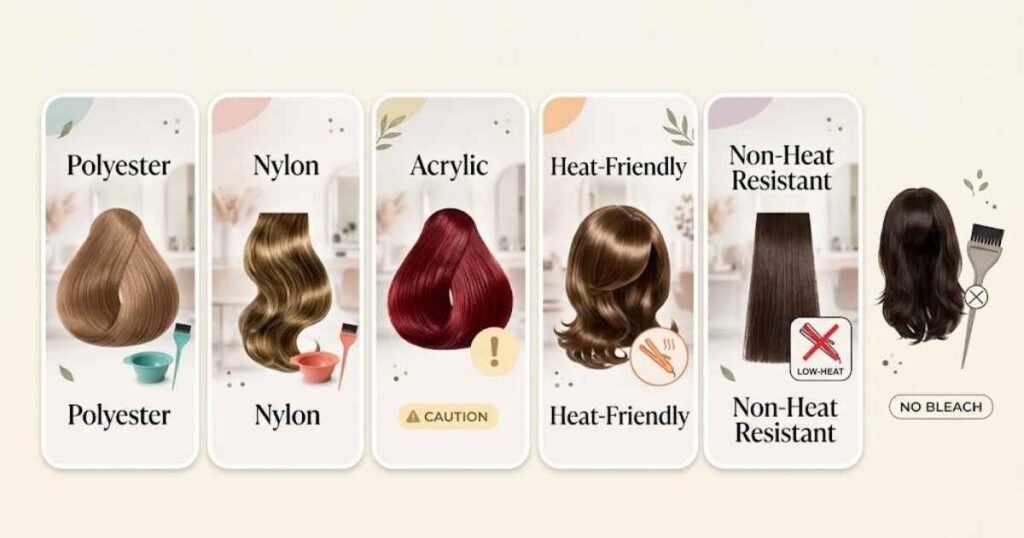
Not every synthetic wig can handle dyeing. Some fibers respond reasonably well to specialized synthetic wig dye, while others may become rough, tangled, melted, or permanently damaged.
So, can synthetic hair be dyed safely? Sometimes, but the answer depends on the fiber and coloring method.
Check the Fiber First
Look at the product label or manufacturer’s information. Common synthetic fibers include:
| Fiber Type | Dyeing Potential | Main Concern |
| Polyester | Often compatible with certain fabric dyes | Requires controlled heat |
| Nylon | Can accept some dyes | Heat and color compatibility matter |
| Acrylic | Difficult to recolor | Heat sensitivity |
| Heat-friendly fibers | May tolerate controlled warmth | Excessive heat can still damage fibers |
| Non heat resistant synthetic hair | Limited options | High temperatures can melt or deform fibers |
If you have non heat resistant synthetic hair, avoid methods that require boiling water or prolonged high heat. Heat-resistant synthetic hair offers more flexibility, but it still needs careful temperature control.
When Should You Avoid Dyeing?
Skip the project when:
- The manufacturer specifically says not to color it.
- The fibers already feel brittle or damaged.
- You can’t identify the fiber type.
- The desired color requires bleaching.
- You need a dramatic lightening result.
If you’re asking can you dye synthetic hair? because you want to lighten a dark wig, consider the limitations first. Synthetic fibers don’t lighten like natural hair.
Why Synthetic Hair Is Different From Human Hair
The biggest difference comes down to fiber structure. Human hair contains natural proteins that allow traditional permanent and semi-permanent dyes to penetrate the hair shaft.
Synthetic hair uses manufactured fibers instead.
These synthetic hair fibers may contain acrylic, polyester, nylon, or specialized heat-friendly materials. Their surface doesn’t absorb standard hair color in the same way.
That’s why can you use hair dye on synthetic hair? is an important question before buying a product. In most cases, regular permanent hair dye isn’t the right choice.
Synthetic Hair vs. Human Hair
| Feature | Synthetic Hair | Human Hair |
| Fiber structure | Manufactured | Natural protein fiber |
| Regular hair dye | Usually ineffective | Generally suitable |
| Bleaching | Usually unsuitable | Possible with proper care |
| Heat tolerance | Depends on fiber | Generally higher |
| Color changes | Limited | More flexible |
| Special dye needed | Often | Usually not |
When dyeing synthetic hair, the goal isn’t simply to deposit color like you would on natural hair. Instead, you need a coloring method that works with the specific material. If you’re asking Can You Dye Synthetic Hair?, the answer depends largely on the fiber and dye compatibility.
What Types of Synthetic Hair Can Be Dyed?
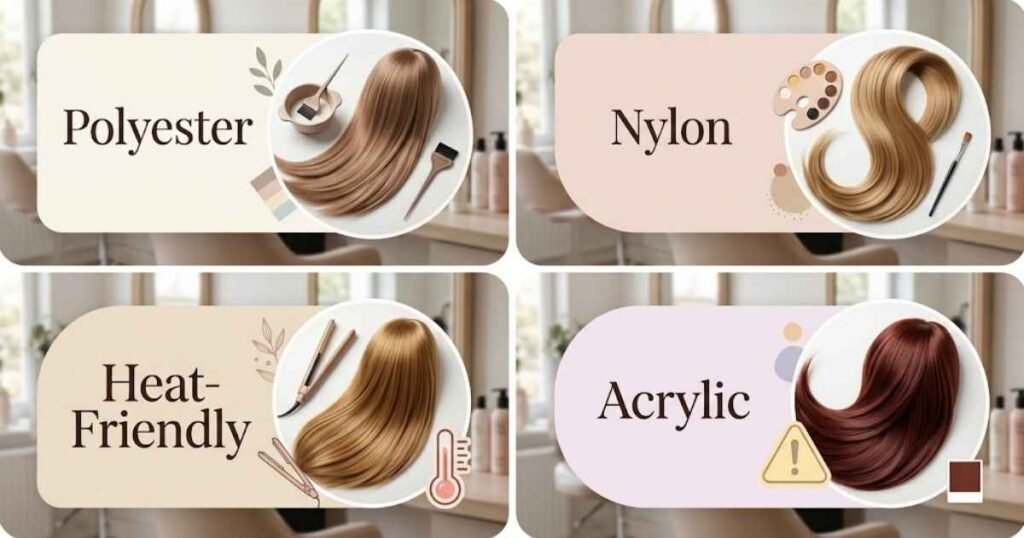
Not all synthetic hair reacts the same way. Understanding the material gives you a much better starting point for synthetic wig coloring. Before you ask Can You Dye Synthetic Hair?, identify whether you’re working with polyester, nylon, acrylic, or heat-friendly fibers.
Polyester Synthetic Hair
Polyester fibers can work with certain fabric dyes designed for synthetic materials. Heat may help the dye bond to the fibers, but temperature control remains essential.
Nylon Synthetic Hair
Nylon can accept certain synthetic-compatible dyes. It may offer more predictable color absorption than some other synthetic materials.
Heat-Friendly Synthetic Hair
Heat-friendly fibers can tolerate styling temperatures that ordinary synthetic hair cannot. However, heat-friendly doesn’t mean heat-proof.
Use controlled temperatures and avoid direct high heat for extended periods. If you’re wondering Can You Dye Synthetic Hair?, heat tolerance is one of the first factors to check.
Acrylic Synthetic Hair
Acrylic fibers can be challenging to recolor. They may not accept standard dyes evenly, and excessive heat can damage their shape.
If you’re wondering what dye works on synthetic hair, always match the product to the fiber rather than choosing a dye based only on the desired color.
Best Methods to Dye Synthetic Hair at Home

If you’re searching for how to dye synthetic hair at home, start with a controlled process rather than jumping straight into the full wig.
The safest approach begins with preparation and a hidden strand test. Knowing Can You Dye Synthetic Hair? also requires understanding whether your chosen method suits the material.
Method 1: Specialized Synthetic Fiber Dye
A fiber-safe dye designed for synthetic materials can provide more suitable color absorption.
Basic process:
- Detangle the hair gently.
- Wash away styling products and buildup.
- Allow the hair to dry according to product instructions.
- Perform a strand test.
- Prepare the dye according to its directions.
- Apply the color evenly.
- Maintain the recommended temperature.
- Rinse carefully.
- Allow the synthetic hair to dry naturally.
Method 2: Fabric Dye for Synthetic Hair
Fabric dye for synthetic hair can work for certain polyester or nylon fibers. However, not every fabric dye works with every synthetic material.
If you’re asking can you use fabric dye on synthetic hair?, check whether the dye specifically works with your fiber type. That’s also important when deciding Can You Dye Synthetic Hair? safely at home.
Avoid guessing. Dye compatibility matters more than brand popularity.
Method 3: Controlled Dye Bath
A dye bath can help achieve more consistent even color coverage across a wig or hairpiece.
This method works best when:
- The fiber is compatible.
- The dye requires immersion.
- You can control the temperature.
- You have enough space to move the hair freely.
- You complete a strand test first.
For anyone researching how to dye a synthetic wig, controlled immersion can be useful for an overall color change. However, careless heat exposure can cause serious fiber damage.
Best Dyes and Coloring Methods for Synthetic Hair
Choosing the right product is often the most important part of the entire process. The best dye for synthetic hair depends on the fiber, current shade, and desired result.
Before choosing a product, ask whether Can You Dye Synthetic Hair? with that particular dye and fiber combination. Compatibility should always come before color preference.
Common Coloring Options
| Coloring Method | Best Use | Important Note |
| Synthetic fiber dye | Compatible synthetic fibers | Match dye to material |
| Fabric dye | Certain polyester and nylon fibers | Check fiber compatibility |
| Synthetic-specific color products | Controlled color changes | Follow product directions |
| Dye bath | Overall recoloring | Requires temperature control |
| Direct application | Small color adjustments | May create uneven coverage |
The right synthetic wig dyeing process should focus on compatibility first. Color comes second. Before starting, ask Can You Dye Synthetic Hair? based on the specific fiber rather than assuming every wig can handle the same method.
What About Regular Hair Dye?
Regular human-hair dye isn’t usually the best option. It relies on chemical processes designed for natural hair.
That means can you use hair dye on synthetic hair? In most situations, you shouldn’t expect reliable results.
You may end up with:
- Little or no color change
- Patchy color
- Stiff fibers
- Product buildup
- Unwanted fading
- Fiber damage
For better results, use a product intended for the specific synthetic material whenever possible. This is especially important when deciding Can You Dye Synthetic Hair? safely at home.
How to Prepare Synthetic Hair Before Dyeing

Good preparation can make the difference between a smooth synthetic hair color change and a frustrating mess.
Before you begin dyeing synthetic hair, inspect the piece carefully. If you’re still wondering Can You Dye Synthetic Hair?, identifying the fiber should be your first step.
Clean the Hair
Remove:
- Oils
- Styling products
- Hairspray
- Silicone buildup
- Dust
- Leave-in treatments
Clean fibers give you more consistent color absorption.
Detangle Carefully
Use a wide-tooth comb or your fingers to gently remove knots. Start at the ends and work upward.
Don’t yank through tangles. Synthetic fibers can stretch, fray, or lose their original texture.
Perform a Strand Test
A strand test should never be skipped.
Choose a small hidden section and apply your intended coloring method. Check the result after rinsing and drying.
Look for:
- Final color
- Evenness
- Texture changes
- Fiber softness
- Curl pattern
- Color bleeding
A strand test also helps answer how to dye synthetic hair evenly before you risk the entire wig.
Protect Your Work Area
Dye can stain countertops, sinks, clothing, and towels. Cover your workspace before mixing or applying color.
Wear gloves and use dedicated tools when possible.
Choose Your Color Carefully
Synthetic hair usually performs better when you work toward a darker or similar shade.
For example:
| Starting Shade | Target Shade | General Result |
| Light brown | Medium brown | Usually more realistic |
| Blonde | Dark red | Potentially achievable with compatible dye |
| Black | Blonde | Generally unrealistic |
If you’re researching how to change the color of synthetic hair, think of the process as adding pigment rather than removing it. Synthetic fibers don’t respond to bleach the way human hair does.
Can You Bleach Synthetic Hair?
The question can you bleach synthetic hair? comes up often. In most cases, traditional bleach isn’t a practical solution.
Similarly, can you lighten synthetic hair? Usually not in the same way you can lighten human hair.
Instead, choose a lighter synthetic wig if you need a dramatically brighter base. Understanding this limitation can make the question Can You Dye Synthetic Hair? much easier to answer realistically.
Final Preparation Checklist
Before beginning your synthetic hair dyeing project, make sure you have:
- ✔ Identified the fiber type
- ✔ Selected a compatible dye
- ✔ Completed a strand test
- ✔ Cleaned the hair
- ✔ Removed tangles
- ✔ Prepared your workspace
- ✔ Checked heat sensitivity
- ✔ Chosen a realistic target shade
- ✔ Read the dye’s instructions
- ✔ Planned your rinsing and drying process
Once these steps are complete, you’re ready to move into the actual synthetic wig dyeing process with fewer surprises. Proper preparation also makes synthetic wig dyeing tips much easier to follow because you already know how the fiber reacts.
The biggest takeaway is simple: Can You Dye Synthetic Hair? Yes, certain synthetic fibers can be colored successfully when you use a compatible dye, controlled technique, and realistic color goal. Treat the fiber gently and don’t assume that methods designed for human hair will work the same way.
MORE INFO: 10 Proven How Long Does Hair Need to Be to Wax for Best Results
Step-by-Step Method for Dyeing Synthetic Hair
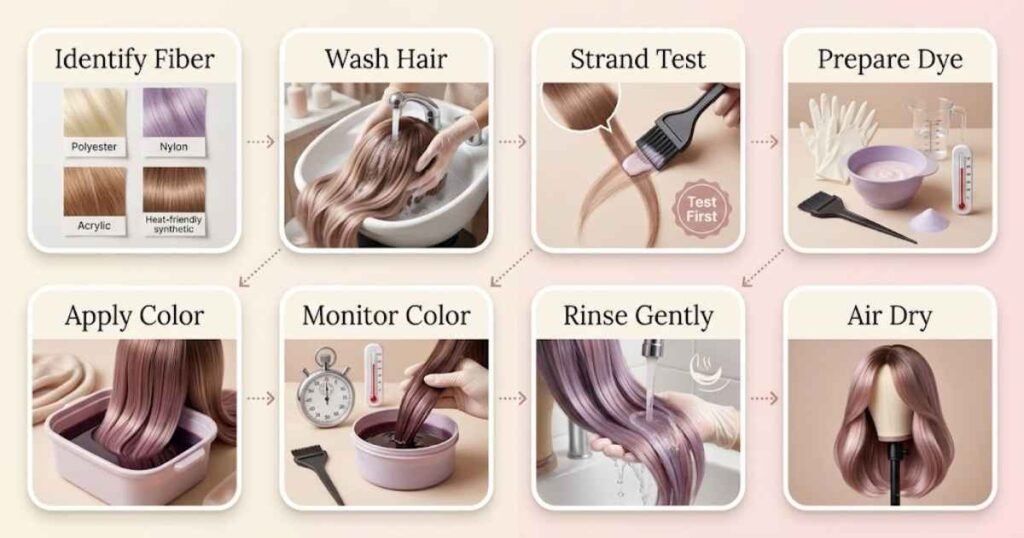
Once you know the fiber type, you can start dyeing synthetic hair with much more confidence. The process differs from coloring human hair because synthetic fibers need compatible products and controlled conditions.
If you’re searching for how to dye synthetic hair at home, follow this practical process. Knowing Can You Dye Synthetic Hair? also means understanding which method suits your particular fiber.
Step 1: Identify the Fiber
Check whether you’re working with polyester, nylon, acrylic, or heat-friendly fibers. The material determines which synthetic hair dye can work safely.
Step 2: Wash the Hair
Clean the wig or extensions with a gentle synthetic-safe cleanser. Remove oils, styling products, and buildup because they can interfere with color absorption.
Don’t apply heavy conditioner before dyeing. It may leave a coating over the fibers.
Step 3: Complete a Strand Test
Test a small hidden section before coloring the entire piece.
Check the strand for:
- Color absorption
- Final shade
- Texture changes
- Fiber damage
- Color bleeding
- Heat sensitivity
This simple test can save an expensive wig from an unwanted synthetic wig color change.
Step 4: Prepare the Dye
Choose a fiber-safe dye that matches the synthetic material. If you’re using fabric dye for synthetic hair, confirm that it’s suitable for the specific fiber.
Follow the product’s recommended mixing ratio and temperature.
Step 5: Apply the Color
For an overall change, immerse the synthetic hair evenly in the dye bath when the product instructions allow it.
For smaller changes, carefully apply the dye section by section.
Move the hair gently so the color reaches different areas without creating tangles.
Step 6: Monitor the Color
Don’t walk away during the process. Synthetic fibers can react quickly to heat and concentrated dye.
Check the color regularly until it reaches the desired depth.
Step 7: Rinse Thoroughly
Rinse the hair carefully until the water becomes mostly clear. Avoid rough rubbing because wet synthetic fibers can tangle easily.
Step 8: Dry Naturally
Place the wig on a suitable stand and let it air-dry. Avoid unnecessary heat unless the fiber specifically allows it.
Essential Tips for Choosing the Right Color
Choosing the right shade isn’t simply about picking your favorite color. Your starting shade, fiber type, and dye compatibility all influence the final result.
Before you dye synthetic hair, consider how the existing color will affect the new pigment. This also helps you set realistic expectations when deciding Can You Dye Synthetic Hair? for a particular color transformation.
Follow the Darker-Color Rule
Synthetic hair generally works better when you move toward a darker shade.
For example:
| Starting Shade | Target Shade | General Expectation |
| Blonde | Medium brown | More realistic |
| Light brown | Dark brown | Usually easier |
| Blonde | Burgundy | Possible with compatible dye |
| Brown | Black | Generally practical |
| Black | Blonde | Usually unrealistic |
| Dark brown | Pastel pink | Very difficult |
Think About the Undertone
A synthetic wig’s existing undertone can influence the finished synthetic hair color.
For example, a warm blonde base may create a warmer red or brown result. A cooler base may produce a different-looking tone.
Consider Your Skin and Style
Your color should also fit your overall look. Popular synthetic hair color options include:
- Chocolate brown
- Espresso
- Burgundy
- Copper
- Auburn
- Deep red
- Blue-black
- Plum
- Dark violet
A dramatic shade can create a complete wig transformation, while a subtle brown or red can make the change look more natural.
Choose Realistic Color Changes
When changing synthetic hair color, think about what the fiber can realistically achieve. Adding pigment is generally more practical than trying to remove existing pigment.
Methods for Getting Even Color on Synthetic Hair
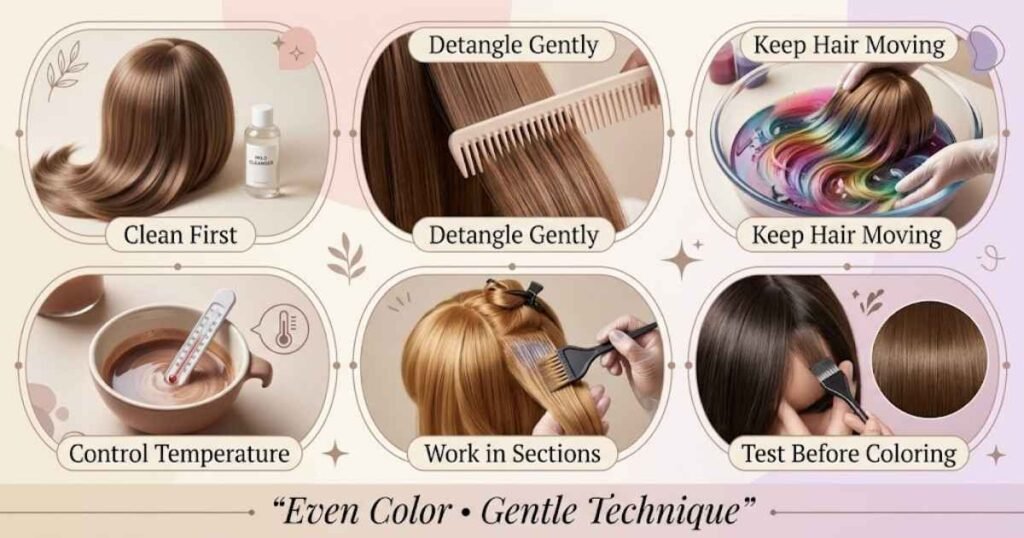
Uneven color is one of the biggest challenges when you dye synthetic hair. Some sections may absorb more pigment than others, especially when the hair contains product buildup or has different fiber textures.
Fortunately, a few simple techniques can improve even color coverage. If you’re asking Can You Dye Synthetic Hair?, consistent application is just as important as choosing the right dye.
Clean Before Coloring
Residue can block dye from reaching the fibers evenly. Always start with clean synthetic hair.
Detangle Before Dyeing
Knots can prevent the dye from reaching every strand. Gently detangle the wig before beginning.
Keep the Hair Moving
During a compatible dye-bath method, gently move the hair through the solution. This helps prevent concentrated patches.
Don’t aggressively stir or scrub the wig. That’s a fast route to tangles.
Maintain Consistent Temperature
If your chosen dye requires heat, maintain the recommended dyeing temperature.
Too little heat may produce weak color absorption. Too much heat can cause fiber damage or distortion.
Avoid Overloading One Section
When applying dye directly, work in manageable sections. Distribute the product consistently from roots toward the ends.
Use a Strand Test First
A test section shows how the dye reacts before you commit to the entire wig. It can also clarify whether Can You Dye Synthetic Hair? with your chosen product and fiber combination.
For better results, remember these synthetic hair coloring tips:
- Start with clean fibers.
- Use compatible dye.
- Work in small sections.
- Keep application consistent.
- Control the temperature.
- Don’t rush the rinsing stage.
- Let the hair dry completely before judging the final shade.
If you’re learning how to dye synthetic hair evenly, patience matters just as much as technique. A careful process can make a noticeable difference in your final synthetic hair color.
Can You Lighten or Bleach Synthetic Hair?
This is where synthetic hair differs dramatically from human hair.
If you’re asking can you bleach synthetic hair, traditional bleach usually isn’t a reliable way to lighten synthetic fibers. Human hair can undergo chemical lightening because of its natural structure. Synthetic fibers don’t respond the same way.
So, can you lighten synthetic hair? Usually not through conventional bleaching. That’s an important limitation to understand when considering Can You Dye Synthetic Hair? for a major color transformation.
Why Bleaching Is Problematic
Traditional bleach may:
- Damage synthetic fibers
- Change the texture
- Create uneven results
- Weaken the strands
- Cause melting with heat
- Produce little useful color change
The same concern applies when trying to create a major synthetic hair color change. Adding pigment and removing pigment are completely different processes.
What Should You Do Instead?
If you need a much lighter shade, purchasing a lighter synthetic wig often makes more sense.
For example, changing black synthetic hair to platinum blonde isn’t comparable to bleaching human hair. The fiber simply doesn’t offer the same chemical response.
If your goal is a dramatic transformation, consider the existing shade before asking Can You Dye Synthetic Hair? A lighter starting color gives you more practical options.
Can You Create a Lighter Appearance?
Sometimes you can alter the visual effect without actually lightening the fibers.
Options may include:
- Choosing a lighter replacement wig
- Adding compatible colored extensions
- Using temporary fiber-safe color products
- Creating highlights with suitable synthetic hair pieces
When asking can synthetic hair be dyed, remember that dyeing and lightening are two different processes. Synthetic fibers may accept added pigment while remaining unsuitable for chemical lightening.
Common Dyeing Mistakes and Tips to Avoid Them
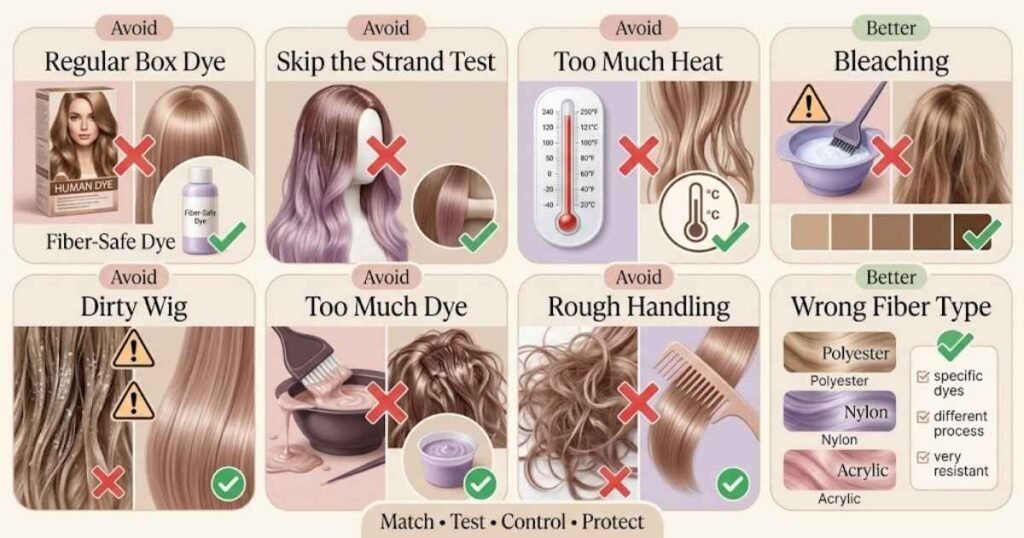
Even experienced wig users can make mistakes when attempting synthetic wig coloring. Most problems happen because people treat synthetic fibers like natural hair.
Before starting, ask Can You Dye Synthetic Hair? based on the fiber type and selected coloring method.
Using Regular Box Dye
Standard human-hair dye isn’t generally designed for synthetic wig fibers.
Better approach: Choose a dye compatible with your specific material.
Skipping the Strand Test
Testing the whole wig first can turn a small experiment into an expensive mistake.
Better approach: Always test a hidden section.
Using Excessive Heat
High temperatures can permanently alter synthetic fibers.
Better approach: Follow the dye’s recommended temperature and consider whether the wig is heat-friendly.
Trying to Bleach the Wig
Traditional bleach usually won’t produce the same results as it does on human hair.
Better approach: Start with a synthetic wig that’s already close to your desired color.
Dyeing a Dirty Wig
Product buildup can create patchy color.
Better approach: Clean the hair thoroughly before dyeing synthetic hair.
Applying Too Much Dye
More dye doesn’t automatically mean better color. Excess product can create buildup and unnecessary mess.
Better approach: Follow the recommended concentration.
Rubbing the Hair Aggressively
Synthetic fibers can tangle and fray when handled roughly.
Better approach: Move and rinse the hair gently.
Ignoring the Fiber Type
This is perhaps the most important mistake.
A method that works for polyester may not work for acrylic or another synthetic material. Understanding the fiber is essential when deciding Can You Dye Synthetic Hair? safely.
Always check:
- Fiber composition
- Heat tolerance
- Dye compatibility
- Manufacturer instructions
- Recommended processing temperature
Avoiding these synthetic hair dyeing mistakes can make the entire process much more predictable.
Aftercare Tips for Dyed Synthetic Hair
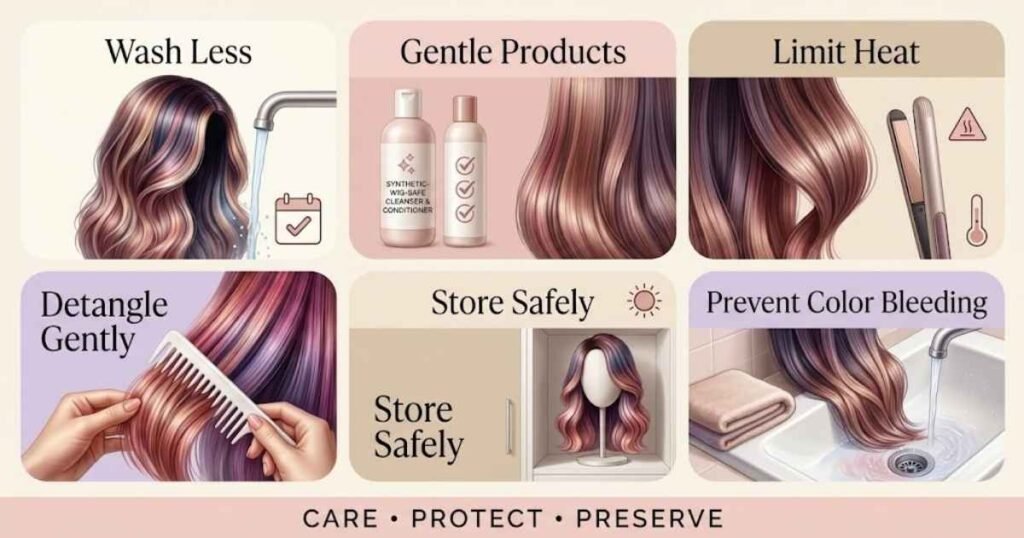
Once you’ve successfully managed to dye synthetic hair, proper aftercare helps preserve the color and keep the fibers looking smooth.
For anyone wondering Can You Dye Synthetic Hair?, remember that successful coloring doesn’t end when you rinse the dye. Proper maintenance plays a major role in keeping the finished shade attractive.
Dyed synthetic hair needs gentle handling because repeated washing, friction, heat, and styling can contribute to color fading and fiber wear.
Wash Less Often
Synthetic wigs don’t need frequent washing. Clean them when necessary rather than following a daily hair-washing routine.
Use Gentle Products
Choose products made for synthetic wigs whenever possible. Avoid harsh cleansers that may strip color or leave the fibers dry and rough.
Avoid Excessive Heat
Even heat resistant synthetic hair has limits. Repeated high-temperature styling can shorten the life of the fibers.
If you’re working with non heat resistant synthetic hair, avoid heated tools unless the manufacturer specifically approves them.
Detangle Carefully
Use your fingers or a suitable wide-tooth comb. Start at the ends and slowly work upward.
Protect the Wig While Storing
Keep your dyed wig away from direct sunlight and excessive heat. Store it on a wig stand or in a clean protective space.
Watch for Color Bleeding
Newly dyed synthetic hair can sometimes release excess pigment during early washes. Rinse carefully and avoid light-colored clothing until you’re confident the color has stabilized.
With thoughtful synthetic wig care, you can help preserve both the color and the condition of the fibers. That’s what turns a successful synthetic hair dyeing project into a wearable, long-lasting result.
FAQ’s
Can regular hair dye work on synthetic wigs?
Can You Dye Synthetic Hair? Regular hair dye usually won’t color synthetic fibers effectively like natural human hair.
What dye works best for synthetic hair?
When asking Can You Dye Synthetic Hair?, choose synthetic fiber dye or compatible fabric dye for your material.
Can you use fabric dye on synthetic hair?
Yes, Can You Dye Synthetic Hair? with fabric dye depends on compatible polyester or nylon fibers and heat.
How can synthetic hair be dyed safely at home?
To answer Can You Dye Synthetic Hair?, clean fibers, test strands, control heat, rinse gently, and air-dry.
How long does synthetic hair dye last?
Can You Dye Synthetic Hair? Color may fade gradually from washing, heat, sunlight, friction, and repeated styling.
Conclusion
Now you know Can You Dye Synthetic Hair? depends mainly on the fiber, dye compatibility, and coloring technique. Synthetic wigs need different treatment from natural hair. Regular box dye usually isn’t the best option. Instead, choose a suitable synthetic wig dye or compatible fabric dye based on the material. Always perform a strand test before coloring the complete piece.
When dyeing synthetic hair, avoid excessive heat and unrealistic color changes. Darkening a compatible wig generally makes more sense than trying to bleach it lighter. Proper synthetic hair care also helps preserve the finished shade. Gentle washing, careful detangling, limited heat, and smart storage can reduce color fading. Ultimately, Can You Dye Synthetic Hair? can be answered with a qualified yes when you match the method to the synthetic fibers and handle the wig carefully.

HairVist is a helpful destination for hair care tips, hairstyle ideas, and beauty inspiration, managed by Ava Reynolds, an SEO content writer with 2 years of experience, focused on creating simple, useful, and engaging content that helps readers learn more about hair care and styling.
1 thought on “10 Proven Can You Dye Synthetic Hair? Safe Methods & Tips”