
If your hair feels dry even after conditioning, porosity may be the missing piece. Deep Conditioner for Low Porosity Hair can help thirsty strands absorb moisture without leaving a heavy coating. Low porosity hair has tightly closed cuticles, so water and conditioning products may struggle to penetrate. The right deep conditioner for a low porosity hair focuses on hydration, softness, and moisture retention. Ingredients such as aloe vera, glycerin, honey, and lightweight oils can support healthier-looking hair.
Choosing a Deep Conditioner for a Low Porosity Hair doesn’t have to feel confusing. This guide covers 15 proven picks for different textures and needs. You’ll also learn which moisturizing ingredients work well, what ingredients may cause buildup, and how to apply a deep conditioner for low porosity hair correctly. Whether you have fine, curly, wavy, or natural hair, the right deep conditioning treatment can help create softer, hydrated, more manageable strands.
What Is Low Porosity Hair?
Low porosity hair has a tightly packed cuticle layer that makes it harder for water and products to enter the hair shaft. Think of the cuticles like tiny roof shingles that stay relatively flat instead of opening easily.
Because of this structure, low porosity hair can resist moisture at first. However, once you get enough hydration into the strands, it can hold that moisture well.
A deep conditioner for low porosity hair should focus on hydration without leaving a heavy coating on the hair. Lightweight formulas usually work better because they can support moisture absorption without creating excessive hair buildup.
Common Features of Low Porosity Hair
- Water may sit on the surface before soaking in.
- Products can build up easily.
- Hair may take longer to become fully wet.
- Heavy creams can leave strands greasy or coated.
- Low porosity curls may feel dry even when they have plenty of products on them.
- Hair can look dull when moisture balance is off.
- Lightweight, water-based formulas often feel more comfortable.
- Warm water can help improve moisture penetration during wash day.
For low porosity natural hair, the goal isn’t to pile on more products. Instead, you want better hair hydration, moisture absorption, and moisture retention.
How to Tell If You Have Low Porosity Hair
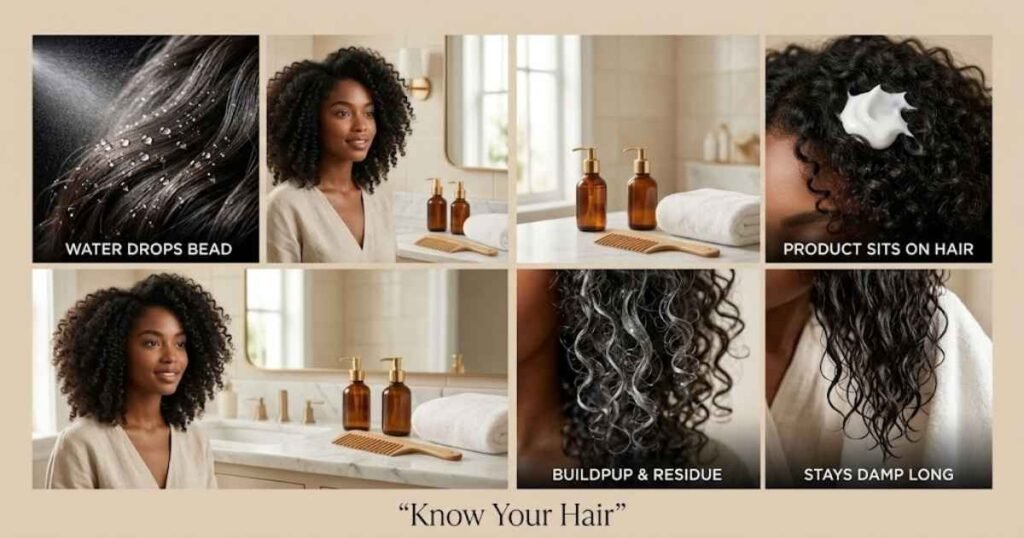
Before buying a deep conditioner for low porosity hair, look at how your strands respond to water and products. Your everyday hair behavior often gives you more useful clues than a single porosity test.
Signs You May Have Low Porosity Hair
1. Water Takes Time to Absorb
When you wet your hair, water may sit on top of the hair strands instead of soaking in quickly.
2. Products Sit on the Hair
A rich hair conditioner may remain on the surface. This can make your hair feel coated rather than hydrated.
3. Buildup Happens Easily
Low porosity strands can collect styling products, oils, and creams. Regular cleansing can help manage product buildup and scalp buildup.
4. Your Hair Takes Longer to Dry
After washing, your hair may stay damp for a long time. This can happen because the tightly arranged hair cuticles slow water movement.
5. Heavy Products Feel Too Much
Thick butters and heavy oils may weigh down fine hair. A lightweight conditioner can provide moisture without making your style limp.
Quick Comparison
| Hair behavior | Possible low porosity sign |
| Water sits on hair | High likelihood |
| Products feel heavy | Common |
| Frequent buildup | Common |
| Slow moisture absorption | Common |
| Hair stays wet for hours | Possible |
| Lightweight products work better | Often |
A deep conditioner for low porosity hair can make a noticeable difference when these patterns appear together. Still, hair porosity can vary across your head. Damaged ends may behave differently from newer growth.
Why Low Porosity Hair Needs a Special Deep Conditioner
Low porosity hair doesn’t necessarily need more product. It needs the right type of moisture.
Since closed hair cuticles can slow moisture penetration, a heavy formula may simply sit on the surface. That’s why a deep conditioner for low porosity hair should usually provide hydration through lightweight ingredients.
A good deep conditioning treatment can help improve softness, manageability, and moisture retention without overwhelming the strands.
What Makes a Formula Work?
Look for a moisturizing deep conditioner that offers:
- Water-based hydration
- Lightweight ingredients
- Humectants such as glycerin or aloe vera
- Gentle conditioning agents
- Ingredients that support softness and shine
- Minimal heavy oils and waxy ingredients
- Balanced moisture without excessive protein
For low porosity curls, proper conditioning can also improve definition and frizz control. Your curls need enough moisture to stay flexible without becoming weighed down.
A deep conditioner for curly hair can work well when its formula suits your porosity. Likewise, a deep conditioner for wavy hair should remain lightweight enough to protect natural movement.
What Ingredients Should You Look for in a Deep Conditioner?
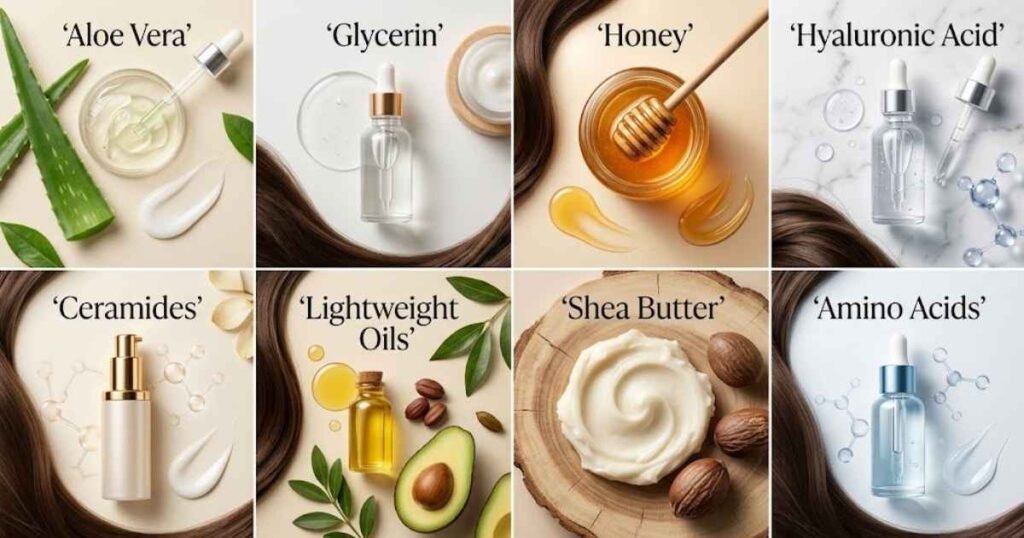
The best deep conditioner for low porosity hair often contains ingredients that hydrate and soften without creating a thick layer over the strands.
1. Aloe Vera
Aloe vera provides lightweight hydration and can help hair feel softer. It’s especially useful when you want moisture without a heavy finish.
2. Glycerin
Glycerin acts as a humectant that helps attract moisture. It can support hydrated hair when used as part of a well-balanced formula.
3. Honey
Honey works as another humectant. In a deep conditioner for low porosity hair mask, it can help support softness and hydration.
4. Hyaluronic Acid
Hyaluronic acid can help attract and hold moisture. It’s a useful ingredient in formulas designed around hair hydration.
5. Ceramides
Ceramides can help support the hair’s protective structure. They may also contribute to smoother, more manageable hair.
6. Lightweight Oils
Some natural oils can provide softness without feeling overly greasy. Jojoba oil and avocado oil are examples worth considering.
7. Shea Butter
Shea butter can provide rich conditioning. However, use it thoughtfully if your low porosity strands become weighed down easily.
8. Amino Acids
Amino acids can support the feel and strength of hair. They’re particularly useful when your strands need conditioning without an aggressive protein treatment.
Ingredient Guide
| Ingredient | Main benefit | Best use |
| Aloe vera | Lightweight hydration | Dry or thirsty strands |
| Glycerin | Moisture attraction | Hair hydration |
| Honey | Humectant support | Softness |
| Hyaluronic acid | Moisture support | Hydration-focused formulas |
| Ceramides | Smoother feel | Dry or rough hair |
| Jojoba oil | Lightweight conditioning | Fine to medium hair |
| Avocado oil | Softness and conditioning | Coarse or textured hair |
| Shea butter | Rich moisture | Very dry strands |
| Amino acids | Conditioning support | Weak-feeling hair |
When shopping for a deep conditioner for low porosity hair, read the full product ingredients instead of relying only on marketing claims.
Ingredients to Avoid for Low Porosity Hair
Not every moisturizing ingredient works equally well for every head of hair. Low porosity strands can become coated when you consistently use heavy formulas.
That doesn’t mean you must completely ban every rich ingredient. Instead, watch how your hair responds.
Be Careful With Heavy Ingredients
- Heavy butters used too frequently
- Large amounts of mineral oil
- Thick waxes
- Very rich silicone-heavy formulas
- Excessive layers of natural oils
- Multiple styling products used together
Too much buildup can prevent water from reaching the hair effectively. If your strands suddenly feel dull, sticky, or unusually coated, your routine may need a reset.
What About Protein?
Protein isn’t automatically bad for low porosity hair. However, some people experience protein overload when they use several protein-rich products too often.
Watch for ingredients such as:
- Hydrolyzed protein
- Keratin
- Wheat protein
- Rice protein
- Silk protein
- Collagen
If your hair feels stiff, rough, or unusually brittle after protein-heavy products, consider switching to a protein-free conditioner temporarily.
A deep conditioner for low porosity hair can contain protein when your hair needs it. The key is maintaining balance rather than avoiding protein forever.
How to Choose the Best Deep Conditioner for Low Porosity Hair
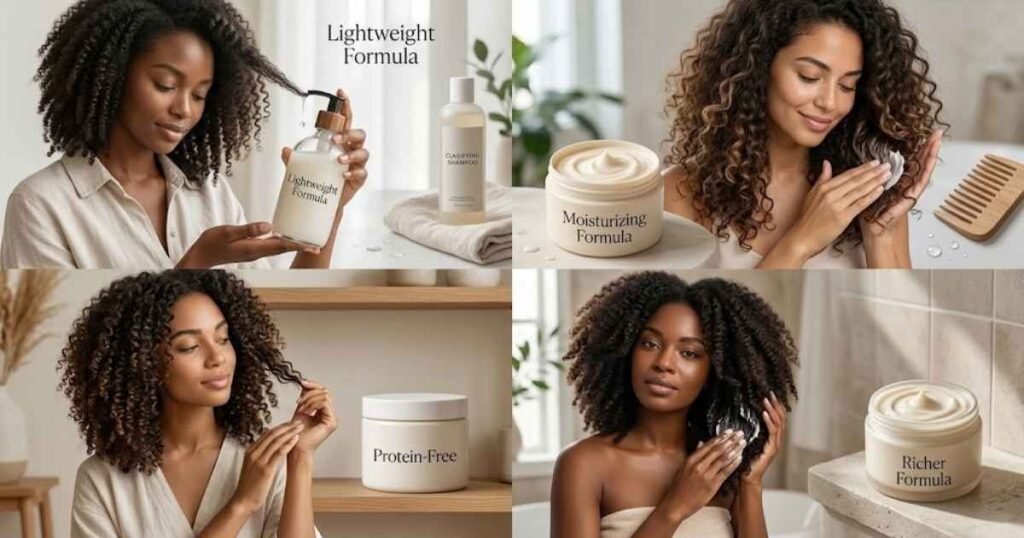
Choosing a deep conditioner for low porosity hair becomes easier when you focus on your actual hair needs instead of choosing the richest product on the shelf.
Start with a lightweight formula. Then consider your texture, dryness level, curl pattern, and history of chemical or heat styling.
Use This Simple Checklist
Choose a water-based conditioner if:
- Your hair gets weighed down easily.
- Products tend to sit on your strands.
- You experience frequent product buildup.
- You want lightweight daily moisture.
Choose a moisturizing deep conditioner if:
- Your hair feels dry after shampooing.
- Your strands lack softness.
- Your curls look dull or frizzy.
- You need better moisture retention.
Choose a protein-free conditioner if:
- Your routine already contains several protein products.
- Your hair feels stiff after protein treatments.
- You want a gentle moisture-focused deep conditioning routine.
Consider richer formulas if:
- Your hair is coarse or extremely dry.
- Your strands tolerate heavier ingredients well.
- Your hair needs additional softness and conditioning.
For a successful deep conditioning treatment, start with clean hair. Use a clarifying shampoo occasionally if buildup becomes a problem. Then apply your deep conditioner for low porosity hair evenly from mid-lengths through the ends.
Warm water can help soften the cuticle layer. A heat cap or hooded dryer may also make conditioning more effective by creating gentle warmth.
ALSO READ: How Much Is a Hair Transplant in USA? 10 Proven Costs
Your Ideal Formula at a Glance
| Your concern | What to prioritize |
| Dry hair | Hydrating ingredients |
| Heavy buildup | Lightweight formula |
| Fine hair | Lightweight conditioner |
| Coarse hair | Richer conditioning |
| Protein sensitivity | Protein-free conditioner |
| Frizz | Moisture + conditioning |
| Weak strands | Balanced amino acids or protein |
| Dullness | Hydration + conditioning |
| Tangling | Slip and detangling support |
Ultimately, the best deep conditioner for low porosity hair should leave your strands soft, hydrated, and manageable rather than coated. Pay attention to how your hair behaves after each wash day.
A simple hair care routine with effective cleansing, conditioning, detangling, and occasional deep conditioning can support healthy-looking hair without turning wash day into a chemistry experiment.
15 Proven Deep Conditioners for Low Porosity Hair
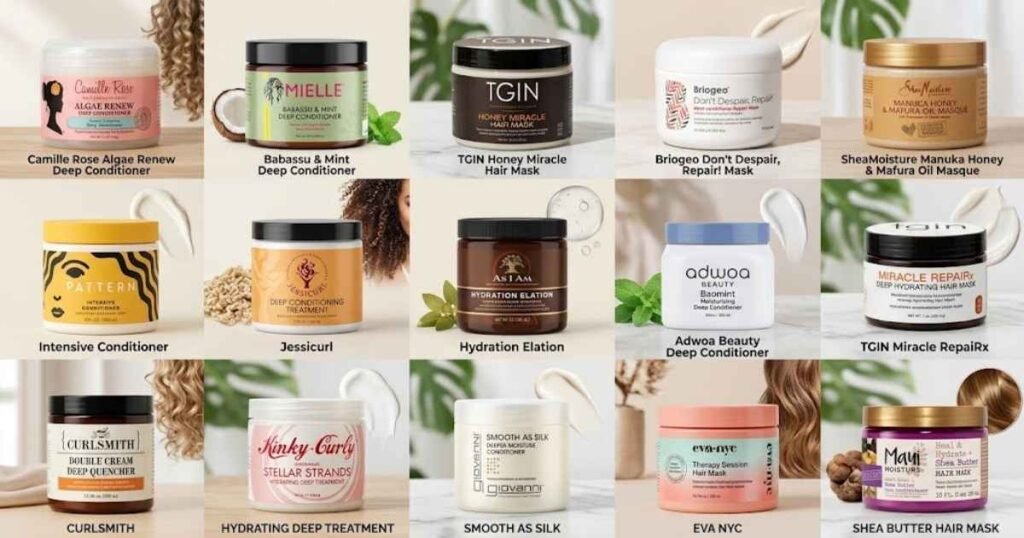
Finding the right deep conditioner for low porosity hair starts with your hair’s texture and moisture needs. Low porosity strands often prefer lightweight hydration because heavy formulas can create buildup.
The options below cover fine, natural, curly, wavy, and textured hair. Always check the current ingredient list before purchasing because formulas can change.
| Deep conditioner | Best for | Notable qualities |
| Camille Rose Algae Renew Deep Conditioner | Dry natural hair | Hydration and softness |
| Mielle Babassu & Mint Deep Conditioner | Natural curls | Moisture and conditioning |
| TGIN Honey Miracle Hair Mask | Dry textured hair | Rich moisture |
| Briogeo Don’t Despair, Repair! Mask | Dry or damaged hair | Conditioning and softness |
| SheaMoisture Manuka Honey & Mafura Oil Masque | Coarse natural hair | Rich conditioning |
| Pattern Intensive Conditioner | Curly and coily hair | Moisture and slip |
| Jessicurl Deep Conditioning Treatment | Curly hair | Hydration and manageability |
| As I Am Hydration Elation | Natural curls | Moisture-focused conditioning |
| Adwoa Beauty Baomint Moisturizing Deep Conditioner | Textured hair | Moisture and scalp-friendly feel |
| TGIN Miracle RepaiRx Deep Hydrating Hair Mask | Dry hair | Hydration and softness |
| Curlsmith Double Cream Deep Quencher | Very dry curls | Intensive moisture |
| Kinky-Curly Stellar Strands Hydrating Deep Treatment | Curly and kinky hair | Hydration and softness |
| Giovanni Smooth As Silk Deeper Moisture Conditioner | Fine to medium hair | Smoother feel |
| Eva NYC Therapy Session Hair Mask | Dry or frizzy hair | Conditioning and frizz control |
| Maui Moisture Heal & Hydrate + Shea Butter Hair Mask | Dry hair | Moisture-focused formula |
How to Pick From the List
If your hair gets weighed down quickly, start with a lighter formula. For coarse hair, a richer hair mask for low porosity hair may provide more lasting softness.
Your goal isn’t simply maximum moisture. You want the right moisture balance for your particular strands.
Best Deep Conditioners for Fine Low Porosity Hair
Fine hair can become flat quickly when you apply heavy butters and oils. That’s why a deep conditioner for low porosity hair should feel nourishing without leaving a thick coating.
For fine low porosity hair, prioritize lightweight ingredients and water-based formulas.
What to Look For
- Aloe vera
- Glycerin
- Hyaluronic acid
- Lightweight conditioning agents
- Jojoba oil in modest amounts
- Water listed near the beginning of the ingredient list
- Protein-free options when your hair doesn’t need added protein
A lightweight conditioner can give fine strands the hydration they need while preserving volume.
Fine Hair Application Tip
Apply a small amount from the middle of your hair toward the ends. Avoid loading the roots with a heavy deep conditioner for low porosity hair mask.
If your hair looks greasy after conditioning, use less product next time. More isn’t always better.
Best Deep Conditioners for Natural Low Porosity Hair
Natural hair often needs consistent hydration because curls and coils can make it harder for moisture to travel along the hair shaft.
A deep conditioner for natural hair should provide slip, softness, and manageable moisture without excessive product buildup.
Ingredients Worth Considering
- Aloe vera for lightweight hydration
- Honey for humectant support
- Shea butter for richer conditioning
- Avocado oil for softness
- Jojoba oil for lightweight conditioning
- Ceramides for smoother-feeling strands
- Amino acids for conditioning support
For low porosity natural hair, warmth can also make your conditioning routine more effective. Try a heat cap or gentle hooded dryer while the conditioner sits on your strands.
Don’t turn up the heat too high. Gentle warmth is enough.
Best Deep Conditioners for Curly and Wavy Low Porosity Hair
Curly and wavy hair needs moisture without sacrificing movement or definition. A heavy formula can flatten waves while leaving curls coated.
A good deep conditioner for curly hair should provide slip and hydration while supporting natural curls. Meanwhile, a deep conditioner for wavy hair usually works best when it has a lighter texture.
For Curly Hair
Look for:
- Moisture-rich conditioning
- Good slip for detangling
- Lightweight oils
- Humectants
- Ingredients that support frizz control
- Formulas that don’t leave excessive residue
For Wavy Hair
Choose formulas that rinse clean and don’t overwhelm your pattern. A lightweight deep conditioner for low porosity hair can help improve softness while keeping waves bouncy.
If your low porosity curls feel dry but coated, cleanse first. Then use a smaller amount of conditioner.
How to Use Deep Conditioner on Low Porosity Hair
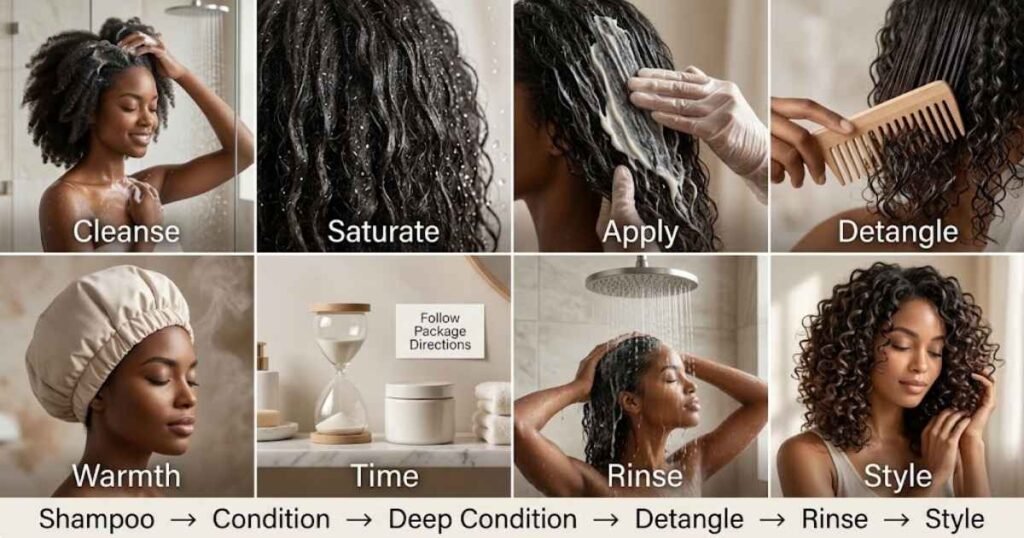
The right application technique can make a deep conditioner for low porosity hair work much better. Start with clean, thoroughly wet hair so the conditioner can spread evenly.
Step-by-Step Method
1. Cleanse Your Hair
Use a gentle shampoo to remove sweat, oils, and styling products. If you have significant hair buildup, occasionally use a clarifying shampoo.
2. Saturate Your Hair With Water
Don’t apply deep conditioner to barely damp hair. Thoroughly wet strands help support moisture absorption.
3. Apply the Deep Conditioner
Divide your hair into manageable sections. Smooth the product through each section from roots toward the ends.
4. Detangle Gently
Use your fingers or a wide-tooth comb. Work from the ends upward to reduce unnecessary pulling and breakage.
5. Add Gentle Warmth
Cover your hair with a heat cap or use a hooded dryer on a comfortable setting. Warmth can help the conditioning process feel more effective.
6. Follow the Recommended Timing
Leave the product on according to its package directions. Longer isn’t automatically better.
7. Rinse Thoroughly
Use lukewarm or comfortably warm water to remove the conditioner. Finish with cooler water if you prefer that sensation.
8. Style as Usual
Apply your preferred styling products while your hair remains appropriately moisturized.
Simple Wash Day Routine
Shampoo → Condition → Deep Condition → Detangle → Rinse → Style
For most people, a deep conditioning routine works best when it matches their hair’s dryness and styling habits.
Common Deep Conditioning Mistakes to Avoid
Even an excellent deep conditioner for low porosity hair won’t perform well if you use it incorrectly. A few small changes can make wash day much easier.
Using Too Much Product
Applying half the container won’t give your hair twice the moisture. Excess conditioner can contribute to product buildup.
Skipping Cleansing
If your strands already have layers of oils and styling products, adding another treatment may not solve the problem. Proper cleansing helps create a cleaner surface for conditioning.
Avoiding Warmth Completely
Low porosity hair often benefits from gentle warmth during conditioning. A heat cap can help create a comfortable environment for your treatment.
Using Heavy Oils Too Often
Natural oils such as coconut oil, avocado oil, and shea butter can work beautifully for some hair types. However, excessive use may leave low porosity strands coated.
Overusing Protein
A protein treatment can benefit certain hair concerns. However, using several products containing hydrolyzed protein may contribute to protein overload for some people.
Deep Conditioning Too Frequently
Your frequency of deep conditioning should depend on how your hair responds.
| Hair condition | General approach |
| Normal, healthy hair | Occasional deep conditioning |
| Dry hair | More consistent conditioning |
| Chemically treated hair | Adjust based on damage |
| Fine hair | Use smaller amounts |
| Coarse hair | Consider richer formulas |
| Heavy buildup | Cleanse before conditioning |
Most importantly, watch your hair rather than following a rigid schedule. If your strands feel soft, flexible, hydrated, and manageable, your routine is probably providing enough conditioning.
The best deep conditioner for low porosity hair should make your hair feel better after rinsing, not heavier. Focus on clean strands, balanced hydration, gentle warmth, and products that match your texture.
FAQ’s
What ingredients work well for tightly closed hair cuticles?
A Deep Conditioner for Low Porosity Hair with aloe vera, glycerin, and lightweight oils supports hydration without heaviness.
How often should low porosity strands receive deep conditioning?
A Deep Conditioner for Low Porosity Hair can support moisture balance when used according to your hair’s dryness.
Can protein products cause problems for low porosity curls?
A Deep Conditioner for Low Porosity Hair doesn’t always need protein, especially when strands show signs of overload.
Should you use heat during a deep conditioning treatment?
A Deep Conditioner for Low Porosity Hair may work effectively with gentle warmth from a heat cap.
How can you prevent buildup after conditioning?
Choose lightweight formulas and cleanse regularly to help a Deep Conditioner for Low Porosity Hair rinse cleanly.
Conclusion
Healthy-looking hair starts with understanding what your strands actually need. A Deep Conditioner for Low Porosity Hair can provide targeted hydration without overwhelming strands that already resist moisture absorption. The right formula should complement your hair texture, washing habits, and styling routine. Lightweight ingredients, aloe vera, glycerin, honey, and suitable conditioning agents can support softness and moisture retention. For some hair types, gentle warmth from a heat cap can also make conditioning more effective.
When choosing a Deep Conditioner for Low Porosity Hair, pay attention to how your hair responds after each wash day. Avoid piling on heavy products when buildup becomes noticeable. Instead, focus on cleansing, hydration, detangling, and balanced conditioning. With consistent low porosity hair care, you can support natural curls, reduce frizz, improve manageability, and maintain hydrated hair. A thoughtful deep conditioning routine can turn an ordinary wash day into a simple step toward softer, healthier-looking strands.

HairVist is a helpful destination for hair care tips, hairstyle ideas, and beauty inspiration, managed by Ava Reynolds, an SEO content writer with 2 years of experience, focused on creating simple, useful, and engaging content that helps readers learn more about hair care and styling.
1 thought on “Deep Conditioner for Low Porosity Hair: 15 Proven Picks”