

Hair loss can affect your confidence and leave you searching for answers. The good news is that professional care can help. A dermatologist for hair loss can identify possible causes and recommend suitable treatments for your needs. Whether you notice thinning hair, bald patches, or excessive shedding, an early scalp health evaluation can make a difference. From androgenetic alopecia to telogen effluvium, each condition requires the right approach. A dermatologist for hair loss can assess your symptoms and discuss hair thinning treatment options, including FDA-approved hair loss treatments when appropriate.
Choosing the right specialist takes careful research. Check board certification, patient reviews, and experience with scalp disorders before booking. Understanding insurance coverage and consultation fees can also help you plan your budget. A dermatologist for hair loss may recommend minoxidil, prescription medication, or platelet-rich plasma therapy when suitable. If you need a trusted hair restoration specialist, start with verified credentials and clear communication. The right medical guidance can help you make informed decisions and build a practical plan for healthier hair.
Why Seeing a Dermatologist for Hair Loss Is Your Best Move
Hair loss can feel frustrating, especially when your hair looks thinner every time you look in the mirror. The good news? You don’t have to guess what’s causing it or waste money on products that may not work. A qualified dermatologist for hair loss can examine your scalp, identify possible causes, and recommend treatments that fit your needs.
Whether you’re dealing with gradual thinning, sudden shedding, bald patches, or a widening part, professional guidance can make a real difference. Hair loss may result from genetics, hormonal changes, stress, nutritional deficiencies, or scalp conditions. Each cause requires a different approach.
Understanding the Most Common Types of Hair Loss in the US

Not all hair loss follows the same pattern. Some people notice a receding hairline, while others experience excessive shedding throughout the scalp. Understanding the type of hair loss you have helps a dermatologist for hair loss choose the right evaluation and treatment plan.
Androgenetic Alopecia: Male and Female Pattern Baldness
Androgenetic alopecia is one of the most common causes of hair thinning in the United States. It develops gradually and often runs in families. Men may notice a receding hairline or thinning crown, while women commonly experience a wider part or reduced hair density.
A dermatologist for hair loss can assess these patterns and recommend suitable care before thinning progresses.
Common signs include:
- A gradually receding hairline or bald spot.
- A wider middle part in women.
- Thinner hair around the crown.
- Gradual loss of overall hair density.
Telogen Effluvium: Hair Shedding After Stress
Have you noticed extra hair in your shower drain after an illness or stressful period? You may have telogen effluvium, a condition that causes increased shedding after a physical or emotional trigger.
Possible triggers include major surgery, childbirth, significant weight loss, severe illness, and prolonged stress. A dermatologist for hair loss can investigate the cause and recommend telogen effluvium treatment when necessary.
Alopecia Areata: Sudden Bald Patches
Unlike gradual pattern baldness, alopecia areata often causes round or oval bald patches that appear suddenly. This autoimmune condition develops when the immune system attacks hair follicles.
An alopecia areata specialist can evaluate patchy hair loss and discuss appropriate treatment options. Depending on the severity, a treatment plan may include prescription medications or corticosteroid injections.
Traction Alopecia and Hair Breakage
Tight ponytails, braids, extensions, and other styles that repeatedly pull on your hair can damage follicles over time. This condition, called traction alopecia, often affects the hairline and temples.
A dermatologist for hair loss can help distinguish traction alopecia from other conditions and recommend changes to reduce further damage.
Scalp Conditions and Inflammatory Hair Loss
Sometimes, hair loss begins with an itchy, flaky, painful, or irritated scalp. Conditions such as psoriasis, fungal infections, and certain inflammatory disorders can affect healthy hair growth.
A professional scalp health evaluation helps identify these issues. Early diagnosis matters because some inflammatory conditions can cause permanent hair loss if they damage hair follicles.
| Type of hair loss | Common signs | Possible next step |
| Androgenetic alopecia | Receding hairline or wider part | Medical evaluation and treatment |
| Telogen effluvium | Increased shedding across the scalp | Identify and address the trigger |
| Alopecia areata | Sudden bald patches | Specialist evaluation |
| Traction alopecia | Thinning around the hairline | Reduce tension and assess follicles |
| Scalp-related hair loss | Itching, redness, scaling, or pain | Examine and treat the underlying condition |
A dermatologist for hair loss can help determine which condition best matches your symptoms. Since different causes require different treatments, an accurate diagnosis is more useful than trying several products without a clear plan.
When Should You Actually Book an Appointment
It’s normal to lose some hair each day. However, noticeable changes in hair density, persistent shedding, or new bald patches deserve attention. If your hair looks different from a few months ago, don’t automatically blame age or genetics.
Booking an appointment with a dermatologist for hair loss can help you understand what’s happening and whether treatment could prevent further thinning.
Signs You Need a Professional Hair Loss Evaluation
Look for these warning signs:
- Sudden hair shedding: You notice much more hair falling out than usual.
- Visible scalp: Your part looks wider or your scalp shows through your hair.
- Bald patches: Smooth or irregular areas appear without hair.
- Hairline changes: Your temples or forehead show increasing thinning.
- Scalp discomfort: You experience burning, tenderness, itching, or persistent redness.
- Broken hairs: Short, uneven strands appear around thinning areas.
- Eyebrow or eyelash loss: Hair disappears from other areas of your body.
- Ongoing shedding: Hair loss continues for weeks or months without improvement.
These signs don’t always indicate a serious condition. Still, a dermatologist for hair loss can check whether an underlying medical issue needs attention.
When Sudden Hair Shedding Needs Medical Attention
Sudden or rapidly worsening hair loss deserves prompt evaluation, especially when it comes with scalp pain, inflammation, or smooth bald patches. Don’t wait for a home remedy to work if your symptoms are getting worse.
You should also arrange an appointment if:
- Hair loss starts after a new medication.
- You develop scaling or sores on your scalp.
- Your hair begins thinning after a major illness or surgery.
- You experience unexplained hair loss alongside other new symptoms.
A dermatologist for hair loss can review your medical history and decide whether blood tests, a scalp examination, or other investigations are appropriate.
Should You Wait or Start Treatment Early?
Waiting may seem easier when the changes appear minor. However, some forms of hair loss become harder to manage as they progress.
Consider these situations:
- Gradual thinning: Schedule an appointment to discuss pattern hair loss.
- Sudden shedding: Arrange an evaluation to identify possible triggers.
- Bald patches: Seek prompt medical advice to determine the cause.
- Scalp pain or inflammation: Get assessed before the condition worsens.
Early evaluation doesn’t mean you automatically need medication. A dermatologist for hair loss may recommend monitoring, gentle hair care, or treatment depending on the diagnosis.
What to Look for in a Qualified Hair Loss Specialist
Choosing the right doctor can feel overwhelming when dozens of clinics promise thicker hair. Some focus mainly on cosmetic procedures, while others diagnose medical conditions that affect your scalp and follicles.
The best dermatologist for hair loss should combine medical expertise with clear communication, realistic expectations, and a treatment plan based on your individual needs.
Experience With Different Hair Loss Conditions
Hair loss isn’t a single condition. A qualified specialist should understand hereditary thinning, autoimmune hair loss, excessive shedding, scalp inflammation, and hair breakage.
Look for experience with:
- Androgenetic alopecia in men and women.
- Alopecia areata and autoimmune-related hair loss.
- Telogen effluvium following illness, stress, or childbirth.
- Traction alopecia caused by repeated pulling.
- Scalp disorders that interfere with healthy hair growth.
A dermatologist for hair loss with broad diagnostic experience can help you avoid treatments that don’t match your condition.
Access to Appropriate Diagnostic Testing
A good consultation should involve more than a quick glance at your hairline. Your doctor should ask questions about your symptoms, family history, medications, health changes, and hair care habits.
Depending on your symptoms, the evaluation may include:
- A scalp health evaluation using visual examination or magnification.
- A hair-pull test to assess active shedding.
- Blood tests when a deficiency, hormonal issue, or another medical cause is suspected.
- Hair follicle testing or a scalp biopsy when the diagnosis remains unclear.
Not everyone needs every test. A dermatologist for hair loss should explain why a test is necessary before recommending it.
A Treatment Plan That Fits Your Needs
Effective treatment depends on the cause, your health, and your goals. Be cautious of clinics that recommend expensive packages before properly examining your scalp.
Your specialist may discuss options such as:
- Minoxidil: A widely used treatment for certain forms of hair loss.
- Finasteride: A prescription option for appropriate patients, primarily for male pattern hair loss.
- Other prescription medications: Selected according to the specific diagnosis.
- Platelet-Rich Plasma (PRP) therapy for hair: A procedure that may help some patients with pattern hair loss.
- Hair restoration procedures: Options for suitable candidates after a medical assessment.
A dermatologist for hair loss should explain the likely benefits, risks, costs, and expected timeline for each option. Ask whether a treatment is FDA-approved for your particular condition. Approval for one use doesn’t automatically mean approval for another.
Clear Communication and Realistic Expectations
Hair regrowth takes time, and results vary. The right specialist won’t promise a full head of hair within a few weeks or guarantee identical results for every patient.
During your consultation, expect clear answers about:
- What may be causing your hair loss.
- Which treatments are appropriate for your diagnosis.
- How long you may need to continue treatment.
- What side effects or limitations to consider.
- When your doctor will assess progress.
A trustworthy dermatologist for hair loss will help you understand your options without pressuring you into costly procedures.
Why Board Certification Matters More Than You Think

When choosing a hair loss specialist in the United States, board certification is an important credential to check. Dermatologists receive specialized medical training in conditions affecting the skin, hair, and nails.
A board-certified physician has met established requirements for specialty certification. This credential can help you narrow your search, although it doesn’t guarantee a particular treatment outcome.
What Does Board Certification Mean?
An American Board of Dermatology certified physician has met the board’s requirements for certification in dermatology. You can verify a doctor’s credentials rather than relying solely on advertisements or a clinic’s claims.
Before booking a dermatologist for hair loss, check the following:
- Medical license: Confirm that the physician holds an active license in the state where they practice.
- Board certification: Verify dermatology certification through an official certification directory.
- Clinical experience: Look for experience diagnosing and treating hair and scalp conditions.
- Professional background: Review the physician’s education, specialty training, and relevant clinical interests.
Remember that a clinic employee may use the title hair specialist without being a physician. Check the actual credentials of the person who will examine and treat you.
Why Dermatology Training Is Important for Hair Loss
Hair thinning can result from several overlapping causes. For example, someone may have hereditary hair loss and a temporary shedding episode after an illness.
A dermatologist for hair loss can assess these possibilities and decide whether further testing is needed. Dermatology training also helps physicians recognize scalp inflammation, infections, autoimmune conditions, and signs of scarring hair loss.
This expertise is especially valuable when symptoms don’t fit a typical pattern.
Can a Non-Dermatologist Treat Hair Loss?
Some primary care physicians can evaluate common causes of hair shedding and order initial tests. Hair restoration surgeons and other qualified professionals may also provide specific services within their training and legal scope.
However, complex or unexplained hair loss may require a specialist with advanced knowledge of scalp disorders.
Consider a dermatologist for hair loss when you have persistent shedding, unusual bald patches, scalp symptoms, or uncertainty about which treatment is appropriate.
How to Check Reviews and Credentials Online
Searching for the best dermatologist for hair loss near me can bring up private practices, medical centers, hair restoration clinics, and telehealth providers. The challenge is separating reliable medical care from promotional claims.
Before scheduling, spend a few minutes checking the doctor’s qualifications, patient feedback, services, and pricing.
Verify the Doctor’s Credentials First
Start with the physician’s full name and professional qualifications. Don’t rely on a clinic website alone when you can independently verify important credentials.
Use this checklist:
- Confirm board certification through an official certification directory.
- Check the state medical board’s licensing information.
- Review the doctor’s experience with your specific type of hair loss.
- Confirm that the person offering treatment is appropriately licensed.
- Look for clear information about the practice’s location and services.
These steps can help you identify a qualified dermatologist for hair loss before committing to an appointment.
Read Patient Reviews With a Critical Eye
Online reviews can reveal useful details about appointment quality, communication, waiting times, and billing. However, they can’t reliably predict whether a particular treatment will work for you.
When comparing top-rated hair loss doctors and specialists, look for consistent patterns rather than focusing on one glowing or negative review.
Pay attention to:
- Communication: Does the doctor explain diagnoses and treatment options clearly?
- Appointment experience: Do patients describe organized visits and respectful care?
- Billing transparency: Are consultation fees and additional charges explained?
- Follow-up care: Does the practice provide ongoing monitoring when needed?
- Treatment pressure: Do reviewers mention aggressive sales tactics or unrealistic promises?
A dermatologist for hair loss should make you feel informed, respected, and comfortable asking questions.
Compare Local Hair Clinics and Private Dermatology Practices
Both settings may offer hair loss services, but their approach and costs can differ. A private dermatology practice may focus on medical diagnosis and treatment, while a hair clinic may emphasize cosmetic procedures or restoration services.
| Factor | Private dermatology practice | Hair restoration clinic |
| Main focus | Medical skin, hair, and scalp conditions | Often hair restoration and cosmetic procedures |
| Diagnostic evaluation | May include medical examination and testing | Depends on the clinicians and services offered |
| Treatment options | Medications and selected procedures | May include restoration procedures and related services |
| Cost structure | Consultation and treatment fees | Consultation, procedure, and package fees may apply |
| Best first step | Unexplained or persistent hair loss | Discussion of restoration options after diagnosis |
The type of provider matters more than the building or brand name. Confirm who will diagnose your condition and whether that professional has the right qualifications.
Understand Consultation Costs and Insurance Coverage
How much does a hair loss dermatologist visit cost? In the United States, your total expense depends on your location, insurance plan, provider, and the tests or treatments you need.
Before booking a dermatologist for hair loss, ask the office for a cost estimate.
Check these details:
- Initial consultation: Ask about the self-pay price for your first visit.
- Insurance coverage: Contact your insurer to learn whether the visit qualifies under your plan.
- In-network status: Confirm that both the physician and facility participate in your network when applicable.
- Testing fees: Ask whether blood work, biopsies, or other diagnostic procedures cost extra.
- Follow-up visits: Find out whether return appointments have separate charges.
- HSA or FSA eligibility: Verify whether the specific medical expense qualifies under your plan’s rules.
Health insurance may cover medically necessary evaluation of hair loss, but coverage varies. Cosmetic hair restoration procedures often receive different treatment under insurance policies.
Consider Telehealth for Convenient Follow-Up Care
A telehealth dermatology consultation for hair loss can make it easier to discuss symptoms, review your history, and follow an existing treatment plan. However, a virtual appointment may not provide enough information to diagnose every scalp condition.
A dermatologist for hair loss may recommend an in-person examination if you need magnified scalp assessment, laboratory testing, or a biopsy.
When comparing virtual providers, check their licensing, fees, privacy practices, and ability to arrange in-person care when necessary.
How to Prepare for a Dermatologist Hair Loss Consultation
A little preparation can make your first visit more productive. You don’t need to know the medical cause beforehand. Just bring useful details about what you’ve noticed and when it began.
Before your appointment:
- Note when the shedding or thinning started.
- Take clear photographs showing changes in your hairline or part.
- List your medications, vitamins, and supplements.
- Mention recent illnesses, surgery, childbirth, weight changes, or major stress.
- Write down any family history of hair loss.
- Prepare questions about treatment choices, side effects, and expected costs.
During the visit, ask what to expect at a hair loss dermatologist appointment and whether additional testing might help confirm the diagnosis.
Ultimately, choosing a qualified dermatologist for hair loss gives you a clearer starting point for managing thinning, shedding, or scalp concerns. Verify credentials, compare practical details, and choose a professional who explains your options without promising overnight results. Your hair care journey should begin with an accurate diagnosis, realistic expectations, and a plan that fits your needs.
More info: 10 Proven Remy Hair Extensions Benefits and Tips
Navigating Insurance Coverage and Out-of-Pocket Costs

Hair loss treatment can cost anywhere from a modest office visit fee to thousands of dollars for advanced restoration procedures. Your total expense depends on the diagnosis, treatment plan, insurance benefits, and provider you choose. Before booking a dermatologist for hair loss, understand which services your insurance may cover and which expenses you’ll need to pay yourself.
Does Health Insurance Cover Dermatologist Visits for Hair Loss?
In the United States, health insurance may cover a medically necessary evaluation for hair loss. However, coverage depends on your insurance policy, provider network, and the reason for your visit.
For example, your plan may cover an examination for sudden hair shedding but exclude a cosmetic hair transplant.
Before your appointment, check these details:
- In-network dermatologist for hair loss: Confirm that the physician accepts your specific insurance plan.
- Referral requirements: Some plans require a referral from your primary care physician.
- Copay and deductible: Ask how much you’ll pay for the consultation.
- Diagnostic testing: Check coverage for blood tests, scalp biopsies, or other procedures.
- Prescription coverage: Verify whether your plan covers recommended medications.
- Cosmetic procedures: Ask whether hair transplantation or PRP therapy falls outside your benefits.
A dermatologist for hair loss can help document your medical concerns, but your insurer determines coverage under your policy.
Typical Hair Loss Dermatology Costs in the USA
Your location and treatment needs can significantly affect the final bill. The following figures are broad budgeting estimates, not guaranteed prices.
| Service | Estimated US cost |
| Initial dermatology consultation without insurance | $100 to $300 |
| Follow-up appointment | $75 to $200 |
| Blood tests for possible underlying causes | $50 to $300 or more |
| Scalp biopsy, when needed | $150 to $500 or more |
| PRP hair treatment session | $500 to $1,500 |
| Hair transplant procedure | $4,000 to $15,000 or more |
Actual costs vary by provider, region, facility, and treatment complexity. Diagnostic testing and facility charges may also be billed separately.
How to Reduce Out-of-Pocket Hair Restoration Costs
You don’t have to choose the most expensive clinic to receive quality medical care. A few practical steps can help you manage your budget.
- Request a written estimate before starting treatment.
- Compare consultation fees at local dermatology practices.
- Ask whether generic prescription medications are available.
- Check your insurance’s preferred pharmacy and prescription benefits.
- Verify HSA/FSA eligibility for each specific medical expense.
- Avoid prepaid treatment packages until you understand your diagnosis and options.
A qualified dermatologist for hair loss should explain the expected costs and discuss reasonable alternatives. If a clinic pressures you to purchase an expensive package immediately, take time to compare your options.
What to Expect During Your First Consultation
Your first appointment should focus on understanding why your hair is thinning or shedding. Instead of immediately recommending expensive products, a good dermatologist for hair loss will gather information about your symptoms, examine your scalp, and determine whether additional testing is necessary.
Your Medical and Hair Loss History
The consultation often begins with questions about when your hair loss started and how it has changed. Your doctor may also ask about your family history, health conditions, medications, and daily hair care routine.
Be ready to discuss:
- Whether your hair loss began suddenly or gradually.
- Whether you notice thinning, bald patches, or excessive shedding.
- Recent illness, surgery, childbirth, or significant stress.
- Changes in weight, diet, or medication.
- Family history of male or female pattern baldness.
- Scalp itching, pain, redness, or flaking.
These details help a dermatologist for hair loss narrow down possible causes and decide which evaluations may be useful.
Scalp Examination and Diagnostic Testing
Next, your doctor will examine your scalp and hair distribution. They may use a magnifying device to inspect the scalp and hair shafts more closely.
Depending on your symptoms, the evaluation may include:
- A hair-pull test to assess active shedding.
- Dermoscopy or trichoscopy to examine scalp and follicle features.
- Blood tests to check for suspected nutritional deficiencies or other medical issues.
- Hair follicle testing or a scalp biopsy when the diagnosis remains uncertain.
Not every patient needs laboratory testing or a biopsy. Your dermatologist for hair loss should explain the purpose of each recommended test.
Discussing Your Diagnosis and Treatment Options
After reviewing your history and examination, your doctor may explain the most likely cause of your hair loss. Sometimes, additional testing is needed before making a firm diagnosis.
Your treatment discussion may cover:
- Medication and other evidence-based hair thinning treatments.
- Lifestyle or hair care changes that address contributing factors.
- Possible side effects and treatment limitations.
- Expected timelines for noticing improvement.
- Follow-up appointments to track your progress.
Ask what results are realistic for your specific condition. Hair regrowth often takes months, and some conditions require ongoing treatment to maintain improvement.
How Long Does the Appointment Take?
An initial consultation commonly takes around 20 to 45 minutes, although complex cases may require more time. Your appointment may last longer if the doctor performs a procedure or reviews extensive medical records.
To make the most of your visit, arrive with your medication list, symptom timeline, and questions ready. This helps your dermatologist for hair loss focus on the details that matter most.
Proven Hair Loss Treatments a Dermatologist Can Offer
Hair loss treatments work best when they target the underlying cause. A product that helps hereditary thinning may not work for autoimmune hair loss or shedding caused by a medical condition.
A dermatologist for hair loss can recommend suitable options based on your diagnosis, medical history, and treatment goals.
Minoxidil for Certain Types of Hair Thinning
Minoxidil is a widely used treatment for androgenetic alopecia. Depending on the product and formulation, it may be available over the counter or by prescription.
It can help some people maintain hair density and encourage regrowth, but results vary.
Keep these points in mind:
- Follow the product instructions or your doctor’s directions.
- Expect results to take several months.
- Continued use is often necessary to maintain benefits.
- Stop and seek medical advice if you experience concerning side effects.
Ask your dermatologist for hair loss whether topical minoxidil is appropriate for your condition. Oral minoxidil is a prescription medication with different risks and requires medical supervision.
Finasteride and Other Prescription Medications
Finasteride is a prescription medication commonly used for male pattern hair loss. It can slow further thinning and help some patients maintain or improve hair growth.
However, it’s not suitable for everyone. Potential side effects and individual health considerations should be discussed with your doctor.
Depending on the diagnosis, a dermatologist for hair loss may also consider other prescription medications, including selected treatments for female pattern hair loss or alopecia areata.
Never start, stop, or change prescription treatment without appropriate medical guidance.
Platelet-Rich Plasma (PRP) Therapy for Hair
PRP therapy involves processing a sample of your blood to concentrate platelets before injecting the preparation into the scalp. Some studies suggest it may help selected patients with pattern hair loss, although treatment protocols and results vary.
Before choosing PRP, ask about:
- The provider’s experience performing the procedure.
- The number of sessions recommended.
- The total cost and likely maintenance schedule.
- Potential discomfort, bruising, or other complications.
- The strength of the evidence for your specific condition.
A dermatologist for hair loss can help you weigh PRP against other options. Remember that PRP is not an FDA-approved drug treatment for hair loss, and evidence does not guarantee results.
Treating Telogen Effluvium and Underlying Conditions
If stress, illness, medication changes, or nutritional deficiencies trigger your shedding, treatment should address the cause whenever possible.
Your doctor may recommend:
- Reviewing medications that could contribute to shedding.
- Treating an identified nutritional deficiency.
- Addressing an underlying scalp or medical condition.
- Allowing time for hair growth to recover after a temporary trigger resolves.
Telogen effluvium treatment doesn’t always require a hair growth medication. A dermatologist for hair loss can help determine whether the shedding is likely to improve once the underlying trigger is managed.
Hair Transplants and Other Restoration Procedures
For some people with stable pattern hair loss, hair transplantation may provide a longer-term cosmetic option. Surgeons move hair follicles from a donor area to areas with thinning or baldness.
However, transplantation doesn’t stop the underlying process of hair loss. Your doctor may recommend medical treatment to help preserve existing hair.
| Treatment | Often considered for | Important consideration |
| Minoxidil | Certain types of pattern hair loss | Ongoing use is often needed |
| Finasteride | Male pattern hair loss | Prescription assessment and side-effect discussion |
| PRP therapy | Selected patients with pattern hair loss | Results and protocols vary |
| Corticosteroids or other medications | Certain cases of alopecia areata | Depends on severity and diagnosis |
| Hair transplantation | Suitable candidates with pattern hair loss | Surgical risks, donor supply, and cost |
A dermatologist for hair loss can help you decide whether medical treatment, a procedure, or a combination makes the most sense.
Smart Questions to Ask Before Committing to a Treatment Plan
A treatment plan should never feel like a sales pitch. Before spending money or starting medication, ask questions that help you understand your diagnosis, options, and likely results.
Questions About Your Diagnosis
Start by clarifying what’s causing your hair loss. Understanding the diagnosis makes it easier to compare treatments and set realistic expectations.
Ask your dermatologist for hair loss:
- What is the most likely cause of my hair loss?
- Do I have androgenetic alopecia, telogen effluvium, or another condition?
- Do I need blood tests or a scalp biopsy?
- Could medication, stress, or a medical condition be contributing?
- Is my hair loss likely to be temporary or progressive?
If the diagnosis remains uncertain, ask what additional information would help confirm it.
Questions About Treatment Benefits and Risks
Every treatment has limitations. Before agreeing to a plan, understand what it can realistically achieve.
Useful questions include:
- Which treatment do you recommend for my specific diagnosis, and why?
- How long might it take to see results?
- What side effects should I watch for?
- Will I need to continue treatment long term?
- Are there less expensive alternatives?
- What happens if the treatment doesn’t work?
A trustworthy dermatologist for hair loss should explain both the benefits and drawbacks without promising guaranteed regrowth.
Questions About Cost and Follow-Up
Treatment expenses can add up when visits, prescriptions, tests, and procedures are billed separately.
Before committing, ask:
- What is the estimated total cost?
- Does my insurance cover the recommended care?
- Are you an in-network provider for my specific plan?
- How often will I need follow-up visits?
- Will I need maintenance treatments?
- Can we measure progress using photographs or scalp assessments?
These questions help you compare providers fairly and avoid unexpected expenses.
Red Flags to Watch Out for When Choosing a Provider
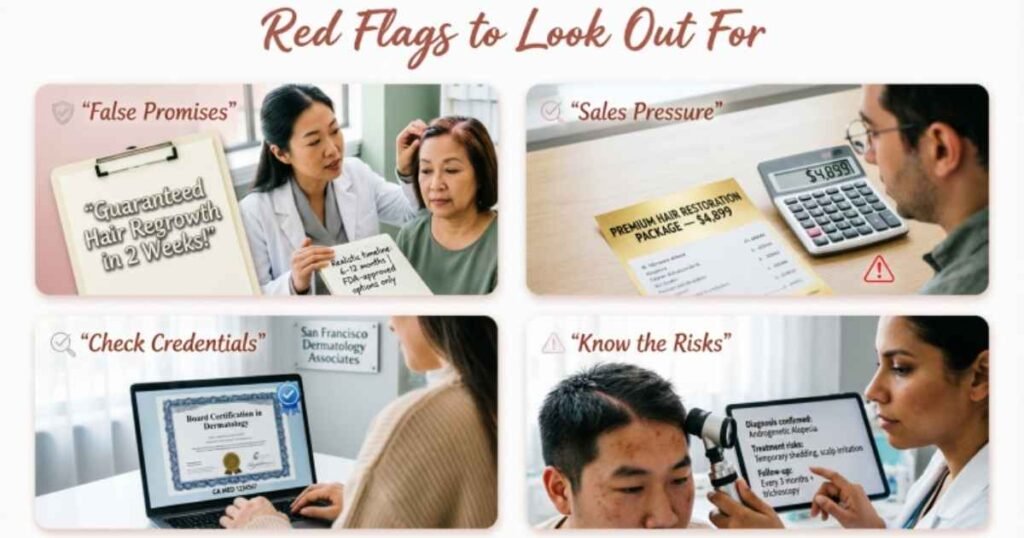
Not every clinic advertising hair regrowth offers the same level of medical care. Be cautious when promises sound too good to be true or a provider pushes you to spend money before explaining your condition.
The right dermatologist for hair loss should prioritize your health, provide clear information, and respect your decisions.
Guaranteed Hair Regrowth Promises
Hair growth depends on the cause of hair loss, the condition of your follicles, and your response to treatment. No responsible provider can guarantee identical results for every patient.
Watch out for claims such as:
- Guaranteed full hair regrowth in a few weeks.
- Permanent results from a single treatment for every patient.
- A secret formula that works for all types of hair loss.
- Claims that every patient needs the same treatment.
A reliable provider discusses realistic outcomes and explains what happens if treatment produces limited results.
Pressure to Buy Expensive Packages
Some clinics encourage patients to purchase multiple sessions or costly products during the first visit. You should have time to review your diagnosis and compare available treatments.
Be cautious if a provider:
- Demands immediate payment for a large package.
- Refuses to provide a written cost estimate.
- Avoids discussing cheaper alternatives.
- Recommends procedures without examining your scalp.
- Uses fear to pressure you into booking treatment.
A qualified dermatologist for hair loss should give you the information needed to make a comfortable, informed decision.
Unclear Credentials or Limited Medical Evaluation
A professional-looking website doesn’t prove that a provider has the right qualifications. Verify the credentials of the person who will diagnose your condition and perform any procedure.
Red flags include:
- No verifiable medical license when one is required.
- Misleading claims about board certification.
- Little discussion of your medical history.
- No clear explanation of treatment risks.
- Refusal to discuss possible causes other than genetics.
- No plan for monitoring your response to treatment.
If you have sudden shedding, patchy hair loss, or scalp inflammation, choose a provider who can evaluate the medical causes rather than focusing exclusively on cosmetic services.
How to Prepare for Your Appointment to Get the Most Value
A little preparation can make your consultation more productive. Instead of trying to remember every detail during the visit, bring a simple record of your symptoms, health history, and concerns.
This helps your dermatologist for hair loss identify patterns and make better-informed decisions.
Create a Hair Loss Timeline
Write down when you first noticed the changes and how they’ve progressed.
Include details such as:
- The date or approximate month your hair loss began.
- Whether the changes developed suddenly or gradually.
- Areas affected, such as your temples, crown, or middle part.
- Recent illness, surgery, childbirth, or major stress.
- Any scalp itching, pain, scaling, or redness.
You can also take photographs every few weeks under similar lighting. Consistent pictures make changes easier to compare over time.
Bring Your Medication and Health Information
Some medications and health conditions can contribute to hair shedding. Your doctor needs a clear picture of your overall health to evaluate possible triggers.
Before your visit, prepare a list of:
- Prescription medications.
- Over-the-counter medicines.
- Vitamins and dietary supplements.
- Recent medication changes.
- Known medical conditions and relevant family history.
Don’t stop a prescribed medication simply because you suspect it causes hair loss. Discuss your concerns with your prescribing clinician.
Prepare Questions and Check Insurance Details
Write down your most important questions so you don’t leave with unanswered concerns.
Before arriving, confirm your appointment fee, insurance status, referral requirements, and any instructions from the clinic.
If you’re attending a telehealth dermatology consultation for hair loss, check your camera, internet connection, and lighting. Take clear scalp photographs beforehand in case the doctor requests them.
These small steps help you use your appointment time wisely and make informed decisions about your care.
Taking the Next Step Toward Healthier Hair
Hair loss can affect your confidence, daily routine, and peace of mind. However, you don’t have to navigate it alone or spend money on every product advertised online. The best next step is understanding what’s causing the changes and choosing care that fits your needs.
A qualified dermatologist for hair loss can help you assess your scalp, review possible triggers, and explore suitable treatments. Whether you have pattern baldness, temporary shedding, or an inflammatory scalp condition, an accurate diagnosis provides a stronger starting point.
Your Simple Action Plan
- Notice the changes: Record when hair loss began and which areas are affected.
- Research providers: Verify medical licenses, board certification, and relevant experience.
- Check costs: Confirm insurance benefits, consultation fees, and potential testing expenses.
- Book an evaluation: Choose a provider who explains your options clearly.
- Follow your plan: Track progress and attend recommended follow-up visits.
Remember, effective hair loss care takes patience. Treatments often need several months to show results, and not every option works for every person.
Choosing the right dermatologist for hair loss helps you move beyond guesswork toward a practical, medically guided plan for healthier hair and scalp care.
FAQ’s
What Causes Sudden Hair Shedding?
A dermatologist for hair loss can assess stress, illness, medications, hormonal changes, and nutritional deficiencies.
When Should You See a Hair Loss Specialist?
Consult a dermatologist for hair loss when thinning persists, bald patches appear, or scalp symptoms develop.
Does Insurance Cover Hair Loss Consultations?
Insurance may cover medical evaluations, but a dermatologist for hair loss visit depends on your plan.
Which Treatments Help With Pattern Baldness?
A dermatologist for hair loss may recommend minoxidil, prescription medications, or suitable procedures after diagnosis.
How Can You Choose a Qualified Hair Specialist?
Verify board certification, patient reviews, and experience before selecting a dermatologist for hair loss for treatment.
Conclusion
Healthy hair starts with understanding what causes your hair loss. Instead of relying on random products, consider professional advice tailored to your symptoms. A dermatologist for hair loss can evaluate your scalp, review your medical history, and recommend appropriate care. Whether you experience female pattern baldness, male pattern baldness, or sudden shedding, an accurate diagnosis helps guide your next steps. A qualified specialist can also discuss scalp biopsy testing, prescription options, and other treatments when necessary.
Before choosing a provider, verify American Board of Dermatology certification, compare patient reviews, and check your insurance benefits. Ask about treatment costs, possible side effects, and realistic results during your consultation. A dermatologist for hair loss can help you understand your options without unnecessary pressure. With patience, consistent follow-up, and the right medical support, you can make informed choices for your scalp health. Start with a professional evaluation and choose a treatment plan that fits your needs, budget, and long-term goals.

HairVist is a helpful destination for hair care tips, hairstyle ideas, and beauty inspiration, managed by Ava Reynolds, an SEO content writer with 2 years of experience, focused on creating simple, useful, and engaging content that helps readers learn more about hair care and styling.
1 thought on “10 Essential Steps to Find a dermatologist for hair loss”