

A Hair Replacement Service can help you regain a fuller look and feel more confident about your appearance. Whether you have thinning hair, bald spots, or a receding hairline, the right solution can make everyday styling easier. From custom hair replacement systems to medical hair wigs, you have several options to match your needs and budget. Many people choose non-surgical hair replacement because it provides immediate coverage without surgery.
Choosing the right Hair Replacement Service starts with understanding your options and costs. Human hair replacement systems offer natural movement, while synthetic hair replacement systems provide affordable alternatives. Professional hairs replacement services may include consultation, fitting, installation, styling, and ongoing maintenance. By comparing providers and understanding hair replacement service cost, you can make a smarter decision. This guide covers key benefits, popular options, maintenance tips, and pricing across the USA.
What Is a Hair Replacement Service?
A hair replacement service helps people address visible hair loss by adding hair, covering thinning areas, or restoring hair through medical procedures. Depending on your needs, a provider may recommend a custom hair system, a medical wig, a hair replacement toupee, or a surgical treatment.
Unlike a basic wig purchase, professional hair replacement services may include a consultation, scalp assessment, color matching, fitting, installation, styling, and ongoing maintenance. These personalized steps help create a comfortable fit and a natural appearance.
For example, someone with a receding hairline might choose a lightweight hair system that blends with their existing hair. Someone experiencing extensive hair loss may prefer a full hair replacement system or a medical wig.
What Is Included in a Hair Replacement Service?
A typical appointment or service package may include:
- Hair replacement consultation: Discuss your hair loss, preferences, budget, and desired results.
- Scalp and hair assessment: Evaluate your remaining hair, scalp condition, and suitable options.
- System selection: Choose between human hair replacement systems, synthetic hair replacement systems, or other solutions.
- Hair system fitting and styling: Customize the shape, color, density, and hairline.
- Hair system installation: Apply the system using an appropriate attachment method.
- Aftercare guidance: Learn about cleaning, adhesives, styling, and routine maintenance.
Not every provider includes all these services in one price. Always request an itemized estimate before committing.
Types of Hair Replacement Services

The best hair replacement service depends on how much hair you’ve lost, whether you want a temporary or long-term solution, and how much maintenance you’re comfortable handling.
Common options available across the United States
| Service type | Best for | Typical approach |
| Non-surgical hair systems | Bald spots, thinning hair, receding hairlines | Attach a hairpiece to the scalp or existing hair |
| Custom hair replacement systems | People seeking a personalized fit | Match hair color, density, base, and hairline |
| Medical hair wigs | Hair loss related to medical conditions or treatment | Provide scalp coverage and comfortable styling |
| Hairpieces and toupees | Localized hair loss | Cover a specific area |
| Hair integration systems | People with some remaining hair | Blend added hair with existing strands |
| Hair transplant surgery | Suitable candidates seeking surgical restoration | Move hair follicles into targeted areas |
| Medical hair loss treatments | Some forms of progressive hair loss | Address the underlying cause or slow further loss |
Which Type Should You Choose?
Consider these factors before selecting a service:
- For immediate coverage: A wig, toupee, or non-surgical hair system can change your appearance without surgery.
- For a customized look: A fitted hair replacement system can match your existing hairline and texture.
- For medically related hair loss: Ask about medical hair wigs and possible insurance eligibility.
- For long-term restoration: Discuss transplant surgery or appropriate medical treatments with a qualified clinician.
- For a limited budget: Compare synthetic hairpieces, at-home maintenance, and affordable hair replacement packages.
The key is finding a solution that works with your everyday routine rather than choosing an expensive option simply because it sounds more advanced.
Hair Replacement Service Benefits
A quality hair replacement service offers more than improved coverage. It can help you feel comfortable with your appearance, simplify your styling routine, and choose a solution that suits your lifestyle.
Here are the main benefits to consider.
- Natural-looking results: Modern hair systems can blend with your natural hair color, texture, density, and hairline.
- Immediate coverage: Non-surgical options can cover thinning areas without waiting months for new hair growth.
- Personalized fit: Custom-fitted hair replacement systems accommodate different head shapes, scalp conditions, and styling preferences.
- Flexible choices: You can choose human hair, synthetic fibers, partial hairpieces, or full hair replacement systems.
- No surgery required: Many hair replacement solutions avoid incisions, anesthesia, and surgical recovery.
- Styling versatility: Human hair systems generally allow more styling flexibility than many synthetic alternatives.
- Support for different needs: Hair replacement for men and hair replacement for women can address a range of hair loss patterns.
- Professional guidance: A trained specialist can help you select suitable products, attachment methods, and maintenance routines.
Are There Any Drawbacks?
Hair replacement systems also require realistic expectations. Some need regular cleaning, professional servicing, and periodic replacement. Adhesives may irritate sensitive skin, while poorly fitted pieces can look unnatural or feel uncomfortable.
Surgical procedures involve additional considerations, including recovery time, medical eligibility, and the possibility of incomplete results. A professional consultation helps you weigh these trade-offs before spending money.
Hair Replacement Service Costs in the USA
The hair replacement service cost varies widely depending on the type of system, hair quality, installation method, provider experience, and location. Major metropolitan areas may charge more than smaller markets, while premium salons often offer additional customization.
For budgeting purposes, the following figures are approximate US price ranges, not guaranteed quotes. Actual prices depend on the provider and package.
Average Hair Replacement Service Cost
| Service or option | Estimated cost in the USA |
| Basic synthetic hairpiece | 50–300 |
| Quality synthetic wig | 100–600 |
| Human hair wig | 300–3,000+ |
| Basic hair replacement toupee | 150–600 |
| Custom human hair system | 500–2,500+ |
| Professional installation | 75–300 |
| Custom hair system with fitting and styling | 700–3,000+ |
| Routine maintenance appointment | 50–200 |
| Hair transplant surgery | 3,000–15,000+ |
These estimates represent broad market ranges. A quoted package may combine the hairpiece, fitting, styling, and initial installation, so compare what’s included before judging the price.
What Affects Hair Replacement Service Pricing?
Several factors determine the final bill:
- Hair material: Human hair typically costs more than synthetic fibers.
- Customization: Hand-tied bases, custom hairlines, and specialized measurements can increase the custom hair system cost.
- Installation method: Bonding, adhesives, clips, and other attachment techniques have different service requirements.
- Provider location: Rent, labor costs, and local demand affect salon pricing.
- Maintenance frequency: Frequent cleaning, rebonding, and styling increase ongoing expenses.
- System lifespan: A longer-lasting product may cost more initially but reduce replacement frequency.
Monthly and Annual Hair Replacement Expenses
Your initial purchase is only part of the total cost. Professional maintenance, replacement systems, adhesives, and cleaning products can add up over time.
| Expense | Estimated cost |
| Monthly maintenance | 50–200 |
| Annual maintenance | 600–2,400 |
| Replacement system | 300–2,500+ |
| Annual expenses for some professional users | 1,000–4,000+ |
These are planning estimates, not fixed rates. Your actual annual spending depends on the system, how often you replace it, and whether you handle some maintenance at home.
Money-saving tip: Ask for a complete breakdown of the hair replacement monthly maintenance cost, installation charges, and replacement schedule. Some providers offer maintenance packages or financing options that make expenses easier to manage.
Non-Surgical Hair Replacement Options
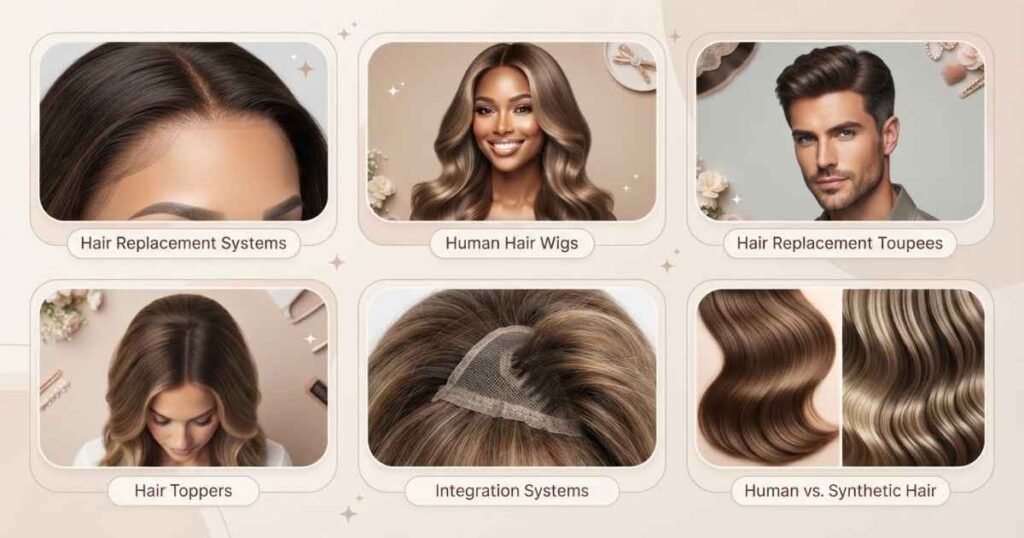
Non-surgical hair replacement appeals to people who want fuller-looking hair without undergoing an operation. These solutions can provide immediate coverage and allow you to change your style without waiting for surgical recovery or hair growth.
A suitable hair replacement service may recommend one of the following options based on your hair loss pattern.
1. Hair replacement systems
These systems use a base made from materials such as lace, polyurethane, or skin-like film. A specialist attaches the system with clips, tape, or approved adhesives, depending on your needs.
Best for: Men and women who want consistent coverage for bald spots or larger thinning areas.
2. Human hair wigs
Human hair wigs offer realistic movement and can often be styled with appropriate heat tools. They generally require more care than basic synthetic wigs.
Best for: People who want full coverage, styling flexibility, or a temporary alternative during medical treatment.
3. Hair replacement toupees
A toupee covers a localized area, such as the crown or top of the scalp. A properly matched piece can blend with the surrounding hair.
Best for: People experiencing male pattern baldness or localized thinning.
4. Hair toppers and integration systems
Toppers cover thinning areas while leaving some natural hair visible. Integration systems blend additional hair with existing strands.
Best for: Women and men who retain enough hair to support a partial coverage solution.
Human Hair vs. Synthetic Hair Replacement Systems
| Feature | Human hair | Synthetic hair |
| Appearance | Natural movement and texture | Can look realistic, depending on quality |
| Styling | Usually more flexible | Often limited by heat sensitivity |
| Price | Generally higher | Generally lower |
| Maintenance | Often requires more styling | Frequently easier to maintain |
| Longevity | Depends on quality and care | Depends on fiber quality and use |
Human hair isn’t automatically the best choice for everyone. If affordability and easy styling matter most, a quality synthetic system may be a sensible starting point.
Is Non-Surgical Hair Replacement Comfortable?
Most well-fitted systems should feel secure without causing pain. However, comfort depends on the base material, attachment method, scalp sensitivity, and daily activities.
Before committing, ask about patch testing for adhesives, scalp preparation, exercise, swimming, and removal procedures. Stop using an attachment product if you develop irritation, and seek medical advice for persistent symptoms.
Surgical Hair Replacement Options
Surgical hair restoration may suit people who want to address certain types of permanent hair loss. Unlike a wig or hair system, a transplant moves hair follicles from one area of the scalp to another.
A medical consultation is essential because not everyone qualifies. The cause of hair loss, donor hair supply, scalp health, age, and future hair loss patterns all affect suitability.
Common Hair Restoration Procedures
- Follicular Unit Transplantation (FUT): A surgeon removes a strip of scalp tissue and separates it into follicular units for transplantation.
- Follicular Unit Extraction (FUE): A surgeon removes individual hair follicles from the donor area and places them in targeted regions.
- Combination procedures: Some patients may benefit from techniques selected according to their hair loss pattern and donor supply.
What Should You Know Before Surgery?
Surgical hair restoration usually costs more upfront than basic non-surgical options. Results also take time because transplanted hair often sheds initially before new growth develops.
Keep these points in mind:
- You may need several months to see meaningful growth.
- Full results can take around 9 to 12 months or longer.
- Surgery can leave scars and may cause temporary swelling or discomfort.
- Transplanted hair doesn’t prevent untreated areas from continuing to thin.
- You may need follow-up treatment or additional procedures.
- Results vary, and no surgeon can guarantee a particular density.
If you’re considering a surgical hair replacement service, consult a qualified medical professional who regularly performs hair restoration procedures. Ask to review realistic before-and-after photographs of patients with hair loss patterns similar to yours.
Also Read: 10 Amazing Hair Art Ideas to Try for Every Style
Hair Replacement Systems for Men and Women
Hair loss affects people differently, so the best solution depends on your hairline, coverage needs, styling preferences, and personal comfort. A well-planned hair replacement service should account for these differences rather than offering the same system to everyone.
Hair Replacement for Men
Men often seek solutions for receding hairlines, thinning crowns, and male pattern baldness. Depending on the extent of hair loss, a specialist may recommend a partial hair system or full scalp coverage.
Popular options include:
- Lace hair systems: Lightweight bases that can create a natural-looking hairline.
- Polyurethane systems: Thin bases designed to create a close-fitting appearance.
- Skin hair systems: Hair attached to a thin, skin-like base.
- Custom toupees: Partial hairpieces matched to your natural hair color, density, and hairstyle.
For men who want short hairstyles, the hairline and blend with surrounding hair deserve special attention. A proper fit can make the difference between an obvious hairpiece and a convincing result.
Hair Replacement for Women
Female hair loss may involve a widening part, reduced crown density, overall thinning, or more extensive hair loss. A dermatologist can help identify the cause before you choose a cosmetic solution.
Options commonly include:
- Hair toppers for thinning around the part or crown.
- Human hair wigs for full coverage and styling flexibility.
- Lightweight synthetic wigs for more affordable everyday wear.
- Hair integration systems that blend with existing hair.
- Medical hair wigs for people experiencing hair loss related to illness or treatment.
The most important consideration is your remaining hair. A partial system may work well when you have enough hair to blend with it, while a full wig may provide better coverage for extensive loss.
Custom Hair Replacement Systems and Wigs

Custom hair replacement systems are designed around your measurements, hair color, density, texture, and preferred hairstyle. They can offer a more personalized result than an off-the-shelf hairpiece, particularly when you need a precise hairline or unusual color match.
A professional fitting also helps reduce gaps, uneven coverage, and uncomfortable pressure points.
What Makes a Custom Hair System Different?
| Feature | Custom system | Standard hairpiece |
| Fit | Tailored to individual measurements | Available in preset sizes |
| Hairline | Can be customized | Depends on the design |
| Color matching | More personalized | Limited to available shades |
| Density | Selected for your preferences | Usually predetermined |
| Initial cost | Generally higher | Often more affordable |
| Availability | May require production time | Often available immediately |
Human Hair and Synthetic Wigs
Human hair replacement systems provide natural movement and greater styling flexibility. They can be especially appealing if you want to maintain a familiar hairstyle.
Synthetic hair replacement systems offer another practical choice. Many hold their style after washing and require less daily styling, although some cannot tolerate heat.
Before ordering a custom piece, ask your provider about:
- Hair origin and fiber quality.
- Base material and ventilation method.
- Expected lifespan under normal use.
- Color matching and styling services.
- Repair policies and replacement charges.
- Hair replacement warranty and guarantees.
A warranty may cover manufacturing defects but exclude ordinary wear, adhesive damage, or improper care. Review the written terms before making your purchase.
Hair Replacement Service for Thinning Hair
Thinning hair doesn’t always require full scalp coverage. In many cases, a partial hairpiece or topper can add volume exactly where you need it.
A personalized hair replacement service should first assess the location and severity of your thinning. This helps determine whether a cosmetic system, medical treatment, or combination approach makes the most sense.
Best Hair Replacement Options for Thinning Hair
- Hair toppers: Cover thinning at the crown or part while blending with existing strands.
- Partial hair systems: Add coverage to specific areas without replacing all your hair.
- Hair integration systems: Combine additional hair with suitable existing hair.
- Medical wigs: Provide full coverage when thinning becomes more extensive.
- Dermatology assessment: Helps identify causes such as hereditary hair loss, nutritional deficiencies, or scalp conditions.
Can Hair Replacement Stop Hair Loss?
Hair replacement systems generally cover hair loss rather than stop it. They don’t treat the underlying cause of thinning, so you may need separate medical care.
If your hair loss develops suddenly, creates distinct bald patches, or comes with itching, pain, or scalp inflammation, seek medical evaluation before using a bonded system.
For gradual hereditary hair loss, a dermatologist can discuss appropriate treatment options. Combining medical care with a cosmetic hairpiece may help you address both hair density and appearance.
How to Choose a Hair Replacement Provider
Finding the right specialist matters as much as selecting the hairpiece itself. An experienced provider should explain your options, discuss realistic results, and give you a clear price before beginning the service.
If you’re searching for the best hair replacement service in the USA, compare several providers rather than choosing the first salon you find.
7 Things to Check Before Booking
- Experience and training: Look for relevant experience with the specific system or procedure you need.
- Consultation process: A good specialist asks about your hair loss, scalp sensitivity, budget, and styling goals.
- Before-and-after photographs: Review genuine examples of completed work, preferably involving similar hair types and coverage needs.
- Transparent pricing: Request an itemized quote covering the system, fitting, installation, and maintenance.
- Product quality: Ask about base materials, hair origin, construction, and expected lifespan.
- Hygiene and comfort: Check that the provider follows appropriate sanitation practices and explains safe removal methods.
- Customer feedback: Read recent hair replacement provider reviews and look for consistent comments about service, communication, and results.
Questions to Ask During a Hair Replacement Consultation
Before paying a deposit, ask:
- What type of system suits my hair loss pattern?
- What is included in the quoted price?
- How much does routine maintenance cost?
- How often will I need professional servicing?
- Can I exercise, swim, or sleep comfortably with the system?
- What happens if the color or fit isn’t right?
- Do you offer payment plans or financing?
- What does your warranty cover?
How to Find a Hair Replacement Salon Near Me
Start by searching for local salons and hair restoration clinics that specialize in non-surgical hair replacement. Check whether they offer consultations, custom fittings, maintenance appointments, and transparent pricing.
Compare at least two or three providers when possible. A slightly higher initial quote may offer better value if it includes professional fitting, reliable aftercare, and a suitable maintenance plan.
Hair Replacement Service Maintenance Tips
Proper care helps preserve the appearance, comfort, and lifespan of your hair system. Maintenance requirements vary by material, attachment method, lifestyle, and manufacturer instructions.
Learning how to maintain a non-surgical hair replacement system before installation can also help you avoid unexpected costs.
Daily and Weekly Care
- Brush gently: Use a suitable brush or comb to minimize tangling and unnecessary shedding.
- Use compatible products: Choose shampoos and conditioners recommended for your hair system.
- Protect the hair: Limit excessive heat and follow the manufacturer’s styling guidance.
- Keep the scalp clean: Clean the attachment area according to your provider’s instructions.
- Avoid pulling: Handle lace bases and delicate hairlines carefully.
- Store wigs properly: Use a suitable stand or storage method to preserve shape and reduce tangles.
Professional Hair Replacement Cleaning and Maintenance
Many bonded systems require periodic removal, cleaning, scalp preparation, and reattachment. The schedule depends on the attachment product, skin condition, and daily activity.
| Maintenance task | Typical frequency |
| Gentle brushing and basic care | Daily or as needed |
| Home washing | As recommended for the system |
| Professional cleaning and rebonding | Every 2–6 weeks for many bonded systems |
| Hairline and fit inspection | During maintenance visits |
| System replacement | Often every 2–6 months for frequently worn systems, although some last longer |
These intervals are estimates rather than universal rules. Some systems last considerably longer, while delicate materials or heavy daily use may shorten their lifespan.
How Much Does Hair Replacement Maintenance Cost?
Professional hair replacement maintenance fees commonly range from about $50 to $200 per appointment. More complex services, premium salons, and certain metropolitan areas may cost more.
Your hair system cleaning cost may be lower if you handle appropriate cleaning at home. However, avoid removing a bonded system yourself unless your provider has shown you how to do it safely.
To extend your system’s lifespan, follow the care instructions, avoid harsh chemicals, and schedule maintenance before the attachment becomes uncomfortable or unstable.
Hair Replacement Service vs. Hair Transplant

Both options can improve the appearance of thinning hair, but they work differently. A hair replacement system adds coverage, while a hair transplant moves your own follicles to targeted areas.
The right choice depends on your budget, medical eligibility, desired results, and willingness to maintain a hair system or undergo surgery.
| Feature | Hair replacement service | Hair transplant |
| Procedure | Fits and attaches a hair system or wig | Surgically moves hair follicles |
| Results | Immediate cosmetic coverage | Gradual growth over several months |
| Surgery | Not required for non-surgical systems | Required |
| Initial cost | Often lower for basic systems | Usually several thousand dollars |
| Ongoing expenses | Cleaning, maintenance, and replacement | Possible follow-up care and additional treatment |
| Hair growth | Does not create new natural hair | Transplanted follicles may produce new growth |
| Best suited for | People seeking immediate coverage | Suitable candidates seeking surgical restoration |
Which Option Is Better for You?
Choose a non-surgical solution if you want immediate coverage, prefer to avoid surgery, or aren’t a suitable transplant candidate. A hair replacement service can also work well if you want to change your hairstyle or adjust your coverage as your needs change.
A transplant may appeal to you if you have suitable donor hair and want to pursue surgical restoration. However, it requires medical assessment and realistic expectations about density, recovery, and future hair loss.
Remember that a transplant doesn’t guarantee a full head of hair. Some people also continue using hair loss treatments after surgery.
Is a Hair Replacement Service Worth the Cost?
For many people, a hair replacement service is worth the investment because it offers immediate coverage and personalized styling without surgery. However, the value depends on how comfortable you feel wearing a hair system and whether the ongoing expenses fit your budget.
Before deciding, consider both the upfront price and the total cost over a year.
When Is Hair Replacement Worth It?
A hair replacement service may be a good investment if you:
- Want fuller-looking hair without waiting for regrowth.
- Prefer a non-surgical alternative to hair restoration.
- Need coverage for hereditary hair loss or a receding hairline.
- Value professional fitting and personalized styling.
- Feel comfortable following a regular maintenance routine.
- Can afford the initial system and its ongoing care.
On the other hand, you may prefer a different option if you don’t want recurring appointments, adhesives, or replacement expenses. Medical treatment may also be more appropriate when your priority is addressing the cause of hair loss rather than covering it.
How to Make Hair Replacement More Affordable
You don’t necessarily need the most expensive system to achieve a natural-looking result. Smart planning can help you control costs without sacrificing comfort or quality.
- Compare several providers and request itemized quotes.
- Consider a quality synthetic system if it meets your styling needs.
- Ask whether installation and initial styling are included.
- Learn which maintenance tasks you can safely perform at home.
- Check for package discounts or hair replacement financing in the USA.
- Ask your insurer whether medical hair replacement wigs qualify for coverage.
Does insurance cover medical hair replacement wigs? Sometimes. Coverage depends on your insurance plan, the medical reason for hair loss, and the documentation required. Some plans may cover eligible cranial prostheses, while others exclude wigs or impose specific limits. Check directly with your insurer before purchasing.
Ultimately, the best solution is one that balances appearance, comfort, durability, and cost. Compare your options carefully, ask questions during your consultation, and choose a provider who understands your goals.
A well-fitted system can help you feel more confident in everyday situations, whether you’re heading to work, meeting friends, or enjoying a special occasion. With realistic expectations and a manageable care routine, the right hair replacement solution can become a practical part of your life.
FAQ’s
How much does professional hair restoration typically cost?
A Hair Replacement Service may cost $100 to $3,000 or more, depending on customization, installation, and materials.
Can hair replacement systems look completely natural?
Yes, a Hair Replacement Service can create natural-looking results through proper fitting, color matching, and professional styling.
How long does a typical hairpiece last?
A Hair Replacement Service provides systems lasting months or longer, depending on materials, maintenance, and daily wear.
Are non-surgical hairpieces suitable for women?
Yes, a Hair Replacement Service offers toppers, wigs, and integration systems for women experiencing different types of hair loss.
Does health insurance cover medical wigs?
Some insurance plans cover eligible medical wigs, but a Hair Replacement Service may require documentation and prior approval.
Conclusion
Choosing a Hair Replacement Service can make managing hair loss simpler and more comfortable. The right solution depends on your hair type, coverage needs, budget, and daily routine. Custom hair replacement systems, natural-looking wigs, and partial hairpieces offer flexible choices for men and women. A professional consultation can help you select a suitable system and understand its expected lifespan.
Before choosing a Hair Replacement Service, compare installation fees, maintenance costs, and replacement schedules. Ask about human hair replacement systems, synthetic alternatives, and financing options. Regular cleaning and proper care can help protect your investment. Although hair replacement systems don’t regrow natural hair, they can provide immediate cosmetic coverage. With realistic expectations and a reliable provider, you can choose an affordable hair replacement solution that suits your lifestyle and personal preferences.

HairVist is a helpful destination for hair care tips, hairstyle ideas, and beauty inspiration, managed by Ava Reynolds, an SEO content writer with 2 years of experience, focused on creating simple, useful, and engaging content that helps readers learn more about hair care and styling.
1 thought on “10 Best Hair Replacement Service Benefits and Costs”