

Choosing the right Laser Hair Remover can simplify your grooming routine and help reduce unwanted hair. Instead of shaving every few days or booking waxing appointments, compare at-home laser hair removal options that fit your budget, skin tone, and schedule. The best device should match your hair color and treatment areas. Some products use IPL technology rather than an actual laser, so knowing the difference matters before you buy.
This guide to Laser Hair Remover options covers useful features, skin compatibility, safety tips, and typical device prices in the USA. You’ll learn how a laser hair removal device works and how to compare treatment windows, energy levels, warranties, plus practical device care and maintenance routines. Whether you want hair removal for your legs, underarms, face, or bikini line, the right information can help you choose wisely. Consistent use and realistic expectations support long-lasting hair reduction at home.
What Is a Laser Hair Remover and How Does It Work?
A laser hair remover is a light-based device designed to reduce unwanted hair by targeting pigment in the hair follicle. Professional clinics use laser systems, while many products marketed for home use rely on intense pulsed light (IPL).
Although both technologies use light energy, they aren’t identical. Most consumer devices sold as at-home laser hair removal machines actually use IPL. Understanding that distinction helps you choose a product that matches your skin tone, hair color, and treatment goals.
How does light-based hair removal work?
The process targets melanin, the pigment that gives your hair its color. Light energy heats the hair and affects structures involved in hair growth.
Here’s how a typical treatment works:
- Prepare your skin: Shave the treatment area if the manufacturer recommends it. Clean and dry your skin.
- Position the device: Place the treatment window flat against the skin.
- Deliver light pulses: The device sends controlled energy toward the hair pigment.
- Repeat consistently: Follow the recommended treatment frequency to target hairs during different growth stages.
- Maintain your results: Occasional maintenance sessions may help manage regrowth.
Hair grows in different phases, so one session can’t treat every follicle effectively. That’s why consistent use matters.
What results can you expect?
An at-home laser hair remover typically aims for long-term hair reduction rather than guaranteed permanent hair removal. You may notice slower growth, finer regrowth, and fewer visible hairs after several weeks of regular use.
Results depend on several factors:
- Hair color and thickness
- Skin tone and the device’s compatibility
- Treatment consistency
- Device power and technology
- Hormonal changes and individual hair growth patterns
Dark hair often responds best because it contains more melanin. White, gray, red, and very light blonde hair may respond poorly to many light-based devices.
Best Laser Hair Remover Options for Home Use
The best laser hair remover for home use depends on your budget, comfort preferences, skin tone, and the areas you want to treat. Instead of choosing a device based on popularity alone, compare its technology, safety features, treatment speed, and manufacturer guidance.
The options below are device categories and selection criteria, not a verified ranking of specific products.
1. Premium IPL Hair Removal Device
Best for people who want a versatile home treatment system.
- Multiple energy settings
- Large treatment window on some models
- Attachments for different body areas
- Designed for repeated maintenance sessions
2. Beginner-Friendly Hair Removal Device
Best for first-time users who prefer a straightforward routine.
- Simple controls
- Clear instructions
- Comfortable grip
- Easy-to-follow treatment schedule
3. Cooling Hair Removal Device
Best for people who find light-based treatments uncomfortable.
- Cooling features on supported models
- May improve comfort during treatment
- Useful for larger areas when compatible
- Still requires correct energy settings
4. Multi-Attachment Hair Removal System
Best for treating several areas with one device.
- Precision attachment for smaller areas
- Body attachment for larger areas
- Useful for facial hair when specifically approved
- Convenient for a shared grooming routine when permitted
What features should you compare?
| Feature | Why it matters |
| Skin tone sensor | Helps assess whether the device is suitable for your skin |
| Adjustable energy levels | Allows settings to match manufacturer guidance and comfort |
| Treatment window | A larger window may speed up treatment on broad areas |
| Cooling technology | May make each flash more comfortable |
| Device attachments | Help with approved facial and body treatment areas |
| Warranty | Provides support if the device develops a covered fault |
| Flash capacity | Indicates the expected number of light pulses, not guaranteed effectiveness |
For most shoppers, the best value comes from a device that suits their skin and hair combination. A more expensive model isn’t automatically better.
Best Laser Hair Remover for Sensitive Skin

Sensitive skin needs extra care during light-based hair removal. Heat, friction, unsuitable energy settings, and frequent sessions can trigger redness, irritation, or discomfort.
A laser hair remover for sensitive skin should offer clear instructions, suitable energy settings, and reliable safety features. Cooling technology can also help, although it doesn’t eliminate the risk of irritation.
Features worth prioritizing
- Adjustable intensity: Start at the lowest setting permitted by the manufacturer.
- Skin contact sensor: Helps prevent accidental flashes when the device isn’t positioned correctly.
- Cooling features: May reduce discomfort during treatment.
- Clear compatibility guidance: Check whether the device supports your skin tone.
- Straightforward controls: Reduce mistakes during your routine.
How to reduce irritation
- Shave beforehand if instructed. Don’t wax or pluck the hair because these methods remove the pigment-bearing hair you want the treatment to target.
- Perform a patch test according to the device manual.
- Wait for the recommended observation period before treating a larger area.
- Avoid using the device on sunburned, irritated, broken, or recently tanned skin.
- Apply a gentle, fragrance-free moisturizer after treatment if your skin tolerates it.
A painless hair removal device isn’t necessarily risk-free. Stop if you experience significant burning, blistering, or persistent pain. Seek medical advice if a reaction is severe.
Best Laser Hair Remover for Dark Skin Tones
Choosing a laser hair remover for darker skin requires particular attention because melanin exists in both the hair and the surrounding skin.
Some devices may mistake skin pigment for the intended treatment target. That can increase the risk of burns, discoloration, and other skin injuries.
What should you look for?
- Explicit compatibility with your specific skin tone
- Clear skin tone charts and operating instructions
- Appropriate safety controls
- Manufacturer guidance for darker complexions
- A professional alternative if home devices aren’t suitable
Important: Many IPL devices aren’t suitable for very dark skin tones. A skin tone sensor doesn’t automatically make a device safe for every complexion.
Is professional laser hair removal a better option?
For some people, yes. A qualified dermatologist or experienced laser practitioner can assess your skin and select an appropriate technology and treatment settings.
Professional systems may offer options designed for darker skin, including certain long-pulsed Nd:YAG lasers. Suitability still depends on your skin, hair, medical history, and the practitioner’s expertise.
If you’re comparing laser hair removal for different skin tones, prioritize documented compatibility and safety over marketing claims. Never use a device outside its approved skin tone range.
Best Laser Hair Remover for Light Skin and Dark Hair
Light skin with dark hair is often a favorable combination for light-based hair reduction. Dark hair contains more melanin, while lighter surrounding skin can make it easier for suitable devices to distinguish between the treatment target and the skin.
For this combination, an at-home laser hair removal device or IPL system may produce noticeable hair reduction when used consistently.
Features to consider
- Adjustable energy levels
- A skin contact sensor
- A treatment window suited to your preferred body areas
- Clear instructions about session frequency
- A warranty and accessible customer support
If you have coarse, dark hair on your legs or underarms, you may see better results than someone with very fine, lightly pigmented hair. However, results vary, and no device can promise identical outcomes for everyone.
How long does it take to see results?
You might notice changes after several sessions, but substantial reduction often takes weeks or months. Follow the manufacturer’s schedule instead of increasing the frequency to speed things up.
Shaving between sessions is generally compatible with light-based hair removal. Waxing and plucking usually aren’t recommended during the treatment course because they remove the hair from the follicle.
Best Laser Hair Remover for Face and Upper Lip
Facial hair can be frustrating when you want a smooth upper lip or less visible chin hair. A suitable laser hair remover may help reduce unwanted facial hair, but you should only treat areas explicitly approved by the manufacturer.
Facial skin can be more delicate than skin on your legs. The right device should provide clear instructions for facial use and include any precision attachments needed for the approved treatment area.
What to consider for facial hair removal
- Precision attachments: A smaller treatment window may make it easier to handle approved areas.
- Skin compatibility: Confirm that the device suits your complexion.
- Facial-use approval: A device designed for the body isn’t automatically suitable for the face.
- Eye safety: Never flash near your eyes or eyebrows. Follow the manufacturer’s protective eyewear instructions.
- Hormonal hair growth: Persistent or changing facial hair may have an underlying hormonal cause.
Can you use a laser hair remover on your upper lip?
Some home IPL devices permit treatment of the upper lip, while others restrict facial use to specific areas or exclude the face entirely. Check the manual before starting.
Avoid treating the eyebrows, eyelids, or areas close to your eyes. If you have a history of cold sores, pigmentation disorders, or significant facial sensitivity, ask a qualified healthcare professional whether treatment is appropriate.
For anyone seeking a laser hair removal device for facial hair at home, safety and precise control matter more than the number of flashes or extra features.
Best Laser Hair Remover for Legs and Arms
Legs and arms are popular treatment areas because unwanted hair can cover a relatively large surface. A device with a larger treatment window and a comfortable grip can make the process less time-consuming.
If you’re shopping for a full-body hair removal device, look for a model that supports your skin tone and permits treatment on both legs and arms.
Features that make body treatments easier
- A wider treatment window for broad areas
- A glide mode, if available, for continuous movement
- A comfortable handle for reaching lower legs
- Multiple energy levels
- Clear guidance on overlapping flashes and session frequency
How to get more consistent results
Start with clean, dry skin and shave the treatment area if the instructions recommend it. Work through a small section at a time so you don’t miss patches or repeatedly flash the same spot.
| Treatment area | Helpful feature | Practical tip |
| Lower legs | Larger treatment window | Work methodically from ankle to knee |
| Thighs | Comfortable grip | Divide the area into smaller sections |
| Forearms | Precise positioning | Avoid flashing over tattoos |
| Upper arms | Adjustable settings | Check skin sensitivity before treatment |
A laser hair remover may gradually reduce visible hair growth, but consistency matters more than rushing through a session. Don’t treat the same area more frequently than the manufacturer recommends.
MORE INFO: 10 Amazing Freetress Hair Styles: Proven Ideas to Try
Best Laser Hair Remover for Bikini Line and Underarms
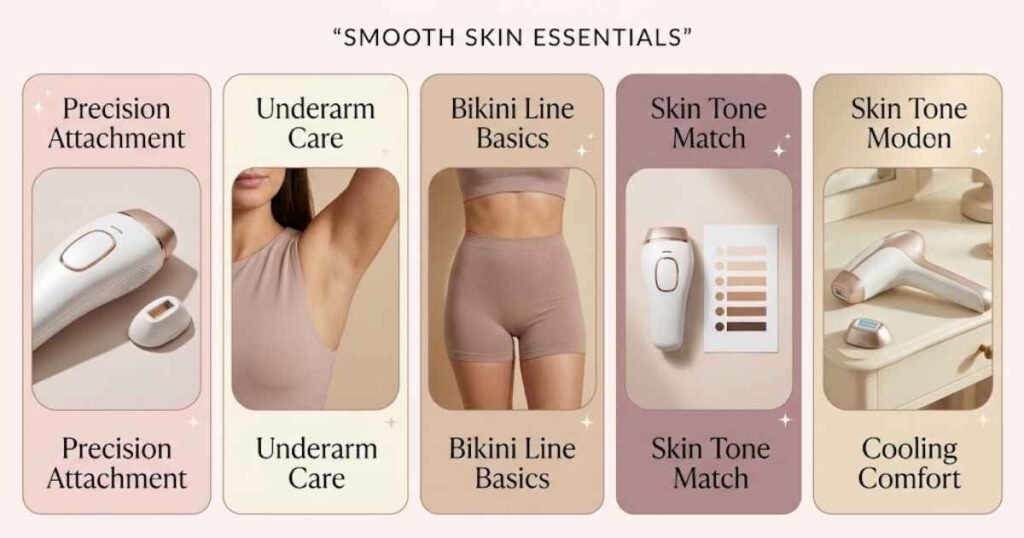
The bikini line and underarms often have coarse, dark hair. These areas may respond well to compatible light-based treatments, although skin sensitivity and pigmentation need careful consideration.
Choose a laser hair remover that explicitly allows treatment on your intended area. Bikini-line approval doesn’t automatically mean the device is suitable for the external genital area or other intimate skin.
What to look for
- A precision attachment for smaller treatment areas
- Suitable skin tone compatibility
- Adjustable settings within the manufacturer’s guidance
- Clear instructions for sensitive body areas
- Cooling technology if you prefer additional comfort
Bikini-line and underarm safety tips
- Shave the area as directed before treatment.
- Avoid applying the device to irritated skin, cuts, or inflamed ingrown hairs.
- Don’t treat mucous membranes or genital areas unless the manufacturer explicitly approves that use.
- Avoid deodorants, fragranced lotions, and other products immediately before treatment if the instructions advise against them.
- Follow the prescribed schedule and allow the skin to recover between sessions.
If you experience recurring ingrown hairs, reducing hair growth may help some people. However, a light-based treatment won’t resolve every cause of ingrown hairs, and treating inflamed skin can make irritation worse.
Best FDA-Cleared Laser Hair Removal Devices for Home
When comparing home hair removal equipment in the USA, check the device’s regulatory status rather than relying on advertising alone.
Some devices are FDA-cleared for specific indications, while others may have different regulatory statuses. The exact model, intended use, and labeling matter.
What does FDA clearance mean?
FDA clearance generally means the agency has determined that a medical device meets the applicable requirements for marketing through a particular regulatory pathway. It doesn’t mean the device guarantees permanent hair removal, works for every skin tone, or is completely free of risk.
| What to check | Why it matters |
| Exact model name | Similar products can have different regulatory statuses |
| FDA status | Verify the specific device and its intended use |
| Skin tone compatibility | Not every device supports every complexion |
| Approved treatment areas | Some models restrict facial or intimate-area use |
| Safety instructions | Explain how to reduce burns and other injuries |
| Manufacturer support | Helps with questions about operation and maintenance |
How to evaluate an FDA-cleared device
Before purchasing, review the manufacturer’s labeling and verify its claims through official FDA device information where applicable. Don’t assume a product is FDA-cleared simply because its packaging says FDA registered.
An FDA-cleared laser hair remover should still be used exactly as directed. Clearance doesn’t replace patch testing, skin tone assessment, or appropriate eye protection.
Also distinguish between actual laser devices and IPL systems. Both may be marketed as home hair removal solutions, but their technologies and regulatory descriptions can differ.
IPL vs. Laser Hair Remover: What Is the Difference?
Although people often use the terms interchangeably, IPL and laser technology deliver light differently. Understanding the difference helps you compare performance, comfort, cost, and skin compatibility.
Uses a concentrated wavelength or a selected set of laser wavelengths to target pigment in the hair. Professional systems offer different technologies for different skin and hair combinations.
Uses intense pulsed light across a broader range of wavelengths. Many consumer devices use this technology to deliver repeated flashes during home treatments.
IPL vs. laser hair removal comparison
| Feature | Laser | IPL |
| Light output | Selected laser wavelengths | Broad spectrum of light |
| Common setting | Professional clinics and some home products | Widely available in home devices and clinics |
| Hair reduction | Depends on technology and individual suitability | Depends on device, skin tone, hair color, and consistency |
| Skin compatibility | Varies by laser type | Varies by device and its permitted skin tone range |
| Home availability | Fewer consumer options | Many consumer products available |
| Cost | Often higher for professional treatments | Home devices vary widely in price |
Which option is better?
Neither technology is automatically best for everyone. Professional laser hair removal may be preferable when you need individualized treatment settings or when home devices aren’t suitable for your complexion.
IPL can be appealing if you want an at-home routine and have a compatible skin and hair combination. Still, compare the device specifications instead of choosing based on the words laser or IPL alone.
A good laser hair remover buying decision starts with compatibility, safety, and realistic expectations.
How to Choose the Right Laser Hair Remover
With so many products available, choosing a suitable laser hair remover can feel overwhelming. The smartest approach is to start with your skin tone, hair color, and treatment goals before comparing extra features.
1. Match the device to your skin tone and hair color
This should be your first priority. Many home IPL devices work best on lighter skin with dark hair, while certain complexions and hair colors fall outside their suitable range.
- Check the manufacturer’s skin tone chart.
- Confirm whether your hair color can respond to the technology.
- Look for clear warnings about tanned skin and pigmentation.
- Consider professional advice if your skin tone falls outside the device’s approved range.
2. Compare essential features
| Feature | What to look for |
| Energy settings | Adjustable levels with clear operating instructions |
| Skin tone sensor | Compatibility checks where supported |
| Treatment window | Larger windows for legs and smaller ones for precision areas |
| Cooling technology | Added comfort during flashes |
| Attachments | Approved options for your intended treatment areas |
| Flash capacity | Enough pulses for your expected use |
| Warranty | Clear coverage and customer support |
| Corded or cordless design | Choose based on convenience and manufacturer specifications |
A cordless hair removal device may be convenient for travel, but battery life and charging requirements matter. Corded models can be easier to use for longer sessions without worrying about battery power.
3. Think about your main treatment area
Your needs will vary depending on where you want to reduce hair.
- Legs and arms: Prioritize a larger treatment window.
- Upper lip: Choose a device specifically approved for that facial area.
- Underarms: Consider precision and comfort.
- Bikini line: Check the exact permitted treatment areas.
- Full-body use: Confirm that the device supports every area you plan to treat.
4. Read laser hair remover reviews carefully
Top-rated at-home hair removal devices can provide useful clues, but reviews shouldn’t replace product specifications.
Look for feedback about:
- Comfort during treatment
- Ease of use
- Time required per session
- Changes in hair regrowth
- Customer service and warranty claims
- Durability after months of use
Be cautious about reviews promising instant results or permanent hair removal after one session. Hair reduction takes time, and individual outcomes vary.
5. Choose the best value, not just the lowest price
An affordable laser hair removal device can be a good purchase when it suits your needs and offers adequate safety features. However, a cheap device that isn’t compatible with your skin tone isn’t a bargain.
Compare the total cost, warranty, treatment capabilities, replacement requirements, and expected convenience before making your decision.
How Much Does a Home Laser Hair Remover Cost in the USA?
The cost of an at-home hair removal device varies by technology, brand, features, and retailer. In the USA, basic IPL products generally cost less than premium systems with specialized attachments and advanced comfort features.
The following ranges are general shopping estimates, not verified current prices for specific models.
| Device category | Estimated price in the USA | Typically suited for |
| Basic IPL device | $50 to $100 | Budget-conscious shoppers |
| Entry-level home device | $100 to $200 | Beginners comparing essential features |
| Midrange IPL system | $200 to $350 | Regular home treatments |
| Premium home system | $350 to $600+ | Shoppers seeking additional features |
| Professional laser treatment | Varies by clinic and area | Individualized in-office care |
Are at-home hair removal devices under $200 worth buying?
They can be, provided the device suits your skin tone and hair color. An inexpensive model may offer enough functionality for basic treatment areas without the cost of a premium system.
Before purchasing, check:
- Whether the product uses IPL or actual laser technology
- Its skin tone and hair color compatibility
- The number of treatment settings
- Warranty length and return policy
- Customer reviews and manufacturer support
At-home hair removal cost compared with salon treatments
Home treatments require an upfront purchase, while professional services usually involve payment per session or treatment package.
For example, a home device costing $250 might seem expensive initially. However, someone who needs multiple professional appointments may spend more over time. Your actual savings depend on the device’s effectiveness, the number of treatments required, and any maintenance sessions.
Professional treatment may still offer better value if home devices aren’t suitable for your skin or if you prefer individualized care.
Don’t overlook the total cost
When comparing the laser hair removal device price in the USA, consider more than the sticker price. A reliable warranty, suitable attachments, and clear safety guidance may matter more than extra features you won’t use.
How to Use and Maintain Your Laser Hair Remover Safely

Even a well-designed laser hair remover requires careful handling. Correct preparation and consistent maintenance help you follow the treatment plan while reducing avoidable irritation and injury.
Step-by-step instructions for home use
Step 1: Read the instructions
Check skin tone compatibility, approved treatment areas, contraindications, and the recommended treatment frequency. Don’t assume every device works the same way.
Step 2: Prepare your skin
Shave if directed and remove lotions, oils, deodorants, and makeup from the treatment area as instructed. Don’t treat freshly irritated or sunburned skin.
Step 3: Perform a patch test
Test a small area according to the manufacturer’s instructions. Observe your skin for the specified period before proceeding with a larger treatment.
Step 4: Treat the area carefully
Select an appropriate setting, position the treatment window correctly, and deliver flashes as directed. Never repeatedly flash the same spot unless the instructions explicitly permit it.
Step 5: Follow the schedule
Use the device at its recommended intervals. More frequent treatments don’t necessarily improve results and may increase irritation or injury.
Step 6: Care for your skin and device
Use gentle skincare after treatment, avoid unnecessary irritation, and clean the treatment window according to the manual. Store the device in a dry, safe place.
At-home laser hair removal safety checklist
Before each session, make sure you’ve completed these checks.
Before you start
0 of 7 checked
My skin tone and hair color are compatible with the device.
The treatment area is clean, dry, and free of irritation.
I’ve checked the manual for contraindications and medication warnings.
I’ve confirmed that the body area is approved for treatment.
I’ve followed the required patch-test instructions.
I’ve reviewed the device’s eye protection requirements.
I’m following the recommended treatment schedule.
Reset checklist
What side effects should you watch for?
Common short-term effects can include mild redness, warmth, tenderness, or temporary irritation. These effects should generally settle quickly.
More serious problems can occur when you use an unsuitable device or incorrect settings. Watch for:
- Persistent pain or burning
- Blisters or crusting
- Significant swelling
- Unusual light or dark patches
- Eye discomfort or changes in vision
Stop treatment if you develop concerning symptoms. Seek prompt medical advice for significant burns, persistent skin changes, or eye symptoms.
Avoid light-based hair removal over tattoos, dark moles, or other prohibited areas unless the manufacturer and an appropriate healthcare professional specifically advise otherwise. Review medication warnings because some medicines can increase light sensitivity.
How to maintain your device
A little care can keep your equipment in good working condition.
- Clean the treatment window: Follow the manufacturer’s cleaning method and disconnect the device first when instructed.
- Inspect the equipment: Look for cracks, damaged cables, or unusual operation.
- Store it properly: Keep the device dry and away from excessive heat.
- Protect the treatment window: Avoid scratches and impacts.
- Check the warranty: Keep your receipt and product information.
- Track your sessions: Record treatment dates and any skin reactions so you can follow the schedule accurately.
Final buying advice
The best laser hair remover is one that matches your complexion, hair color, budget, and preferred treatment areas. For many shoppers, a compatible home IPL system offers a convenient alternative to frequent shaving and waxing.
Start by checking safety and skin tone compatibility. Then compare treatment windows, comfort features, warranties, and total cost. With realistic expectations and consistent use, a suitable device may help reduce unwanted hair and simplify your grooming routine over time.
FAQ’s
How long does at-home hair removal take to show results?
A Laser Hair Remover may take weeks or months to show results with consistent use.
How often should you use a hair removal device?
Use a Laser Hair Remover only as often as its manufacturer recommends for your device.
Is light-based hair removal suitable for darker skin?
A Laser Hair Remover may suit darker skin, but only when the device allows it.
Can you treat facial hair with a home device?
A Laser Hair Remover may treat approved facial areas, but never use it near eyes.
Does home hair reduction last permanently?
A Laser Hair Remover may reduce hair growth, but results vary by device and person.
Conclusion
A Laser Hair Remover can be a practical addition to your routine when you choose a device that suits your skin and hair. Before buying, compare IPL and laser technology, check approved treatment areas, and review the manufacturer’s skin tone guidance. Features such as adjustable energy levels, cooling technology, and precision attachments can improve convenience, but safety should always come first.
For shoppers in the USA, prices range from budget-friendly home devices to premium systems with extra features. Think about your main treatment areas, warranty, and expected upkeep instead of choosing by price alone. Follow the recommended schedule, perform a patch test, and avoid treating irritated skin. A Laser Hair Remover won’t deliver instant or identical results for everyone, yet consistent use may help reduce regrowth over time. With realistic expectations and careful use, you can choose an option that fits your routine and supports smoother-feeling skin.

HairVist is a helpful destination for hair care tips, hairstyle ideas, and beauty inspiration, managed by Ava Reynolds, an SEO content writer with 2 years of experience, focused on creating simple, useful, and engaging content that helps readers learn more about hair care and styling.
1 thought on “17 Best Laser Hair Remover Options for Home Use”