
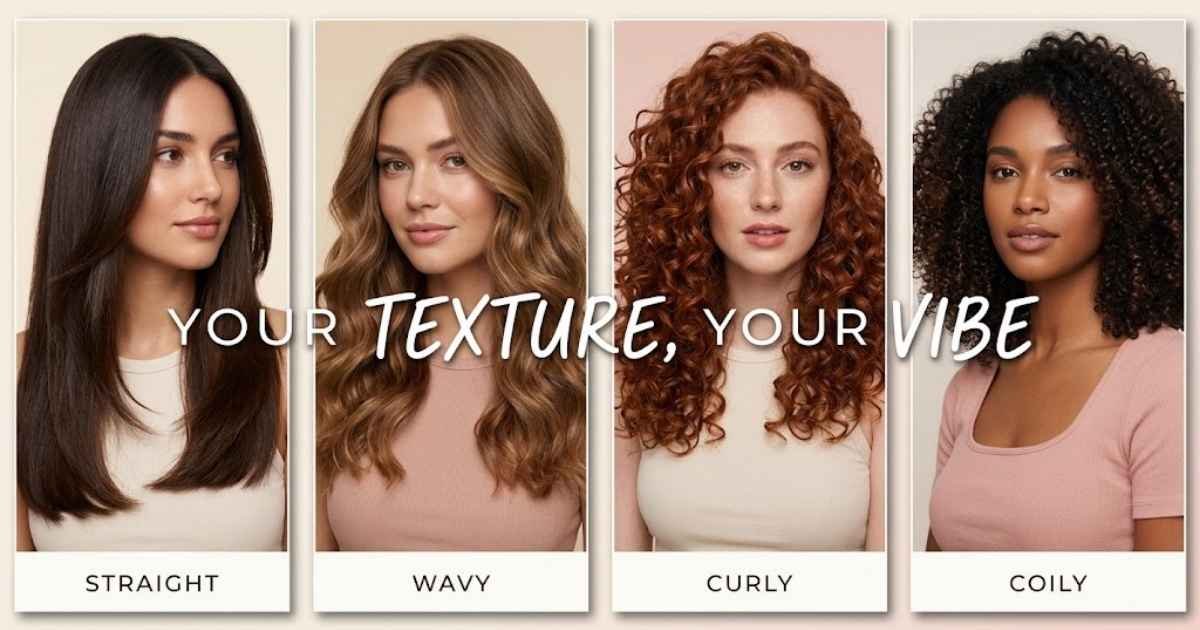
Understanding your Type Hair makes everyday styling and hair care much easier. Everyone has unique hair patterns, textures, and needs. Whether you have straight hair, wavy hair, curly hair, or coily hair, knowing your Type Hair helps you choose suitable products and hairstyles. A simple hair type chart can help you identify your natural curl pattern and understand your hair structure.
However, hair porosity, density, and strand thickness also influence your results. Learning about different hair types gives you a practical starting point for better hair maintenance. With the right hair care routine, you can manage frizz, reduce breakage, and improve shine. This Type Hair guide covers hair classification, styling tips, and natural hair care. You’ll also learn how to identify your hair texture and select products that suit your needs. Small changes can make a noticeable difference in your hair’s appearance.
What Is Type Hair?
Type Hair refers to a classification system that describes your hair’s natural shape and curl pattern. It helps you understand whether your strands grow straight, form waves, create curls, or develop tight coils.
The most widely used system divides hair into four main categories, numbered from Type 1 to Type 4. Each category includes subtypes that describe differences in wave shape, curl size, and coil formation.
Understanding your Type Hair makes everyday hair care easier. You can choose appropriate styling methods and recognize which products may suit your natural texture.
Why Does Hair Type Matter?
Your hair type influences how your hair responds to moisture, styling, and different products. Recognizing these patterns helps you make more informed decisions.
- Product selection: Choose shampoos, conditioners, and styling products suited to your texture.
- Frizz management: Understand why humidity and dryness affect certain hair patterns.
- Styling choices: Find haircuts and hairstyles that work with your natural shape.
- Breakage prevention: Adjust detangling methods and reduce unnecessary pulling.
- Moisture balance: Build a routine that addresses dryness without weighing your hair down.
Remember that hair typing provides guidance rather than strict rules. Two people with the same Type Hair classification may need different routines because their porosity, density, and scalp conditions differ.
Different Hair Types and Textures
Hair comes in many shapes, thicknesses, and densities. Although the hair typing system focuses mainly on natural curl patterns, understanding other characteristics gives you a clearer picture of your hair’s needs.
The difference between hair texture and Type Hair matters when choosing products. Hair type describes the pattern of your strands, while hair texture commonly refers to strand thickness in everyday hair care discussions.
Hair Texture Types Explained
Your strands generally fall into three thickness categories.
- Fine hair: Individual strands have a small diameter and can break easily under tension. Heavy products may flatten fine hair or make it appear greasy.
- Medium hair: Strands have a moderate diameter and often respond well to a variety of styling methods.
- Thick or coarse hair: Individual strands have a larger diameter and may feel stronger or more substantial. Depending on their condition, they might need richer conditioning products.
These categories describe strand thickness, not the amount of hair on your head.
Hair Density vs. Hair Thickness
Hair density describes how many strands grow across your scalp. Hair thickness describes the diameter of an individual strand.
| Hair characteristic | What it means | Why it matters |
| Type Hair | Natural straight, wavy, curly, or coily pattern | Helps guide styling choices |
| Hair texture | Fine, medium, or coarse strands | Influences product weight and handling |
| Hair density | Low, medium, or high strand concentration | Affects volume and haircut choices |
| Hair porosity | How readily hair absorbs and retains moisture | Influences conditioning and product selection |
| Hair structure | The physical makeup and shape of the strands | Affects strength, flexibility, and appearance |
For example, you might have fine, high-density Type 2 hair. Your strands are individually thin, but you have many of them. This combination may need lightweight products that provide moisture without removing natural movement.
The Four Main Hair Types Explained
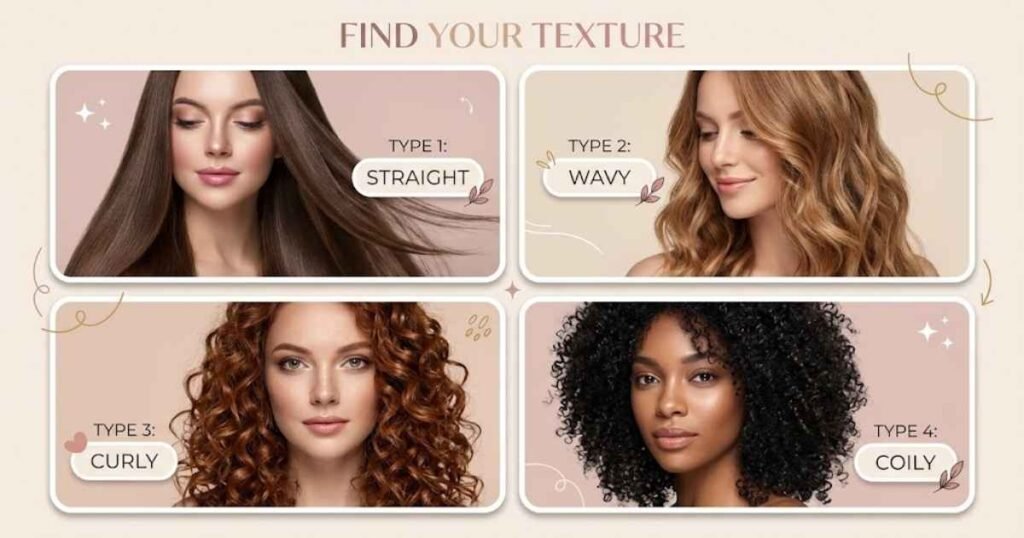
The four main Type Hair categories make it easier to understand your natural pattern. Each category includes different subtypes, so your hair may not match every description perfectly.
Type 1: Straight Hair
Straight hair falls without a defined wave or curl pattern. It can look sleek and shiny, although fine strands may struggle to hold volume.
Type 2: Wavy Hair
Wavy hair forms loose bends or noticeable S-shaped patterns. It often sits between straight and curly hair, with varying amounts of volume and frizz.
Type 3: Curly Hair
Curly hair forms visible loops, spirals, or ringlets. It often benefits from conditioning, gentle detangling, and styling products that support curl definition.
Type 4: Coily Hair
Coily hair features tight curls, compact coils, or zigzag patterns. Gentle handling, regular conditioning, and low-tension hairstyles can help protect its length.
Hair Type Chart: Types 1, 2, 3, and 4
| Hair type | Subtypes | Typical pattern | Main care priority |
| Type 1 | 1A, 1B, 1C | Straight | Maintain movement and manage oil |
| Type 2 | 2A, 2B, 2C | Loose to pronounced waves | Define waves and control frizz |
| Type 3 | 3A, 3B, 3C | Spirals and ringlets | Preserve curl definition and moisture |
| Type 4 | 4A, 4B, 4C | Tight coils and zigzags | Minimize breakage and maintain flexibility |
A Type Hair chart offers a useful starting point, but it cannot capture every variation. Many people have multiple patterns on the same head, especially around the hairline and crown.
Type 1 Straight Hair Characteristics

Type 1 hair grows without a naturally defined wave or curl pattern. Depending on your strands, it can look silky and flat or thick and full.
Straight hair often allows scalp oils to travel down the strands more easily than tightly curled hair. Consequently, some people with Type 1 hair notice greasy roots sooner.
Types of Straight Hair
- Type 1A: Very straight, fine strands that usually lie flat against the scalp.
- Type 1B: Straight hair with slightly more body and natural volume.
- Type 1C: Straight hair that often has more texture, fullness, or a slight bend.
These descriptions aren’t rigid categories. Your straight hair may fall between two subtypes depending on its thickness and natural movement.
How to Care for Straight Hair
A simple routine helps straight hair look clean, smooth, and full of movement.
- Wash as often as your scalp needs, especially if your roots become oily.
- Choose lightweight conditioner to avoid weighing down fine strands.
- Apply volumizing mousse or root-lifting products when you want extra body.
- Use a heat protectant before blow-drying or using hot tools.
- Brush gently to minimize tangles and unnecessary breakage.
- Apply heavy oils sparingly, particularly near the roots.
For the best results, choose products based on your specific Type Hair needs rather than assuming every straight-haired person requires the same routine.
Type 2 Wavy Types Hair and Styling

Type 2 hair forms waves rather than remaining completely straight or developing full spiral curls. Its pattern can range from barely visible bends to strong S-shaped waves.
Wavy hair often looks different depending on humidity, haircut, and styling technique. Some days, your waves might appear defined. On other days, they may look almost straight or become frizzy.
Understanding Type 2A, 2B, and 2C Hair
| Subtype | Characteristics | Helpful styling approach |
| Type 2A | Loose, subtle waves with relatively little volume | Lightweight mousse or texture spray |
| Type 2B | More noticeable S-shaped waves, often with frizz | Lightweight curl cream or wave-enhancing gel |
| Type 2C | Strong waves with greater volume and occasional loose curls | Moisturizing conditioner and stronger-hold gel |
Type 2A hair can lose its shape under heavy products. Type 2B and 2C hair may need more moisture and hold to maintain definition.
How to Style Wavy Hair
Try these practical hair styling tips to bring out your natural waves.
- Apply lightweight styling products to damp hair.
- Scrunch your hair upward with your hands to encourage wave formation.
- Use a microfiber towel or soft cotton T-shirt to remove excess water.
- Diffuse on low heat or let your hair air-dry.
- Avoid brushing dry waves if brushing makes them expand or lose definition.
- Use a small amount of gel when humidity causes persistent frizz.
Best products for Type 2 wavy hair usually include lightweight conditioners, mousse, leave-in sprays, and flexible-hold gels. Start with small amounts and adjust based on your results.
Type 3 Curly Hair Types and Care

Type 3 hair forms visible curls, loops, or spirals. These patterns can range from large ringlets to tighter corkscrew curls.
Curly hair often experiences more dryness along its lengths because scalp oils may travel less easily around curved strands. However, not every person with Type 3 hair needs a heavy moisturizing routine.
Types of Curly Hair
- Type 3A: Large, loose spirals with a noticeable curl pattern and natural bounce.
- Type 3B: Medium-sized ringlets that generally appear tighter and fuller.
- Type 3C: Tight corkscrew curls with substantial volume and spring.
Your curl pattern may vary across different sections. For example, the hair around your crown might form tighter curls than the hair near your temples.
How to Care for Type 3 Curly Hair
The right approach helps your curls stay defined without feeling stiff or weighed down.
- Use a moisturizing shampoo that cleans your scalp without leaving your hair excessively dry.
- Apply conditioner generously to the lengths and ends.
- Detangle damp hair with your fingers or a wide-tooth comb.
- Apply leave-in conditioner or curl cream to support softness.
- Use gel when you need stronger hold and longer-lasting definition.
- Dry gently with a diffuser or let your curls air-dry.
- Avoid repeatedly touching curls while they dry, as this can increase frizz.
To define natural curls, distribute styling products evenly and scrunch gently. Experiment with different amounts until you find the right balance between softness and hold.
A good Type Hair routine for curly strands should also include occasional deep conditioning when your hair feels dry or rough. If your curls become limp, reduce heavy products before adding more.
Type 4 Coily Hair Types and Tips
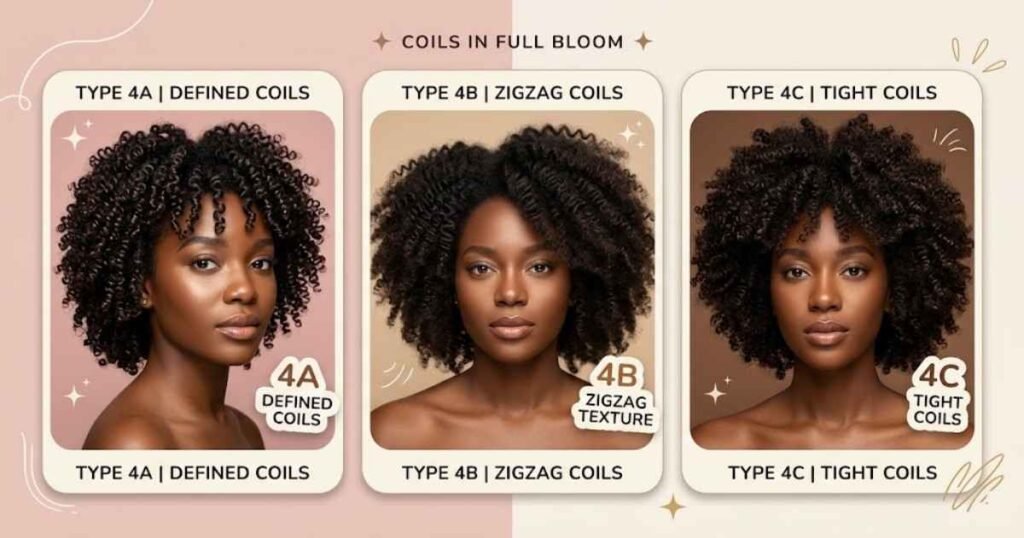
Type 4 hair features tightly packed coils, compact curls, or sharp zigzag patterns. It often creates impressive volume and can shrink considerably as it dries.
Coily hair can be especially vulnerable to breakage when it becomes tangled or loses flexibility. That doesn’t mean every Type 4 strand is fragile, but gentle handling can help preserve length.
Understanding Type 4A, 4B, and 4C Hair
| Subtype | Typical pattern | Helpful care focus |
| Type 4A | Small, defined coils with visible curl formation | Moisture and gentle detangling |
| Type 4B | Tighter bends with less clearly defined coils | Conditioning and careful sectioning |
| Type 4C | Very tight coils or zigzag patterns with substantial shrinkage | Gentle handling and moisture retention |
These subtypes describe common patterns rather than strict definitions. Your hair may show characteristics of more than one subtype.
Best Moisturizing Routine for Type 4 Coily Hair
A thoughtful routine helps keep coily hair flexible and easier to manage.
- Cleanse your scalp regularly with a suitable shampoo.
- Condition thoroughly and detangle in manageable sections.
- Apply a leave-in conditioner to damp hair when needed.
- Use a cream or oil if it suits your hair’s moisture needs.
- Protect your ends with low-tension styles that don’t pull tightly.
- Sleep with a satin bonnet or use a satin pillowcase to reduce friction.
- Trim damaged ends when necessary instead of repeatedly manipulating split strands.
You can also try twists, braid-outs, and wash-and-go styles to work with your natural texture. Avoid tight braids, painful extensions, or styles that place persistent tension on your hairline.
For many people, maintaining natural hair means finding a balance between moisture, cleansing, styling, and protective techniques. Your scalp still needs regular cleaning, even when you wear protective hairstyles.
Also Read: 10 Amazing Remy Hair Facts You Should Know Before Buying
How to Identify Your Hair Type
Wondering what my Type Hair? You can usually identify your natural pattern at home without special tools or expensive products.
The easiest approach is to observe your clean hair after washing. Let it dry naturally without applying products that might change its shape.
How to Determine Your Hair Type at Home
Follow these steps to identify your natural curl pattern.
- Wash your hair: Use a shampoo suitable for your scalp and rinse thoroughly.
- Condition lightly: Apply a suitable conditioner, then rinse according to the product instructions.
- Skip styling products: Avoid gels, curl creams, straighteners, and other products that could alter your natural pattern.
- Air-dry your hair: Let your strands dry without brushing or manipulating them excessively.
- Observe the pattern: Look for straight strands, loose waves, spiral curls, or tight coils.
- Check several sections: Compare the crown, sides, back, and hairline for differences.
- Assess other characteristics: Notice strand thickness, overall density, dryness, and how your hair responds to moisture.
This process helps you learn how to identify Type 1, 2, 3, and 4 hair without relying on appearance alone.
Type Hair Identification Checklist
Select the pattern that best describes your naturally dried hair.
My hair falls straight without clear waves or curls.
My hair forms loose or pronounced S-shaped waves.
My hair forms visible spirals, loops, or ringlets.
My hair forms very tight coils or zigzag patterns.
What Else Affects Your Hair Type?
Your curl pattern tells only part of the story. Consider these additional characteristics:
- Porosity: How readily your hair absorbs and retains moisture.
- Density: How much hair grows across your scalp.
- Strand thickness: Whether individual strands feel fine, medium, or coarse.
- Scalp condition: Whether your scalp tends toward oiliness, dryness, irritation, or flaking.
Hair porosity is particularly useful when selecting conditioners and styling products. Low-porosity hair may resist water absorption, while highly porous hair can absorb moisture quickly and lose it just as readily.
Also remember that genetics strongly influence your natural pattern. Hormonal changes, aging, medications, and chemical treatments can affect how your hair looks or behaves over time.
Best Hairstyles for Every Hair Type

The best hairstyles for different Type Hair work with your natural texture rather than fighting against it. A suitable cut can improve movement, highlight curls, and make everyday styling easier.
Your face shape, lifestyle, and desired maintenance level matter, too. Choose a hairstyle that suits your preferences instead of following a hair typing chart alone.
| Type Hair | Hairstyles to consider | Styling tip |
| Type 1 straight | Blunt bob, layered cut, long sleek hair, textured pixie | Add light layers or mousse for movement |
| Type 2 wavy | Shag, lob, long layers, curtain bangs | Enhance natural waves with lightweight styling products |
| Type 3 curly | Curly bob, rounded layers, shoulder-length curls, curly shag | Ask for curl-aware shaping to manage volume |
| Type 4 coily | Tapered afro, twist-out, braid-out, protective updo | Minimize tension and protect your ends |
Hairstyles for Fine and Thick Hair
Your strand thickness can change how a haircut looks.
For fine hair:
- Try blunt cuts that make the ends appear fuller.
- Choose lightweight layers rather than excessive thinning.
- Use volumizing mousse when you want extra lift.
For thick hair:
- Consider strategic layers to reduce unwanted bulk.
- Choose a shape that distributes volume evenly.
- Ask your stylist about techniques that preserve your natural texture.
How to Choose a Haircut for Your Type Hair
Before visiting your stylist, consider three things: your natural pattern, how much styling you’re willing to do, and your preferred length.
Bring reference photos that resemble your actual texture. A hairstyle that looks effortless on straight hair might require a different cut or styling method for coily strands.
For the best results, tell your stylist how your hair behaves when air-dried. That information often proves more useful than showing a photo of a completely different texture.
Hair Care Tips for Different Hair Types
Healthy hair habits begin with understanding what your strands need. You don’t need an expensive collection of products to maintain healthy-looking hair. Consistency and gentle handling often make a bigger difference.
Essential Hair Maintenance Tips
- Wash according to your scalp: Oily scalps may need more frequent washing than dry ones.
- Condition consistently: Focus on the lengths and ends when they need extra moisture.
- Detangle gently: Start at the ends and work upward to minimize pulling.
- Limit excessive heat: Use lower temperatures and apply a heat protectant.
- Protect your hair at night: Satin pillowcases or bonnets can reduce friction.
- Trim damaged ends: Remove split ends when needed to prevent further splitting along the strand.
- Adjust for the weather: Humidity can increase frizz, while dry indoor air may leave some hair feeling rough.
How to Reduce Frizz and Breakage
Frizz often occurs when strands respond to moisture in the air or lack sufficient conditioning. Breakage, however, can result from friction, excessive heat, chemical damage, or rough detangling.
To manage frizz, use a conditioner suited to your hair and apply a compatible styling product. Avoid aggressive towel-drying, which can roughen the hair’s surface and create tangles.
To reduce breakage, handle wet hair carefully and avoid hairstyles that pull tightly at the roots. If your hair becomes increasingly brittle, review your chemical treatments and heat-styling habits.
Does Hair Porosity Affect Hair Type?
Yes, but porosity and curl pattern describe different characteristics. Your Type Hair category identifies the natural shape of your strands, while porosity describes how readily they absorb and retain moisture.
For example, two people with Type 3 curly hair may need different conditioners. One person’s hair might absorb water slowly, while the other’s may become dry again quickly.
Choose products based on your hair’s actual response. Don’t assume every curly or coily texture needs the same oils, creams, or deep-conditioning schedule.
Best Products for Your Hair Type
Choosing the best products for your Type Hair doesn’t mean buying everything labeled for your texture. Start with a few essentials, then adjust your routine based on how your hair responds.
Best Shampoo and Conditioner for Your Type Hair
| Hair type | Shampoo to consider | Conditioner to consider |
| Type 1 straight | Lightweight, scalp-appropriate shampoo | Lightweight conditioner |
| Type 2 wavy | Gentle shampoo that cleans without excessive dryness | Lightweight moisturizing conditioner |
| Type 3 curly | Gentle, moisturizing shampoo | Richer conditioner that supports detangling |
| Type 4 coily | Gentle shampoo suited to your scalp | Rich conditioner with good slip |
Your scalp condition matters as much as your Type Hair. If you have persistent dandruff or irritation, choose products designed for that concern rather than relying solely on curl classifications.
Which Styling Products Work Best?
Different formulas serve different purposes. Understanding what each product does helps you build a simpler routine.
- Leave-in conditioner: Adds softness and helps make detangling easier.
- Hair mousse: Provides volume and flexible hold, especially for straight and wavy hair.
- Curl cream: Supports softness and curl definition for curly or coily hair.
- Styling gel: Helps waves and curls hold their shape for longer.
- Hair oil: Can smooth the surface, add shine, and reduce friction during styling.
- Deep conditioner: Provides additional conditioning when your hair feels dry or difficult to manage.
- Heat protectant: Helps reduce damage from blow-dryers and other heated styling tools.
For fine hair, start with lighter formulas to avoid a flat appearance. Coarser or tightly curled hair may benefit from richer conditioners, but the right amount depends on its needs.
The simplest rule: Choose products for your scalp condition, strand thickness, porosity, and styling goals. Your Type Hair classification helps narrow the options, but your results should guide your final choices.
Common Hair Type Mistakes to Avoid

Hair typing can simplify your routine, but a few common mistakes can lead to unnecessary spending and frustration.
1. Assuming Everyone Has One Curl Pattern
You might have loose waves around your crown and tighter curls near your ears. That’s completely normal. Examine several sections instead of forcing your entire head into one category.
2. Confusing Hair Texture With Type Hair
Straight hair can be fine or coarse. Curly hair can also have fine strands or high density. Separate these characteristics when choosing products and hairstyles.
3. Copying Someone Else’s Routine
A product that works beautifully for one person may weigh down your hair or leave it feeling dry. Consider differences in porosity, scalp condition, density, and styling habits.
4. Using Too Much Product
Applying more cream or oil doesn’t automatically create healthier hair. Excessive product can cause buildup, flatten waves, and leave strands feeling heavy.
Start with small amounts. Add more only when your hair needs it.
5. Overwashing or Avoiding Shampoo Completely
Your ideal washing schedule depends on scalp oiliness, sweat, buildup, and personal comfort. Some people need frequent cleansing, while others can comfortably wash less often.
Focus on keeping your scalp clean without leaving your hair uncomfortably dry.
6. Ignoring Heat and Chemical Damage
Repeated high-heat styling, bleaching, and chemical treatments can alter your hair’s appearance and weaken strands. Use protective products and avoid unnecessary overlapping treatments.
7. Treating Hair Typing as a Scientific Diagnosis
A hair typing system provides a convenient visual guide, not a complete assessment of hair health. It cannot independently determine porosity, scalp health, or the cause of hair loss.
If you notice sudden shedding, bald patches, or persistent scalp problems, consider consulting a dermatologist.
How to Build a Hair Care Routine
A good hair care routine should fit your Type Hair, daily schedule, budget, and styling preferences. You don’t need ten products or a complicated weekly schedule to get started.
Instead, establish a few consistent habits and make changes when your hair needs something different.
Your Simple Hair Care Routine
Step 1: Cleanse your scalp
Choose a shampoo that suits your scalp and wash whenever needed to remove oil, sweat, and buildup.
Step 2: Condition your strands
Apply conditioner to your lengths and ends. Use a richer formula if your hair feels dry or tangled.
Step 3: Style your natural pattern
Use mousse for volume, gel for hold, or curl cream for softness. Pick products that match your desired finish.
Step 4: Protect your hair
Reduce excessive heat, detangle carefully, and choose comfortable nighttime protection to limit friction.
Step 5: Review and adjust
Notice how your hair feels after washing and styling. Change one product or habit at a time.
How Often Should You Wash Your Type Hair?
There isn’t one perfect washing schedule for everyone. Your scalp condition, activity level, product use, and hair texture all influence how often you should shampoo.
- Straight hair: Wash when your roots become oily or your scalp needs cleansing.
- Wavy hair: Adjust washing frequency to balance scalp cleanliness with manageable waves.
- Curly hair: Choose a schedule that removes buildup without leaving your curls excessively dry.
- Coily hair: Cleanse as needed and follow with conditioner to maintain softness and manageability.
You can also use a deep conditioner periodically if your hair feels dry. However, daily deep conditioning isn’t necessary for everyone.
How to Improve Hair Health Over Time
Healthy-looking hair develops through consistent care rather than a single miracle product. Give your routine time to work, and pay attention to changes in softness, breakage, and manageability.
Keep these priorities in mind:
- Eat a balanced diet with enough protein and essential nutrients.
- Avoid hairstyles that cause persistent scalp tension.
- Limit damaging chemical treatments and excessive heat.
- Choose products that suit your scalp and strands.
- Seek professional advice when unusual shedding or scalp symptoms persist.
Most importantly, let your natural hair guide your decisions. Your Type Hair classification can help you understand its basic pattern, but your everyday experience reveals what works best.
Frequently Asked Questions About Type Hair
What Are the Four Main Hair Categories?
The four categories describe Type Hair patterns: straight, wavy, curly, and coily, each with distinct styling needs.
How Can I Identify My Natural Curl Pattern?
Observe your Type Hair after washing and air-drying without styling products to recognize its natural shape.
Does Hair Porosity Affect Product Selection?
Yes, Type Hair porosity influences moisture absorption and helps determine which conditioners and styling products suit you best.
Which Hairstyles Work Best for Different Textures?
The best hairstyles complement Type Hair patterns, strand thickness, face shape, and your preferred daily maintenance level.
Can Hair Texture Change Throughout Life?
Yes, Type Hair texture may change with aging, hormonal shifts, medication, and chemical treatments over time.
Conclusion
Choosing the right routine starts with understanding your Type Hair and its natural characteristics. Straight, wavy, curly, and coily hair each require different approaches to cleansing, conditioning, and styling. Your hair texture, porosity, and density also affect which products work best. By identifying your natural curl pattern, you can make smarter choices without wasting money on unsuitable formulas. This Type Hair guide provides practical ideas for healthier-looking strands and easier daily maintenance.
Focus on gentle handling, suitable conditioners, and hairstyles that complement your natural texture. Avoid comparing your hair with someone else’s because everyone’s needs differ. Consistent care matters more than following complicated routines. Whether you want defined curls, smoother waves, or fuller straight hair, simple habits can help. Use these hair care tips to build confidence, maintain your natural beauty, and keep your Type Hair looking its best throughout the year.

HairVist is a helpful destination for hair care tips, hairstyle ideas, and beauty inspiration, managed by Ava Reynolds, an SEO content writer with 2 years of experience, focused on creating simple, useful, and engaging content that helps readers learn more about hair care and styling.
1 thought on “10 Ultimate Type Hair Guide to Textures and Styling”