

Oily hair can feel like a never-ending battle, especially when your roots look greasy just hours after washing. The right shampoo and conditioner for oily hair can make a noticeable difference. You don’t need dozens of expensive products to keep your hair fresh. Instead, focus on ingredients that remove excess oil without stripping your scalp’s natural moisture.
Your scalp naturally produces sebum to protect and moisturize your hair. However, excess sebum production can leave your roots looking flat, sticky, and unwashed.
Choosing the right shampoo and conditioner for oily hair also depends on your hair texture, thickness, and scalp condition. Fine hair often needs lightweight formulas, while thick hair may benefit from deeper cleansing. If you have oily roots and dry ends, you’ll need a slightly different approach.
Let’s look at the best ingredients, product choices, washing techniques, and everyday habits that help control greasy hair.
Best Ingredients to Look for in Oily Hair Products
The secret to managing Shampoo and Conditioner for Oily Hair and greasy hair starts with the ingredients inside your shampoo and conditioner. Certain ingredients remove excess sebum, refresh your scalp, and prevent heavy product buildup.
When choosing the best shampoo and conditioner for oily hair, prioritize lightweight cleansing formulas and moisturizing ingredients that won’t leave a greasy coating.
1. Salicylic Acid
Salicylic acid helps loosen dead skin cells and excess oil from your scalp.
- Removes greasy buildup around hair follicles.
- Helps keep scalp pores clear.
- Supports gentle exfoliation.
- Works well in clarifying shampoo for oily hair.
2. Tea Tree Oil
Tea tree oil creates a refreshing scalp-cleansing experience when properly formulated.
- Helps remove excess oil and product residue.
- Leaves your scalp feeling refreshed.
- Works well in oily scalp treatment products.
- Provides a clean feeling without heavy conditioning.
3. Niacinamide
Niacinamide supports healthy scalp care and helps maintain comfortable skin.
- Supports the scalp’s natural moisture barrier.
- Helps maintain balanced-looking scalp conditions.
- Works well in lightweight hair care products.
- Complements gentle cleansing ingredients.
4. Zinc PCA
Zinc PCA appears in many products designed for oily skin and scalp care.
- Helps manage excess surface oil.
- Supports scalp oil regulation.
- Works well in balancing shampoo for oily hair.
- Offers a lightweight approach to daily cleansing.
5. Aloe Vera
Aloe vera provides lightweight moisture without making your roots feel heavy.
- Helps soothe dry scalp sensations.
- Adds lightweight hydration.
- Works well in gentle shampoo formulas.
- Supports comfortable everyday scalp care.
6. Green Tea Extract
Green tea extract contains antioxidants that support a healthy scalp environment.
- Helps protect against environmental stress.
- Adds a refreshing feel.
- Works well in oil control shampoo.
- Complements lightweight moisturizing formulas.
7. Rosemary Extract
Rosemary extract appears in many botanical hair care formulas.
- Provides antioxidant benefits.
- Supports a refreshing scalp care routine.
- Works well in lightweight cleansing products.
- Pairs nicely with other botanical ingredients.
8. Lightweight Conditioning Ingredients
Your hair still needs moisture, even when your scalp produces plenty of oil.
Look for:
- Glycerin for lightweight hydration.
- Panthenol for softness and moisture.
- Hydrolyzed proteins for improved hair feel.
- Lightweight silicones for smoother strands.
- Aloe-based conditioning ingredients for added hydration.
Quick tip: Choose a shampoo that cleans your scalp effectively and a conditioner that moisturizes your hair lengths. This combination makes the best shampoo and conditioner for oily hair easier to use consistently.
Ingredients to Avoid When Choosing Hair Care Products
Not every moisturizing ingredient works well for greasy hair. Some formulas contain heavy oils, waxes, and rich conditioning agents that can weigh down your strands.
However, you don’t need to avoid every oil or silicone. Your Shampoo and Conditioner for Oily Hair texture and product application matter just as much as the ingredient list.
When shopping for shampoo and conditioner for oily hair, watch for these ingredients and product characteristics.
| Ingredient or product type | Why to be cautious | Better approach |
| Heavy mineral oil | May feel greasy on fine hair | Choose lightweight conditioners |
| Thick petroleum-based products | Can leave a heavy coating | Use lightweight styling formulas |
| Heavy shea butter | May weigh down oily roots | Apply richer products to dry ends |
| Coconut oil | Can feel too heavy for some hair types | Use sparingly on lengths |
| Heavy waxes | May contribute to product buildup | Choose lightweight styling products |
| Excessive fragrance | May irritate sensitive scalps | Choose fragrance-free formulas |
| Heavy conditioning masks | Can flatten fine strands | Use occasional lightweight treatments |
Ingredients and Formulas Worth Limiting
1. Heavy Oils: Coconut, castor, and olive oils can feel too rich when applied directly to oily roots.
2. Thick Butters: Shea and cocoa butter may weigh down fine or naturally greasy hair.
3. Excessive Conditioning Agents: Some rich formulas leave residue that makes freshly washed hair feel unclean.
4. Harsh Cleansing Formulas: Very strong cleansers may leave your scalp feeling dry or irritated.
5. Heavy Styling Waxes: Pomades and waxes can accumulate around your roots when you use them frequently.
Should You Avoid Sulfates?
Not necessarily. Sulfates such as sodium laureth sulfate effectively remove oil, dirt, and styling residue.
However, stronger cleansing formulas may feel drying on color-treated, damaged, or sensitive hair. A sulfate-free shampoo for oily hair can work well if it cleanses effectively without leaving buildup.
The best choice depends on your scalp condition and hair texture.
How to Choose the Right Shampoo for Your Hair Type

Your friend’s favorite Shampoo and Conditioner for Oily Hair might not work for your hair. That’s because oil production, strand thickness, and scalp condition vary from person to person.
Before buying shampoo and conditioner for oily hair, identify your hair type and its specific needs.
1. Fine and Oily Hair
Fine hair often looks greasy faster because individual strands have less volume.
Choose:
- Lightweight volumizing shampoo.
- Oil-balancing cleansing formulas.
- Lightweight conditioner for oily hair.
- Products labeled non-greasy or residue-free.
Avoid thick creams and heavy leave-in treatments near your roots.
2. Thick and Oily Hair
Thick hair may need stronger cleansing to remove accumulated oil and styling products.
Choose:
- Deep cleansing shampoo.
- Lightweight moisturizing conditioner.
- Clarifying shampoo for occasional buildup removal.
- Products with gentle but effective cleansing ingredients.
Apply conditioner evenly through your lengths to maintain softness.
3. Curly and Oily Hair
Curly hair can have greasy roots and dry ends at the same time.
Choose:
- Gentle sulfate-free shampoo for oily hair.
- Hydrating conditioner with a lightweight texture.
- Moisturizing ingredients such as glycerin.
- Products designed for your curl pattern.
Avoid applying rich conditioners directly to your scalp.
4. Oily Hair With Dry Ends
This combination requires a little extra attention. Your scalp needs cleansing, but your ends still need moisture.
Choose:
- Balancing shampoo for oily hair.
- Lightweight conditioner for dry lengths.
- Occasional moisturizing hair masks.
- Gentle products that don’t leave heavy residue.
5. Color-Treated and Oily Hair
Color-treated hair needs effective cleansing without unnecessary dryness.
Choose:
- Color-safe cleansing formulas.
- Gentle sulfate-free shampoo when suitable.
- Lightweight conditioner for colored lengths.
- Products that support moisture retention.
6. Oily Hair With Dandruff
Flaking and excess oil sometimes occur together. However, dandruff requires more than ordinary oil control.
Choose:
- An appropriate anti-dandruff shampoo.
- Gentle conditioner for your hair lengths.
- Products suited to your scalp’s sensitivity.
- Medicated formulas containing ingredients such as ketoconazole or selenium sulfide when appropriate.
If flaking persists or causes irritation, consult a dermatologist.
| Hair type | Recommended shampoo | Recommended conditioner |
| Fine and oily | Volumizing shampoo | Lightweight conditioner |
| Thick and oily | Deep cleansing shampoo | Lightweight moisturizing conditioner |
| Curly and oily | Gentle balancing shampoo | Curl-friendly lightweight conditioner |
| Oily roots, dry ends | Oil-control shampoo | Hydrating conditioner for ends |
| Color-treated and oily | Color-safe shampoo | Color-safe lightweight conditioner |
| Oily with dandruff | Anti-dandruff shampoo | Gentle moisturizing conditioner |
The right shampoo and conditioner for oily hair should match your individual hair needs instead of simply promising maximum oil removal.
Best Shampoo and Conditioner for Oily Hair and Greasy Roots
Greasy roots can make even freshly styled Shampoo and Conditioner for Oily Hair look flat and lifeless. If your scalp becomes oily quickly, prioritize effective cleansing over heavy moisturizing formulas.
The best shampoo and conditioner for oily hair and dry ends should balance two different needs. Your scalp requires cleansing, while your ends need enough moisture to remain soft.
What to Look for in Shampoo
Choose products with:
- Gentle cleansing surfactants that remove excess sebum.
- Salicylic acid for scalp exfoliation.
- Tea tree oil for a refreshing cleansing experience.
- Lightweight formulas that rinse clean.
- Clarifying ingredients for occasional buildup removal.
A good shampoo should leave your scalp clean without creating excessive dryness.
What to Look for in Conditioner
A Shampoo and Conditioner for Oily Hair should soften your strands without making your roots greasy.
Look for:
- Lightweight moisturizing ingredients.
- Glycerin and panthenol.
- A creamy but non-heavy texture.
- Easy-rinse conditioning formulas.
- Products labeled suitable for fine or oily hair.
Best Product Pairing for Greasy Roots
| Product combination | Best suited for | Main benefit |
| Clarifying shampoo + lightweight conditioner | Heavy product buildup | Deeper cleansing |
| Volumizing shampoo + weightless conditioner | Fine, greasy hair | Fuller-looking roots |
| Balancing shampoo + hydrating conditioner | Oily roots, dry ends | Better moisture balance |
| Gentle shampoo + lightweight conditioner | Frequent washing | Comfortable everyday cleansing |
| Anti-dandruff shampoo + gentle conditioner | Oily, flaky scalp | Targeted dandruff care |
How to Prevent Conditioner From Making Roots Greasy
Follow these simple application techniques:
- Apply conditioner from the middle of your hair toward the ends.
- Keep rich conditioning products away from your scalp.
- Use a small amount instead of coating every strand.
- Rinse thoroughly to remove leftover product.
- Choose a lightweight formula suited to your hair thickness.
Remember: You don’t need to leave your hair completely moisture-free to control oil. The right shampoo and conditioner for oily hair can keep your scalp refreshed while maintaining soft, manageable lengths.
Best Drugstore Shampoo and Conditioner for Oily Hair
You don’t need luxury salon products to manage greasy roots. Many affordable drugstore formulas offer effective cleansing and lightweight conditioning.
The best drugstoreShampoo and Conditioner for Oily Hair and for greasy hair should remove excess oil without leaving your strands rough or tangled.
Here are some popular product options worth considering when shopping in the United States.
1. Neutrogena Exfoliating Healthy Scalp Clarifying Shampoo
Best for occasional deep cleansing
This clarifying shampoo is designed to remove buildup and refresh the scalp.
- Helps remove accumulated product residue.
- Suitable for occasional clarifying routines.
- Useful when regular shampoo doesn’t remove buildup effectively.
- Avoid excessive use if your hair feels dry.
2. L’Oréal Paris Elvive Extraordinary Clay Shampoo
Best for oily roots and dry lengths
This clay-based formula targets greasy roots while supporting softer-looking lengths.
- Designed for oily roots and dry ends.
- Helps remove excess oil.
- Offers a balanced cleansing approach.
- Pairs with a lightweight conditioner.
3. Aveeno Apple Cider Vinegar Blend Shampoo
Best for a refreshing wash
This shampoo offers a refreshing cleansing option for hair that feels dull or weighed down.
- Helps cleanse product residue.
- Provides a fresh washing experience.
- Works well for people who prefer botanical-inspired formulas.
- Choose a suitable conditioner for your ends.
4. OGX Clarifying Strength + Rosemary Mint Shampoo
Best for refreshing oily roots
The rosemary mint-inspired formula offers a refreshing cleansing experience.
- Helps remove excess surface oil.
- Leaves hair feeling refreshed.
- Works well in occasional cleansing routines.
- Follow with lightweight conditioning.
5. Suave Essentials Daily Clarifying Shampoo
Best budget-friendly clarifying option
This affordable option suits people who want straightforward cleansing without spending much.
- Helps remove styling product residue.
- Offers a simple cleansing formula.
- Useful for occasional clarifying.
- May feel drying on some hair types.
6. Garnier Fructis Pure Clean Shampoo
Best for everyday cleansing needs
This shampoo offers a straightforward option for people who prefer a clean-feeling wash.
- Helps cleanse dirt and oil.
- Works with a lightweight conditioning routine.
- Suitable for people seeking a fresh finish.
- Check the current formula for your hair needs.
Drugstore Conditioner Options for Oily Hair
Finding the right Shampoo and Conditioner for Oily Hair matters just as much as choosing shampoo.
| Conditioner | Best for | What to consider |
| L’Oréal Paris Elvive Hyaluron Plump Conditioner | Lightweight hydration | Apply mainly to lengths |
| Garnier Fructis Pure Clean Conditioner | Everyday conditioning | Use a small amount |
| Aveeno Oat Milk Blend Conditioner | Softer hair feel | Avoid overapplying near roots |
| OGX Lightweight + Coconut Fine Curls Conditioner | Fine or textured hair | Check whether the formula suits your texture |
| Herbal Essences Rose Hips Smooth Conditioner | Smoother lengths | Rinse thoroughly |
Product availability and formulas can vary between US retailers. Always check the current ingredient list before purchasing.
How to Choose an Affordable Shampoo and Conditioner Set
Before adding products to your shopping cart, consider these factors:
- Price: Compare the cost per ounce instead of bottle price alone.
- Hair type: Choose products designed for your strand thickness.
- Ingredients: Look for effective cleansing and lightweight conditioning.
- Formula: Avoid products that leave a heavy coating.
- Reviews: Pay attention to feedback from people with similar hair types.
An affordable shampoo and conditioner for oily hair can work beautifully when its formula matches your scalp and hair needs.
ALSO READ: 10 Best Milan Hair Removal: Complete Guide to Costs, Treatments, and Results
Best Natural Shampoo and Conditioner for Oily Hair

If you prefer botanical-inspired products, natural shampoo and conditioner formulas offer another option for managing greasy hair.
However, natural doesn’t automatically mean better or gentler. Some plant oils and extracts can irritate sensitive scalps or weigh down fine strands.
When choosing the best shampoo and conditioner for oily hair with natural ingredients, focus on the formula rather than marketing claims.
1. Tea Tree-Based Shampoo
Tea tree-based shampoos provide a refreshing cleansing experience.
Potential benefits include:
- Removing excess surface oil.
- Leaving the scalp feeling refreshed.
- Supporting a clean hair washing routine.
- Pairing well with lightweight conditioners.
2. Aloe Vera Shampoo
Aloe vera formulas offer gentle cleansing and lightweight hydration.
- Help maintain comfortable scalp moisture.
- Provide a lightweight feel.
- Suit people who dislike heavy formulas.
- Work well for frequent washing when properly formulated.
3. Rosemary-Based Shampoo
Rosemary extract appears in many botanical-inspired cleansing products.
- Offers antioxidant properties.
- Adds a refreshing botanical element.
- Complements other cleansing ingredients.
- Works well in balanced scalp care formulas.
4. Apple Cider Vinegar Shampoo
Apple cider vinegar-inspired products often target residue and dull-looking hair.
- Help cleanse accumulated product residue.
- Provide a fresh hair feel.
- Suit occasional cleansing routines.
- Shouldn’t replace medicated dandruff treatments.
5. Green Tea Shampoo
Green tea extract provides antioxidant support in hair care formulations.
- Supports a refreshing cleansing experience.
- Complements gentle surfactants.
- Works well in lightweight formulas.
- Offers a botanical option for oily scalp care.
Natural Conditioner Ingredients to Consider
Your Shampoo and Conditioner for Oily Hair should provide moisture without leaving a greasy coating.
| Ingredient | Conditioning purpose | Best suited for |
| Aloe vera | Lightweight hydration | Fine and oily hair |
| Glycerin | Helps attract moisture | Dry lengths |
| Panthenol | Improves softness | Most hair textures |
| Oat extract | Helps soothe and condition | Sensitive-feeling scalps |
| Jojoba oil | Adds conditioning | Dry hair lengths |
| Hydrolyzed proteins | Improve hair feel | Weak or damaged strands |
Are Natural Products Better for Oily Hair?
Not always. A natural shampoo can still contain heavy oils or irritating fragrances.
Instead, look for a well-formulated shampoo and conditioner for oily hair that provides effective cleansing and lightweight moisture.
Choose products based on how your scalp responds. That’s a much better strategy than relying on the word natural alone.
How Often Should You Wash Oily Hair?
If your Shampoo and Conditioner for Oily Hair looks greasy the morning after washing, you might need a different washing schedule.
The ideal frequency depends on your scalp’s oil production, activity level, hair texture, and styling habits.
Some people need daily shampooing, while others feel comfortable washing every other day. Neither routine automatically works for everyone.
Recommended Hair Washing Frequency
| Hair type or condition | Suggested washing frequency |
| Extremely oily scalp | Daily or as needed |
| Fine and oily hair | Daily or every other day |
| Thick and oily hair | Every 1–2 days |
| Curly hair with oily roots | Every 2–3 days, depending on buildup |
| Oily scalp with dandruff | Follow your treatment shampoo instructions |
| Normal scalp with occasional oiliness | Every 2–3 days |
These are starting points rather than strict rules. Adjust your routine according to scalp comfort and visible oil buildup.
Can You Wash Oily Hair Every Day?
Yes, daily washing can work if your scalp produces excess oil.
The key is choosing a suitable daily shampoo for oily hair that cleanses effectively without leaving your scalp irritated or excessively dry.
Consider these habits:
- Use lukewarm water instead of very hot water.
- Massage shampoo gently into your scalp.
- Avoid aggressive scratching.
- Apply conditioner only where needed.
- Rinse thoroughly after every wash.
What Happens If You Wash Too Frequently?
Overwashing doesn’t automatically make everyone produce more oil. However, harsh cleansing can irritate or dry your scalp.
Watch for:
- Tightness after washing.
- Itching or irritation.
- Rough, dry hair lengths.
- Increased tangling and breakage.
If these problems appear, switch to a gentler formula or adjust your washing schedule.
What If Your Hair Gets Greasy Within Hours?
First, check whether your Shampoo and Conditioner for Oily Hair removes product buildup effectively. Heavy conditioners and styling creams can also contribute to greasy-looking roots.
Try a lighter conditioner and review your styling routine. If excessive oil comes with itching or persistent flaking, consider professional scalp advice.
How to Use Shampoo and Conditioner for Oily Hair
Even excellent products won’t deliver their best results if you apply them incorrectly.
The proper shampoo and conditioner for oily hair routine focuses on cleansing the scalp and conditioning the hair lengths.
Follow these steps to get a cleaner, fresher finish.
Step 1: Wet Your Hair Thoroughly
Start by soaking your hair with lukewarm water.
- Make sure water reaches your scalp.
- Separate thick hair with your fingers.
- Allow water to loosen surface dirt.
- Avoid extremely hot water.
Step 2: Apply Shampoo to Your Scalp
Pour a small amount of shampoo into your palm.
- Focus on the scalp rather than the ends.
- Distribute the product evenly.
- Add water if you need more lather.
- Avoid piling your hair on top of your head.
Step 3: Massage Gently
Use your fingertips to massage the shampoo into your scalp.
- Work across the front hairline.
- Cleanse the crown and sides.
- Massage the back of your scalp.
- Avoid scratching with your fingernails.
A gentle massage helps distribute the cleansing formula without unnecessary friction.
Step 4: Rinse Completely
Rinse until you remove all visible shampoo residue.
Leftover product can make your roots feel coated. Pay extra attention to the crown and back of your head.
Step 5: Shampoo Again When Necessary
A second shampoo isn’t essential for everyone.
Consider double cleansing when:
- You use several styling products.
- Your scalp feels particularly greasy.
- You haven’t washed your hair for several days.
- Your first wash produces little lather because of heavy buildup.
Step 6: Apply Conditioner Correctly
This step makes a big difference for greasy roots.
- Squeeze excess water from your hair.
- Apply conditioner from mid-lengths to ends.
- Use a small amount.
- Avoid coating your scalp.
- Follow the product’s recommended application time.
Step 7: Rinse Thoroughly
Use lukewarm water to remove the conditioner completely.
Your hair should feel soft rather than coated. This final rinse helps maintain a clean, lightweight finish.
Step 8: Dry Your Hair Properly
How you dry your hair also affects its appearance.
- Gently squeeze out excess water.
- Use a clean microfiber towel.
- Avoid rough towel rubbing.
- Clean your hairbrush regularly.
- Keep styling products away from your roots.
Pro tip: Consistency matters more than complicated routines. A suitable shampoo and conditioner for oily hair can simplify your hair washing routine considerably.
Common Hair Washing Mistakes That Make Hair Greasy
Sometimes, your products aren’t the problem. Small washing mistakes can leave your roots greasy even after a thorough shower.
Avoid these habits to improve your Shampoo and Conditioner for Oily Hair care routine for oily scalp conditions.
1. Applying Conditioner to Your Roots
Conditioner can weigh down your roots and create a greasy appearance.
Better approach: Apply a lightweight conditioner from the middle of your hair toward the ends.
2. Using Too Much Shampoo
More shampoo doesn’t necessarily mean cleaner hair.
Excessive product use may create unnecessary dryness or irritation.
Better approach: Start with a small amount and adjust according to your hair length and thickness.
3. Skipping Proper Rinsing
Leftover shampoo and conditioner can make your hair feel coated.
Better approach: Rinse your scalp and lengths thoroughly before leaving the shower.
4. Using Heavy Hair Masks Too Frequently
Rich masks can leave fine hair looking flat.
Better approach: Choose lightweight treatments and apply them mainly to dry ends.
5. Washing With Extremely Hot Water
Very hot water can increase dryness and discomfort.
Better approach: Use comfortably lukewarm water during your washing routine.
6. Overusing Dry Shampoo
Dry shampoo absorbs some surface oil but doesn’t actually cleanse your scalp.
Better approach: Use it occasionally between washes and shampoo regularly to remove accumulated residue.
7. Ignoring Hairbrush Hygiene
Your brush can collect oil, dead skin cells, and styling residue.
Better approach: Remove trapped hair and clean your brush regularly.
8. Applying Too Many Styling Products
Serums, creams, waxes, and sprays can accumulate around your roots.
Better approach: Use lightweight products and apply them sparingly.
9. Scratching Your Scalp Aggressively
Hard scratching can irritate your scalp and damage delicate skin.
Better approach: Massage gently using your fingertips.
10. Choosing Products Without Considering Hair Texture
A thick conditioner might work beautifully on coarse hair but overwhelm fine strands.
Better approach: Match your shampoo and conditioner for oily hair to your hair texture and thickness.
Tips to Keep Oily Hair Fresh and Clean Longer
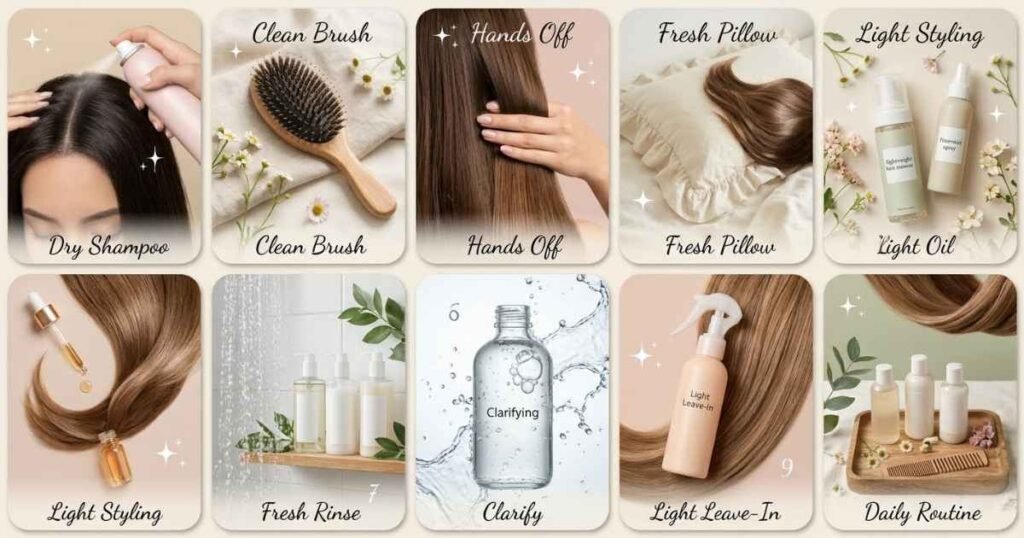
Fresh-looking Shampoo and Conditioner for Oily Hair isn’t just about what happens in the shower. Your everyday habits also influence how quickly your roots appear greasy.
With a few simple changes, you can maintain a cleaner appearance between washes without relying on excessive styling products.
1. Use Dry Shampoo Strategically
Dry shampoo helps absorb surface oil between regular washes.
- Apply it to dry roots.
- Follow the product’s directions.
- Allow it to absorb before brushing.
- Avoid using it as a permanent replacement for shampoo.
2. Keep Your Hairbrush Clean
A dirty brush can redistribute accumulated oil and styling residue.
Clean your brush regularly and remove trapped strands after use.
3. Avoid Touching Your Hair Frequently
Your hands transfer natural oils and product residue onto your strands.
Try to keep your fingers away from your roots throughout the day.
4. Change Your Pillowcase Regularly
Pillowcases collect oil, sweat, and leftover hair products.
Wash them regularly to maintain a cleaner sleeping environment.
5. Choose Lightweight Styling Products
Heavy creams and oils can make freshly washed hair look greasy.
Choose lightweight sprays, mousses, and styling products designed for your hair texture.
6. Don’t Overapply Hair Oil
Hair oils can provide useful conditioning, especially for dry ends.
However, applying large amounts near your scalp may create an oily appearance.
Use a small amount on your lengths when needed.
7. Rinse Away Sweat When Necessary
Sweat doesn’t automatically mean your scalp has excessive oil.
After exercise, wash your hair if it feels uncomfortable or noticeably dirty. You can also rinse your scalp when appropriate.
8. Use Clarifying Shampoo Occasionally
A clarifying shampoo helps remove stubborn styling residue and accumulated buildup.
However, frequent clarifying can dry out some hair types. Follow the product directions and adjust usage according to your scalp’s needs.
9. Avoid Heavy Leave-In Conditioners
Rich leave-in products can flatten fine strands and create greasy-looking roots.
Choose lightweight sprays or apply leave-in conditioner only to your ends.
10. Maintain a Consistent Hair Care Routine
Switching products constantly makes it difficult to understand what works.
Give a suitable shampoo and conditioner for oily hair enough time to demonstrate how your scalp responds.
Daily Habits for Longer-Lasting Freshness
| Daily habit | Why it helps |
| Clean your hairbrush | Removes trapped oil and residue |
| Avoid frequent touching | Reduces oil transfer |
| Use lightweight styling products | Prevents heavy buildup |
| Change pillowcases regularly | Maintains a cleaner sleeping surface |
| Apply conditioner to ends | Prevents greasy-looking roots |
| Use dry shampoo occasionally | Absorbs surface oil between washes |
| Follow a consistent washing schedule | Keeps cleansing predictable |
How to Keep Oily Hair Fresh Between Washes
If your hair gets greasy quickly, try this simple routine:
In the morning:
- Brush your hair gently.
- Use a small amount of dry shampoo if needed.
- Avoid heavy styling creams.
- Choose loose hairstyles that don’t require excessive product.
During the day:
- Avoid touching your roots.
- Keep your hairbrush clean.
- Use lightweight styling products.
- Avoid repeatedly adding dry shampoo.
At night:
- Remove styling accessories.
- Brush out loose tangles gently.
- Keep your pillowcase clean.
- Wash your hair when your scalp needs it.
The right shampoo and conditioner for oily hair, combined with consistent habits, can help your hair look fresher for longer.
A clean scalp doesn’t require aggressive washing or expensive products. Focus on effective cleansing, lightweight conditioning, and healthy scalp care. Once you understand what your hair needs, controlling excess oil becomes much easier.
FAQ’s
What Is the Best Way to Choose Products for an Oily Scalp?
Choose a Shampoo and Conditioner for Oily Hair with gentle cleansers and lightweight moisturizing ingredients.
How Often Should You Wash Hair That Gets Greasy Quickly?
Wash as needed, often daily or every other day, using suitable Shampoo and Conditioner for Oily Hair.
Can Conditioner Make Naturally Oily Hair Look Greasier?
Yes, heavy formulas can weigh down roots, so choose Shampoo and Conditioner for Oily Hair with lightweight conditioning.
Which Ingredients Help Reduce Excess Oil on the Scalp?
Salicylic acid, tea tree oil, and zinc PCA complement Shampoo and Conditioner for Oily Hair routines.
Is Clarifying Shampoo Suitable for Greasy Roots and Dry Ends?
Yes, occasional clarifying removes buildup, while Shampoo and Conditioner for Oily Hair helps maintain balanced moisture.
Conclusion
Managing oily hair doesn’t have to feel like an endless battle. Choosing the right Shampoo and Conditioner for Oily Hair makes your daily routine easier and more effective. Focus on gentle cleansing ingredients, lightweight conditioners, and formulas that remove excess scalp oil without stripping natural moisture. Whether you prefer drugstore options, sulfate-free shampoo, or clarifying formulas, always consider your hair texture and scalp condition.
Apply conditioner mainly to your lengths and rinse thoroughly to prevent greasy buildup. A consistent washing schedule also helps maintain fresh, manageable strands. The best Shampoo and Conditioner for Oily Hair should leave your roots feeling clean while keeping your ends soft. With the right products and healthy habits, you can enjoy better oil control and longer-lasting freshness. Choose wisely and give your scalp the care it deserves.

HairVist is a helpful destination for hair care tips, hairstyle ideas, and beauty inspiration, managed by Ava Reynolds, an SEO content writer with 2 years of experience, focused on creating simple, useful, and engaging content that helps readers learn more about hair care and styling.
1 thought on “10 Best Shampoo and Conditioner for Oily Hair That Work”