

A good night’s sleep should leave your hair looking refreshed, not tangled, frizzy, or difficult to manage. Unfortunately, tossing and turning can create friction between your hair and pillowcase. Over time, that friction may contribute to dryness, split ends, breakage, and unwanted frizz. That’s where a hair wrap for sleeping makes a noticeable difference.
Whether you have long, short, straight, curly, or natural hair, the right nighttime protection can help maintain your hairstyle. Silk scarves, satin bonnets, and comfortable hair wraps offer simple ways to reduce friction while you rest. They can also help preserve moisture and keep your hair manageable until morning.
However, choosing the right material and wrapping technique matters. A Hair Wrap for Sleeping that’s too tight or poorly secured can cause discomfort. This guide covers the benefits, materials, wrapping methods, and practical tips to help you protect your hair overnight.
Why You Should Wrap Your Hair Before Sleeping
Your hair goes through more than you might realize while you sleep. Every turn, pillow movement, and change in sleeping position creates friction. A hair wrap for sleeping creates a protective barrier between your strands and rough bedding.
Here are some important reasons to include nighttime hair wrapping in your routine.
1. Reduces Overnight Hair Breakage
Hair rubbing against cotton pillowcases can create friction and stress delicate strands. A soft wrap reduces direct contact and helps protect fragile ends.
2. Helps Control Frizz
Morning frizz often comes from friction and disrupted hair strands. Wrapping your hair helps maintain a smoother appearance throughout the night.
3. Preserves Natural Moisture
Cotton pillowcases can absorb some moisture from your hair. Silk and satin materials create smoother surfaces that help limit friction-related moisture loss.
4. Keeps Hairstyles Looking Fresh
If you’ve spent time styling your hair, you probably don’t want to start over every morning. A nighttime wrap helps maintain curls, straight styles, braids, and other hairstyles.
5. Prevents Tangling
Loose hair can twist together while you sleep. A comfortable wrap keeps strands organized and reduces morning detangling.
6. Protects Hair Ends
Your ends are older and generally more vulnerable to damage than newer growth. Covering them overnight helps reduce rubbing against bedding.
Other Benefits Worth Considering
- Less morning styling: Spend less time brushing and fixing messy strands.
- Better curl definition: Help preserve your natural curl pattern overnight.
- Reduced friction: Minimize unnecessary rubbing against pillowcases.
- Easier morning routines: Wake up with hair that’s easier to manage.
- Better hairstyle preservation: Keep protective styles looking neat for longer.
A consistent nighttime hair care routine doesn’t need complicated products. Sometimes, a simple wrap makes all the difference.
Best Hair Wrap Materials for Overnight Hair Protection

Not every fabric Hair Wrap for Sleeping offers the same level of comfort and protection. Some materials create more friction, while others provide a smoother surface for your strands.
When choosing a hair wrap for sleeping, consider your hair texture, budget, and personal comfort.
| Material | Main Benefits | Best For |
| Silk | Smooth texture and reduced friction | Fine, curly, and delicate hair |
| Satin | Smooth surface and affordable options | Most hair types |
| Cotton | Soft and breathable but absorbent | Short-term daytime use |
| Bamboo fabric | Lightweight and breathable options | People who prefer soft fabrics |
| Microfiber | Lightweight and quick-drying | Specific hair-drying needs |
Silk: A Premium Choice
Silk feels exceptionally smooth against your hair and skin. Its natural fibers provide a comfortable surface that helps reduce friction.
Benefits include:
- Smooth texture for delicate strands.
- Comfortable feel against the scalp.
- Lightweight material for overnight use.
- Helps reduce friction-related tangling.
However, genuine silk usually costs more than synthetic alternatives.
Satin: Affordable and Practical
Satin describes a type of weave rather than a specific fiber. Many affordable satin wraps use polyester.
A satin hair wrap offers a smooth surface without the higher price of genuine silk. It’s a popular option for everyday overnight hair protection.
Why people choose satin:
- Budget-friendly choices.
- Smooth surface for different hair textures.
- Available in bonnets, scarves, and turbans.
- Easy to find in different sizes.
Cotton: Comfortable but Less Protective
Cotton feels familiar and breathable. However, it can absorb moisture and create more friction than silk or satin.
For overnight hair protection, cotton isn’t usually the first choice. You can still use it for everyday comfort when hair protection isn’t your main concern.
Bamboo and Other Soft Fabrics
Some bamboo-based fabrics feel lightweight and comfortable. Their performance depends on the fabric construction and surface finish.
Always check the actual texture before buying. A soft, smooth fabric generally works better than a rough material.
Quick tip: Choose silk or smooth satin if reducing friction is your main priority. Both offer practical options for a comfortable nighttime routine.
How to Wrap Your Hair for Sleeping Step by Step
Learning how to Hair Wrap for Sleeping before bed doesn’t require professional styling skills. With the right technique, you can protect your strands in just a few minutes.
Follow these simple steps to create a comfortable hair wrap for sleeping.
Step 1: Detangle Your Hair Gently
Start by removing knots and tangles with a wide-tooth comb or suitable brush.
- Begin at the ends.
- Work upward toward the roots.
- Avoid pulling or tugging.
- Use a detangling product if needed.
Gentle handling prevents unnecessary stress before bedtime.
Step 2: Prepare Your Hair
Make sure your Hair Wrap for Sleeping is reasonably dry before wrapping. Excess moisture trapped beneath a tight covering can create an uncomfortable environment.
If you have curly hair, apply your usual lightweight leave-in conditioner or styling product.
Step 3: Choose Your Wrapping Method
Select a technique that suits your hair length and texture.
- Use a flat wrap for straight hair.
- Choose a loose pineapple for curls.
- Try a satin bonnet for longer styles.
- Use a scarf for shorter hairstyles.
Step 4: Position Your Hair Comfortably
Gather your hair without pulling tightly at the roots. Keep your ends tucked inside the protective fabric whenever possible.
Avoid tight ponytails, restrictive elastics, or hairstyles that create scalp tension.
Step 5: Place Your Scarf or Bonnet
Position your silk scarf, satin scarf, or bonnet over your hair.
Make sure the fabric covers your hairline and ends. Adjust the material so it sits comfortably without squeezing your head.
Step 6: Secure the Wrap
Tie your scarf gently or adjust the bonnet’s elastic band.
Your wrap should stay in place without creating pressure around your forehead, ears, or scalp.
Step 7: Check Your Comfort
Move your head slightly and check the fit.
If the wrap feels tight, loosen it before sleeping. Comfort matters just as much as protection.
Extra tip: A silk pillowcase provides additional protection if your scarf or bonnet slips off during the night.
Silk Hair Wraps for Smooth and Frizz-Free Hair
Silk hair wraps have become popular among people who want smoother-looking hair without complicated nighttime routines. Their naturally smooth surface helps minimize friction during sleep.
A silk hair wrap for sleeping works particularly well for people with delicate strands, dry ends, and easily tangled hairstyles.
Why Silk Makes a Difference
Silk offers several qualities that make it suitable for nighttime hair care.
- Smooth surface: Helps reduce rubbing between hair strands and fabric.
- Lightweight feel: Makes overnight wear more comfortable.
- Gentle texture: Works well with delicate hair.
- Versatile styling: Available in scarves, turbans, and bonnets.
Best Silk Wrap Styles
| Silk Wrap Style | Main Feature | Suitable For |
| Square silk scarf | Traditional wrapping method | Short and medium hair |
| Long silk scarf | Extra fabric for tying | Long hair |
| Silk bonnet | Full hair coverage | Curly and natural hair |
| Silk turban | Easy pull-on design | Everyday nighttime use |
| Adjustable silk wrap | Customizable fit | Different head sizes |
How to Sleep With a Silk Hair Wrap
Start with clean, detangled, and mostly dry hair. Choose a scarf large enough to cover your entire hairstyle.
Fold the Hair Wrap for Sleeping scarf into a triangle if you’re using a square design. Place its longest edge near your forehead and bring the ends toward the back.
Tie the ends gently and tuck away loose fabric. Your hair should remain covered without excessive pressure.
Who Should Choose Silk?
Silk can be a worthwhile investment if you have:
- Fine hair that tangles easily.
- Dry or fragile ends.
- Curly hair that loses definition overnight.
- Chemically treated or color-treated hair.
- A preference for natural fabric fibers.
Remember that silk isn’t a miracle treatment. It simply helps create gentler conditions for your hair while you sleep.
Satin Hair Wraps for Different Hair Types
Satin Hair Wrap for Sleeping offer an affordable alternative to genuine silk. Their smooth surface helps reduce friction and makes them suitable for many nighttime hairstyles.
A satin hair wrap for sleeping can work with straight, wavy, curly, and coily hair. The key is selecting the right design and size.
Satin Wraps for Straight Hair
Straight hair can develop tangles, flyaways, and flattened sections overnight.
A satin scarf helps keep strands together while limiting friction.
Helpful tips:
- Brush your hair gently before bed.
- Create a loose wrap around your head.
- Avoid tight ponytails.
- Secure the scarf without flattening your roots.
Satin Wraps for Wavy Hair
Wavy hair often loses its natural shape after repeated movement during sleep.
A satin bonnet provides space for your waves without compressing them too much.
You can also use a loose braid if your waves need extra organization.
Satin Wraps for Curly Hair
Curly hair benefits from gentle overnight protection because its bends and curves can create vulnerable areas.
Choose a roomy bonnet that accommodates your curls without flattening them.
A loose pineapple hairstyle also helps preserve volume and curl definition.
Satin Wraps for Coily and Natural Hair
Coily hair often needs extra attention to moisture retention and end protection.
A large satin bonnet can comfortably cover twists, braids, and other protective hairstyles.
Consider these options:
- Oversized satin bonnets for voluminous styles.
- Adjustable scarves for flexible coverage.
- Extra-wide wraps for thick natural hair.
- Double-layered bonnets for added coverage.
Choosing the Right Satin Wrap
| Hair Type | Recommended Wrap | Main Goal |
| Fine | Lightweight satin scarf | Reduce tangling |
| Straight | Satin scarf | Maintain smoothness |
| Wavy | Loose satin bonnet | Preserve wave patterns |
| Curly | Roomy satin bonnet | Protect curl definition |
| Coily | Large satin bonnet | Cover protective styles |
| Thick | Extra-large bonnet | Prevent compression |
The best option should feel comfortable and provide enough room for your natural hair volume.
Best Hair Wrapping Methods for Long Hair

Long Hair Wrap for Sleeping needs extra attention because loose ends can tangle, twist, and rub against bedding. Fortunately, several techniques make overnight protection easier.
The best hair wrap for sleeping with long hair should accommodate your full length without forcing strands into tight positions.
1. Loose Low Bun
A loose bun keeps longer strands organized throughout the night.
- Gather your hair gently.
- Twist it into a loose bun.
- Secure it with a soft scrunchie.
- Cover everything with a satin bonnet.
Avoid pulling your hair tightly at the crown.
2. Loose Braid Method
A relaxed braid works well if you want to prevent tangling.
Divide your hair into three sections and create a loose braid. Secure the end with a soft fabric hair tie.
Cover the braid with a satin scarf or bonnet.
This technique works particularly well for straight and wavy hair.
3. Satin Bonnet Method
A large bonnet provides full coverage without requiring complicated wrapping techniques.
Simply gather your hair gently and place it inside the bonnet. Make sure the ends don’t stick out.
Choose an extra-large design if you have thick or very long hair.
4. Long Scarf Wrapping Method
A long satin scarf gives you more fabric to work with.
- Brush your hair gently.
- Bring it together without creating tension.
- Position the scarf over your hair.
- Wrap the ends around your head.
- Tie them securely but comfortably.
This option works well when you prefer adjustable coverage.
5. Loose Pineapple Method
The pineapple method works especially well for long curly hair.
Gather your curls loosely near the top of your head. Secure them with a soft scrunchie, then cover them with a satin bonnet.
This technique helps preserve curl shape and volume.
Important: Don’t force long hair into a small bonnet. Choose enough space to prevent unnecessary compression and tangling.
MORE INFO: 10 Best Shampoo and Conditioner for Oily Hair That Work
How to Wrap Short Hair Before Bed
Short Hair Wrap for Sleeping may seem easier to protect overnight. However, shorter strands can still develop frizz, flattened sections, and unwanted tangles.
A comfortable hair wrap for sleeping helps maintain your haircut and keeps your strands protected.
1. Use a Square Satin Scarf
A square scarf works particularly well for short bobs, pixie cuts, and chin-length hairstyles.
Fold the scarf into a triangle and position it over your head. Bring the ends toward the back and tie them gently.
Make sure your hairline and side sections remain covered.
2. Try a Small Satin Bonnet
A smaller bonnet can provide comfortable coverage for shorter hairstyles.
Choose an adjustable design that doesn’t slide over your forehead. Avoid oversized bonnets that create unnecessary fabric movement.
3. Use the Flat Wrapping Method
This technique works well for straight or relaxed short hair.
- Comb your hair gently.
- Brush longer sections around your head.
- Use clips designed for nighttime styling if needed.
- Cover everything with a satin scarf.
Avoid metal clips or sharp accessories that may snag your hair.
4. Protect Short Natural Hair
Short natural hair still needs moisture and gentle handling.
Apply your regular moisturizing product if necessary. Then use a satin bonnet or scarf to cover your strands.
5. Keep Your Hairline Comfortable
Short hairstyles often expose more of the hairline. Avoid tight scarf knots or narrow elastic bands.
A soft, adjustable wrap helps prevent uncomfortable pressure.
Best tip: Choose a wrap that stays in place without flattening your haircut. Your morning style should look natural rather than squeezed into shape.
Hair Wrap Techniques for Curly and Natural Hair
Curly and natural hair often needs a thoughtful nighttime routine. Its texture can make tangling, dryness, and friction more noticeable.
Using a hair wrap for sleeping helps protect curls while keeping your hairstyle manageable.
1. The Pineapple Technique
The pineapple method is one of the easiest ways to protect longer curls.
Gather your curls loosely at the top of your head. Use a soft scrunchie and avoid pulling the roots tightly.
Cover your hair with a satin bonnet to maintain protection.
2. The Loose Twist Method
Loose twists help organize natural hair without requiring tight styling.
- Divide your hair into several sections.
- Apply your usual leave-in product if needed.
- Twist each section gently.
- Cover your hair with a satin bonnet.
This method works well for medium-length natural hair.
3. The Braid Method
Loose braids help reduce tangling in longer curly hairstyles.
Create two or more relaxed braids before bedtime. Cover them with a satin scarf or bonnet.
Avoid braiding too tightly because excessive tension can stress your roots.
4. The Flat Twist Method
Flat twists keep hair close to the Hair Wrap for Sleeping scalp while protecting the ends.
Divide your hair into sections and twist each one gently against your head. Secure the ends without pulling.
A bonnet provides additional overnight coverage.
5. The Satin Bonnet Method
A satin bonnet is a simple option for people who prefer minimal styling.
Place your curls inside the bonnet and distribute them evenly. Avoid crushing your curl pattern with a tight fit.
Extra Tips for Natural Hair
- Apply lightweight moisturizing products when needed.
- Protect your ends with loose twists or braids.
- Avoid sleeping with excessively wet hair.
- Choose breathable, smooth fabrics.
- Clean your bonnet regularly.
- Refresh curls gently in the morning.
Remember: Every curl pattern behaves differently. Experiment with gentle methods until you find a routine that preserves your natural texture.
How to Protect Your Hair From Breakage Overnight
Overnight breakage can happen gradually. You might not notice the damage until your ends become rough or your Hair Wrap for Sleeping starts looking thinner.
Fortunately, a few simple habits can help protect your strands.
1. Choose a Smooth Pillowcase
Cotton pillowcases can create more friction than silk or satin alternatives.
A silk or satin pillowcase provides an additional layer of overnight protection if your wrap moves during sleep.
2. Avoid Tight Hairstyles
Tight ponytails, buns, and braids can place unnecessary tension on your roots.
Choose relaxed hairstyles that allow your scalp to rest comfortably.
3. Protect Your Hair Ends
Your ends deserve special attention because they experience more wear over time.
Try these simple options:
- Loose braids for longer hair.
- Soft twists for natural hair.
- A satin bonnet for full coverage.
- Lightweight leave-in conditioner when appropriate.
4. Don’t Wrap Excessively Wet Hair
Wet hair can be more vulnerable to stretching and damage. Covering damp strands too tightly may also trap moisture.
Let your Hair Wrap for Sleeping dry sufficiently before putting on your nighttime wrap.
5. Use Gentle Hair Accessories
Traditional elastic bands can snag strands and create pressure.
Instead, choose:
- Satin scrunchies.
- Soft fabric hair ties.
- Smooth spiral hair ties.
- Gentle, snag-free clips when appropriate.
6. Maintain a Consistent Nighttime Routine
Healthy hair habits work best when you follow them consistently.
| Nighttime Habit | How It Helps |
| Gentle detangling | Reduces knot-related pulling |
| Loose protective styling | Limits tension |
| Satin or silk wrapping | Reduces friction |
| Moisture maintenance | Supports manageable strands |
| Clean hair accessories | Keeps your routine hygienic |
| Regular trimming | Removes damaged ends |
7. Give Your Scalp Room to Breathe
Your nighttime covering shouldn’t feel restrictive. Choose a breathable design that doesn’t create excessive heat or pressure.
If your Hair Wrap for Sleeping scalp becomes itchy or irritated, remove the wrap and check its fit and cleanliness.
A protective routine should make your hair more manageable, not uncomfortable.
Common Hair Wrapping Mistakes to Avoid
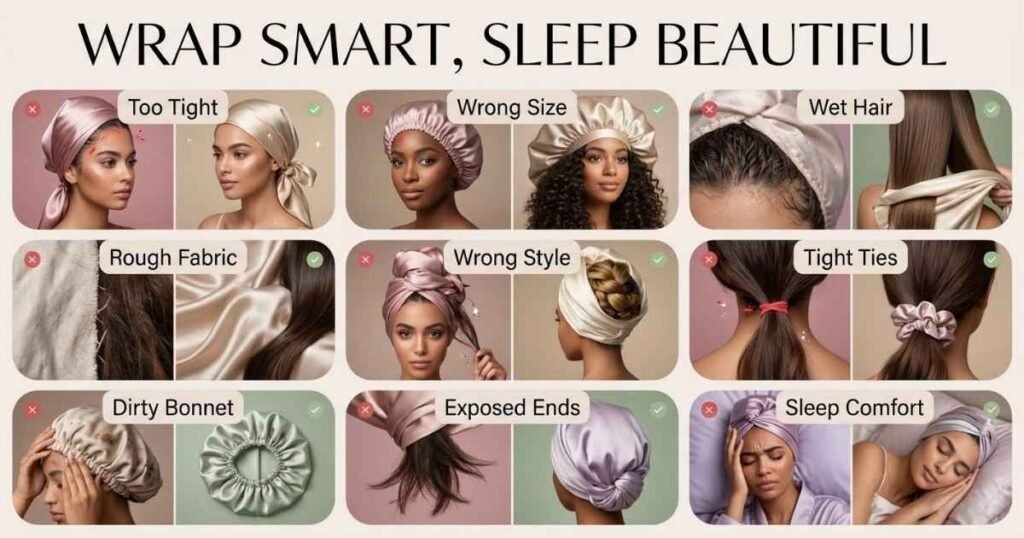
Even the best materials won’t help much if you use them incorrectly. Small mistakes can affect comfort and make overnight protection less effective.
Here are common problems to avoid when using a hair wrap for sleeping.
1. Tying the Scarf Too Tightly
A tight Hair Wrap for Sleeping scarf can create pressure around your hairline and scalp.
Better approach: Tie your scarf securely but leave enough room for comfortable movement.
2. Choosing the Wrong Size
A small bonnet may squeeze thick or long hair. An oversized one might slip off during sleep.
Better approach: Select a size that accommodates your full hairstyle without excessive compression.
3. Wrapping Wet Hair Too Tightly
Trapping damp Hair Wrap for Sleeping beneath a tight covering can create an uncomfortable environment.
Better approach: Allow your hair to dry sufficiently before wrapping.
4. Using Rough Fabrics
Rough fabrics can increase friction and disturb your hairstyle.
Better approach: Choose smooth silk or satin materials.
5. Ignoring Your Hair Texture
Different textures need different wrapping methods.
Better approach: Consider your hair length, thickness, and natural pattern before choosing a technique.
6. Using Tight Hair Ties
Tight elastics may pull strands and stress the roots.
Better approach: Use soft scrunchies or gentle fabric ties.
7. Forgetting to Wash Your Bonnet
Hair products, oils, and sweat can accumulate inside your Hair Wrap for Sleeping.
Better approach: Wash your bonnet regularly according to its care instructions.
8. Leaving Hair Ends Exposed
Uncovered ends can continue rubbing against your pillowcase.
Better approach: Make sure your scarf or bonnet covers the full length of your hair.
9. Wearing an Uncomfortable Wrap Every Night
You shouldn’t tolerate headaches, itching, or pressure just to protect your hairstyle.
Better approach: Adjust the design or switch to a more comfortable material.
Tips for Keeping Your Hair Wrap Secure All Night
A wrap that falls off halfway through the night defeats much of its purpose. The right fit, material, and tying technique can help keep everything in place.
Try these practical tips to improve your hair wrap for sleeping experience.
1. Choose the Correct Size
Your bonnet should accommodate your hair without squeezing it.
If you have thick curls or long braids, choose an extra-large design.
2. Look for Adjustable Features
Adjustable elastic bands and drawstrings make it easier to customize the fit.
They also help accommodate different hairstyles and head sizes.
3. Use a Non-Slip Design
Some bonnets feature wider elastic bands or adjustable closures.
These designs can help reduce slipping during movement.
4. Tie Your Scarf Properly
When using a scarf, position the knot away from areas that create discomfort.
Avoid tying it directly against your forehead with excessive pressure.
5. Secure Your Hair First
Loose strands can move around inside your bonnet.
Use gentle twists, loose braids, or a pineapple style when appropriate.
6. Choose Breathable Fabric
A breathable material can make overnight wear more comfortable.
Look for smooth fabrics that don’t feel excessively hot or heavy.
7. Consider Your Sleeping Position
Side sleepers may prefer bonnets with flat closures. Back sleepers might find different designs more comfortable.
Experiment with a few styles to see what works best.
8. Keep Your Wrap Clean
Regular washing helps remove accumulated oils, styling products, and sweat.
Always follow the manufacturer’s washing instructions to maintain fabric quality.
Quick reminder: A secure Hair Wrap for Sleeping should stay comfortably in place without squeezing your head or pulling your hairline.
How to Choose the Right Hair Wrap for Sleeping
Choosing the right nighttime Hair Wrap for Sleeping becomes easier when you understand your hair’s needs. The perfect option should protect your strands while fitting comfortably into your routine.
Before buying a hair wrap for sleeping, consider these important factors.
1. Consider Your Hair Type
Your natural texture influences which design works best.
- Fine hair: Choose lightweight silk or satin scarves.
- Straight hair: Consider a traditional satin scarf.
- Wavy hair: Try a roomy satin bonnet.
- Curly hair: Choose a spacious bonnet that protects curl definition.
- Coily hair: Look for extra-large bonnets.
- Thick hair: Select adjustable designs with generous coverage.
2. Check the Fabric Quality
Look for smooth materials without rough seams or uncomfortable edges.
Silk offers a premium natural-fiber option. Satin provides an affordable alternative with a smooth surface.
3. Choose the Right Size
Your Hair Wrap for Sleeping should accommodate your hair without forcing it into a tight shape.
| Hair Length | Suitable Wrap Style |
| Pixie | Small satin scarf |
| Short bob | Square silk or satin scarf |
| Shoulder-length | Medium bonnet |
| Long hair | Large satin bonnet |
| Very long hair | Extra-large bonnet |
| Thick natural hair | Roomy adjustable bonnet |
4. Prioritize Comfort
A nighttime wrap should feel soft and lightweight.
Look for:
- Gentle elastic bands.
- Adjustable closures.
- Smooth inner surfaces.
- Breathable materials.
- Comfortable stitching.
5. Consider Your Budget
You don’t need an expensive product to build a useful nighttime routine.
Affordable satin bonnets can provide practical protection. Premium silk wraps offer another option if you prefer natural fibers.
Compare fabric quality, construction, size, and durability instead of focusing only on price.
6. Check the Washing Instructions
Nighttime accessories need regular cleaning.
Choose a wrap that’s easy to maintain. Follow its care label to avoid damaging delicate fibers.
7. Think About Your Sleeping Habits
If you move frequently during sleep, look for adjustable designs with secure closures.
If you prefer minimal pressure around your head, try a soft scarf with a comfortable knot.
Final Buying Checklist
Before purchasing your nighttime Hair Wrap for Sleeping, make sure it meets these requirements:
- Smooth and comfortable fabric.
- Suitable size for your hair length.
- Secure but gentle fit.
- No rough seams or irritating edges.
- Easy washing and maintenance.
- Enough room for your hairstyle.
- Suitable price and fabric quality.
The best choice isn’t necessarily the most expensive one. It’s the Hair Wrap for Sleeping that protects your hair while allowing you to sleep comfortably.
FAQ’s
Why Should You Wrap Your Hair Before Going to Bed?
A Hair Wrap for Sleeping reduces friction, controls tangles, protects delicate ends, and helps maintain smoother hairstyles overnight.
Is Silk or Satin Better for Overnight Hair Protection?
A Hair Wrap for Sleeping made from silk or satin helps reduce friction and supports smoother, manageable hair.
How Do You Keep Your Hair Wrap From Falling Off?
Choose a properly fitted Hair Wrap for Sleeping with adjustable bands and secure closures for comfortable overnight coverage.
Can a Hair Wrap Help Prevent Frizz and Breakage?
Yes, a Hair Wrap for Sleeping reduces friction and helps protect strands from tangling, dryness, and unnecessary breakage.
Should You Wear a Hair Wrap Every Night?
A Hair Wrap for Sleeping can support consistent overnight protection when you choose comfortable materials and gentle wrapping techniques.
Conclusion
Beautiful, manageable hair often starts with simple nighttime habits. Choosing a Hair Wrap for Sleeping helps protect your strands from unnecessary friction while you rest. Whether you prefer a silk scarf for hair or a satin bonnet, comfort and proper fit should come first. A suitable wrap can help reduce tangling, control frizz, and maintain hairstyles overnight. For curly and natural hair, overnight hair protection also supports curl definition and helps protect delicate ends.
Meanwhile, people with straight or long hair can benefit from gentle wrapping techniques. Keep your nighttime hair care routine simple by detangling gently and avoiding tight hairstyles. Wash your sleeping hair scarf regularly and choose breathable fabric for comfortable use. With consistent care, a Hair Wrap for Sleeping can help you wake up with smoother, more manageable hair. Small changes tonight can make tomorrow’s hair routine much easier.

HairVist is a helpful destination for hair care tips, hairstyle ideas, and beauty inspiration, managed by Ava Reynolds, an SEO content writer with 2 years of experience, focused on creating simple, useful, and engaging content that helps readers learn more about hair care and styling.
1 thought on “5 Effective Hair Wrap for Sleeping Methods for Better Hair”